
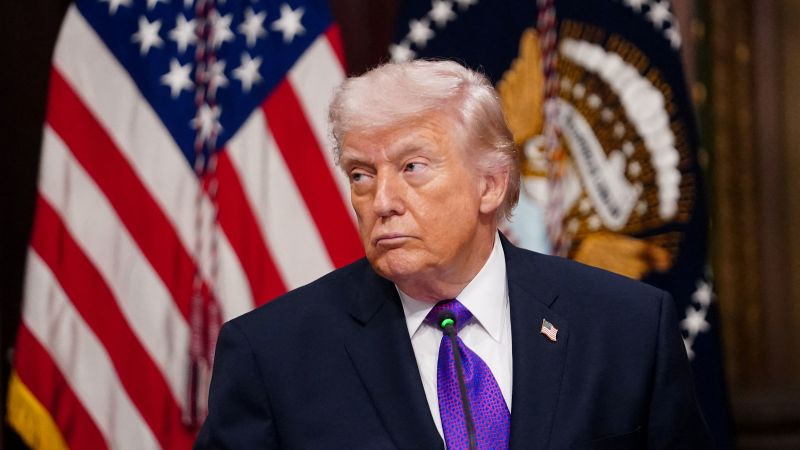
Amid the constant barrage of President Donald Trump’s often-unpopular actions, it can be easy to lose sight of what probably matters most politically: the sputtering economy.
It’s been Trump’s and the GOP’s biggest problem with about seven months to go until the 2026 midterm elections.
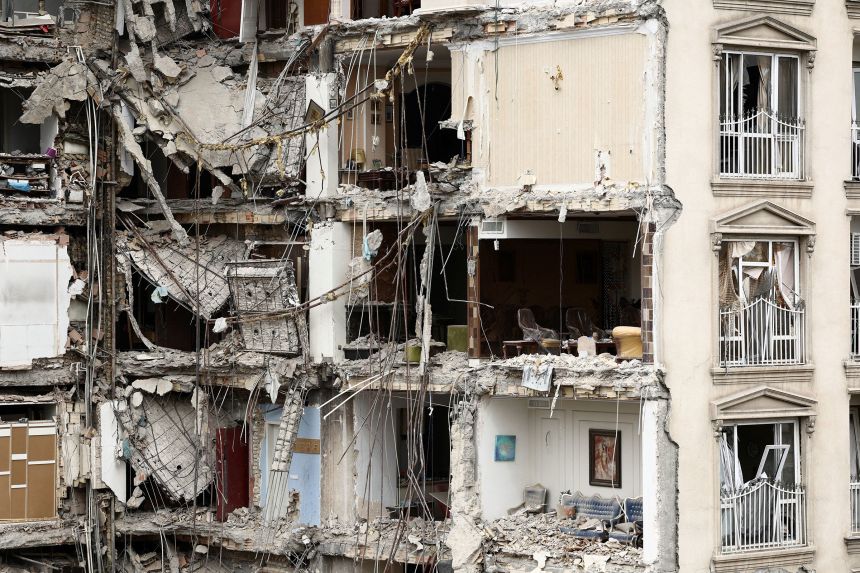
The Iran war has made it worse.
New polls indicate that Trump’s decision to launch a war has made people more negative on his handling of the economy and more pessimistic than they already were as gas prices have skyrocketed.
And crucially, even if the war somehow wraps up relatively quickly, the negative economic impacts could linger for months.
A new Reuters/Ipsos survey released Tuesday showed Trump’s approval rating on the economy hitting an all-time low of 29%.
That’s down from between 34% and 36% in January and February. And it’s not only worse than any of Trump’s previous numbers; it’s also worse than any of former President Joe Biden’s. (Biden, who also struggled mightily with the economy, bottomed out at 32%.)
Since mid-February, before the war began, Trump has gone from a minus-31 net approval on “cost of living” (30% approving to 61% disapproving) to minus-41 (25%-66%). And on inflation and rising prices, he’s gone from minus-33 (29%-62%) to minus-45 (23%-68%).
Perhaps most striking is the Republican shift.
While 27% of Republicans disapproved of Trump on “cost of living” issues last month, that number is now 34%.
And while 28% of Republicans disapproved of him on inflation and rising prices in mid-February, that number has jumped to 40%.
Those are large chunks of what should be Trump’s base.
Other recent polls don’t show Trump’s economic approval rating shifting as much. But they do carry other warning signs for how the Iran war could damage Trump — and solidify the economy as a GOP liability.
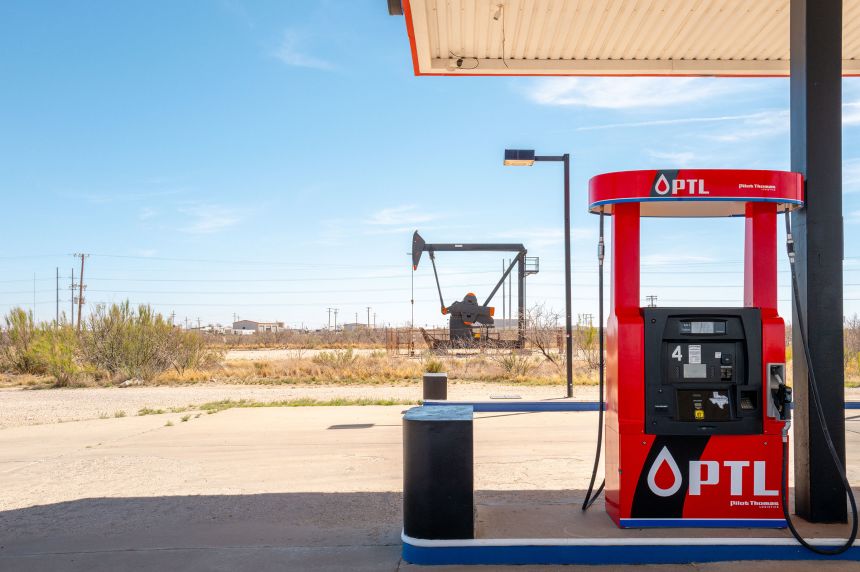
A new AP-NORC poll released Wednesday showed 45% of Americans said they were “extremely” or “very” concerned about being able to afford gas in the next few months. That’s up from 30% at the tail end of Biden’s tenure, in December 2024.
Tellingly, when it comes to priorities in the Iran war, 67% of Americans said it was extremely or very important for the administration to prevent rising oil and gas prices. That’s about as many who said the same about preventing Iran from obtaining a nuclear weapon (65%).
Preventing rising oil and gas prices was also viewed as significantly more important than other goals, including preventing Iran from threatening Israel (39%) and replacing Iran’s leaders with a friendlier government (33%).
The story was similar in a CBS News-YouGov poll released last week. It suggested the Iran war has only exacerbated the already significant American pessimism about the economy.
Americans said by 48 points that they expected the war to make the economy worse in the short term (15% said it would get stronger, 63% said it would get weaker). A clear plurality also expected it to make the economy weaker in the long run (30%-44%).
Americans were even more pessimistic about oil and gas prices, with 58% expecting the war to make them higher over the long term, compared to 27% who thought it would make them lower.
Trump has explicitly argued that the war will lower oil prices in the long term, and has suggested that Americans should be willing to deal with some short-term pain on gas costs in exchange for weakening Iran.
That’s also a price that Americans don’t appear to be willing to pay. Fully two-thirds of those polled said Americans should not be willing to pay more for gas during the war.
And then there’s a final finding that jumps out.
One of the most significant political problems with the Iran war is not just that it’s unpopular or that people worry about the economic consequences; it’s that polling has long shown Americans would much rather Trump focus on domestic issues — especially inflation, which they believe he is neglecting.
The CBS data suggests the war has further damaged Trump on that front.
In the days before the war began in late February, the CBS poll showed 45% of Americans said Trump was “focusing too much” on international matters. That number has now shot up to 58%.
The percentage of independents who agree with that statement has increased from 52% last month to 66% now, and Republicans have gone from 19% to 29%.
None of that is good news for Trump on the economy, which, it bears re-emphasizing, was already a major problem for him and the GOP. But like with his tariffs last year, he has decided to take an already uncertain economy and pursue action that clearly harms it in at least the short term, if not the long term, too.
While Biden could certainly be criticized for not paying enough attention to inflation, Trump has proactively taken steps that have directly contributed to rising prices.
Which brings us to what happens now.
Even if Trump ends the war soon and the Strait of Hormuz is somehow instantly re-opened — both big “ifs” — it’s likely we’ll see these impacts linger for months.
As CNN’s David Goldman wrote Tuesday, oil prices can shoot up like a rocket, but they tend to drop like a feather. And that’s especially the case in a war that has also damaged other facets of the energy markets in ways that will take time to rebuild.
And those higher energy costs tend to make plenty of other things more expensive, as CNN’s Alicia Wallace wrote.
It’s likely this political problem will get worse as the economic effects linger. It’s one thing to fill up your gas tank a couple of times at around $4 a gallon; it’s another to do it over and over again in an election year — even if prices drop a bit from their highs.
The early polling suggests Americans are quite concerned about what this war will portend for them. And Republicans should be, too.