
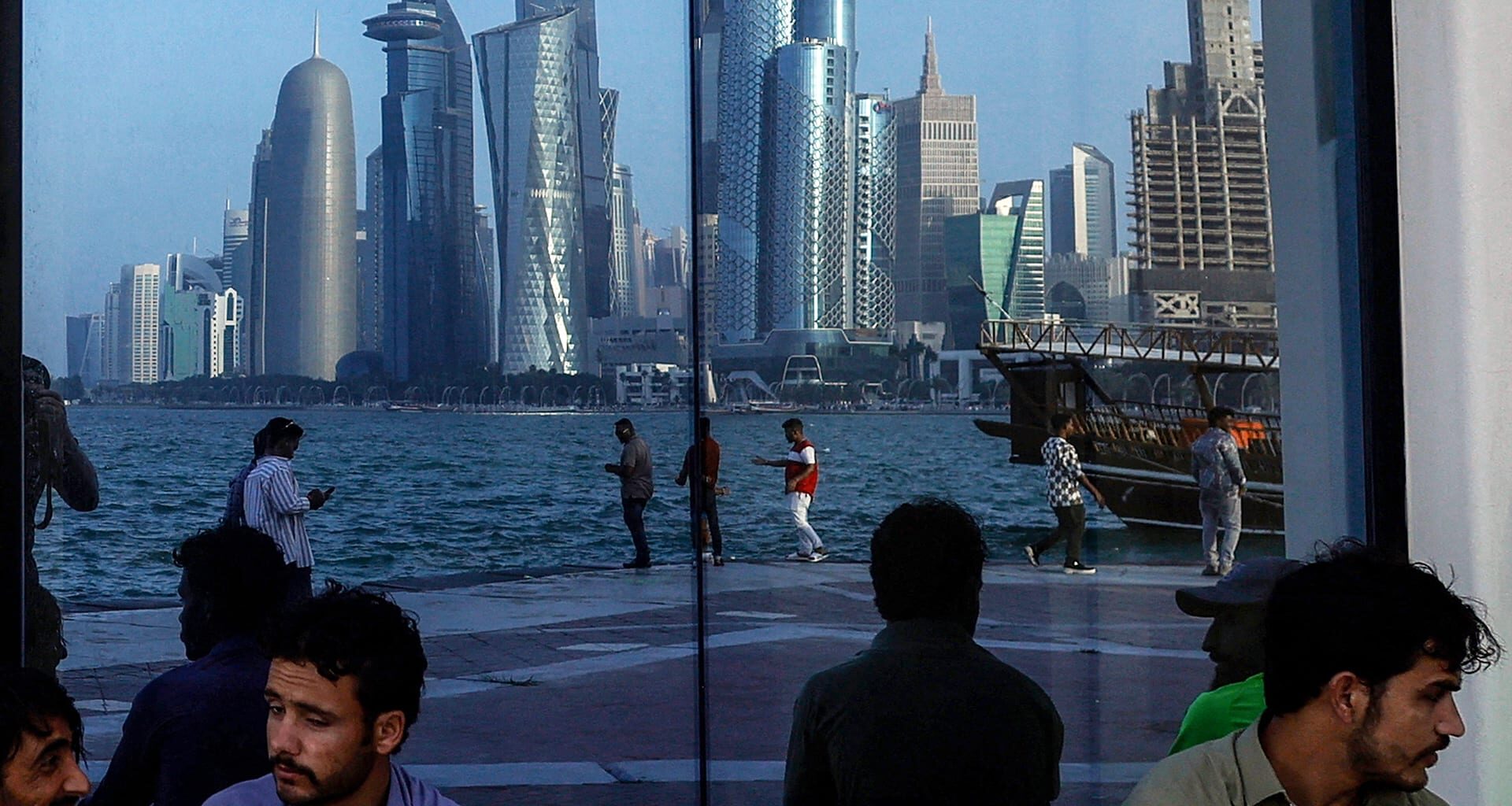
Washington’s Gulf partners do not want to be left with an Iran that can continue to threaten the region and even impose a new regime on the Strait of Hormuz. Not only would this constitute a strategic defeat for the United States (and Israel), but it would also threaten the Gulf states’ model of development.
Over the last decade, Qatar, Saudi Arabia, and the UAE have embarked on ambitious efforts to transform their economies. They have opened themselves to the world, provided advantageous business environments, built world-class infrastructure, leveraged their geography to become logistics and travel hubs, and invested heavily in technology, especially artificial intelligence (AI). The Emiratis clearly lead in all these areas, but the Saudis and Qataris (and to a lesser extent the Bahrainis, Omanis, and Kuwaitis) are generally pulling in this direction. They are betting hundreds of billions of dollars on initiatives that will render hydrocarbons one facet of diversified economies and prosperous societies.
For the “Gulf model” of development to be successful, the Gulf Cooperation Council (GCC) states need to be attractive to large numbers of multinational workers and foreign investors, which requires safety and regional stability. Those workers will not choose to relocate, tech companies will not build data centers or AI research facilities, tourists will not visit, and financial services firms will not establish offices in the Gulf if they are vulnerable to Iranian missiles and drones. At the same time, the fact that hydrocarbons remain an important component of Gulf economies means that any outcome of the war that leaves Iran in control of the Strait of Hormuz would be a strategic defeat for Washington and leave the energy exporters of the region even more vulnerable to Tehran.
The Gulf states are clearly in a bind. They are on the front lines of a war they did not want, but also very much want the United States to finish the job. Recent media reporting suggests that Saudi Arabia and the UAE are inching toward direct action against Iran. Both militaries field advanced warplanes, and Emiratis have skilled air crews who flew alongside the United States in Afghanistan and against the Islamic State.
This is not a question of capabilities, however. Joining the United States and Israel in the fight against Iran would invite additional Iranian retaliation and potentially more damage to civilian, energy, and military infrastructure. And in the case of the Saudis, it would put Crown Prince Mohammed bin Salman in the politically awkward position of fighting alongside Israel. For the moment, Saudis, Emiratis, and others seem willing to remain on the sidelines. The United States and Israel can batter Iran’s missile and drone forces, while the Gulf reserves the right to respond to Iran’s provocations.
The Gulf states now have to contend with managing a radically destabilized regional environment. If the Islamic regime in Iran does not fall—and so far, it has proved to be resilient—the GCC states will need time to harden their defenses. The billions in resources it will take to protect Dubai, Abu Dhabi, Doha, and Riyadh will detract from their plans for domestic economic change and regional integration. Regional tension will also drive military spending, especially in air defense capabilities. The Gulf countries will also likely draw even closer to the United States to help ensure their safety and security.
It is almost certain that the rapprochement between the Gulf states and Iran is over, but for Saudis, Emiratis, and others to achieve their domestic goals, they need more than that. Iran cannot be able to threaten its neighbors and sow chaos in the region. But, even after four weeks of military operations against the Islamic Republic, that goal does not seem to be at hand.
This work represents the views and opinions solely of the author. The Council on Foreign Relations is an independent, nonpartisan membership organization, think tank, and publisher, and takes no institutional positions on matters of policy.