

When my family and I came to Israel in 1998, our daughter (who’s now closing in on forty) was just about to have her Bat Mitzvah. It was important to us that she read Torah in a “traditional” synagogue. In other words, what we wanted for her was an “egalitarian Orthodox” setting (for lack of a better term), where the service would be completely traditional, but where she could read Torah.
Yet there were essentially no options. So we rented a space, set up our own minyan and did things exactly as we wanted them to be.
On the morning after the Bat Mitzvah, someone at my work who had attended told me that she’d enjoyed the simcha, but that (this being Israel where it was in vogue to say whatever you think long before Donald Trump came to the scene) we’d been unfair to our daughter. Why? “Because she clearly loved reading Torah, and she’s great at it. And now she can’t do it again. So you’ve set her up for long-term frustration and disappointment ….”
Except that our daughter regularly reads Torah. As will our granddaughter at her Bat Mitzvah in a year or so, not in a hired hall, but at a regular shul.
Religious life in Israel has changed in myriad ways during the almost three decades that we’ve been here—for all sorts of reasons. One of the most important reasons, though, has been the immigration to Israel of thousands of traditional American Jews, who have brought with them uniquely American conceptions of pluralism, the roles of women, access to traditional learning—and much more.
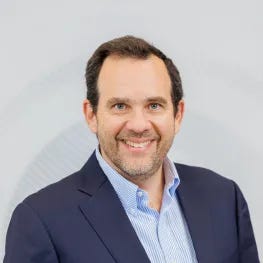
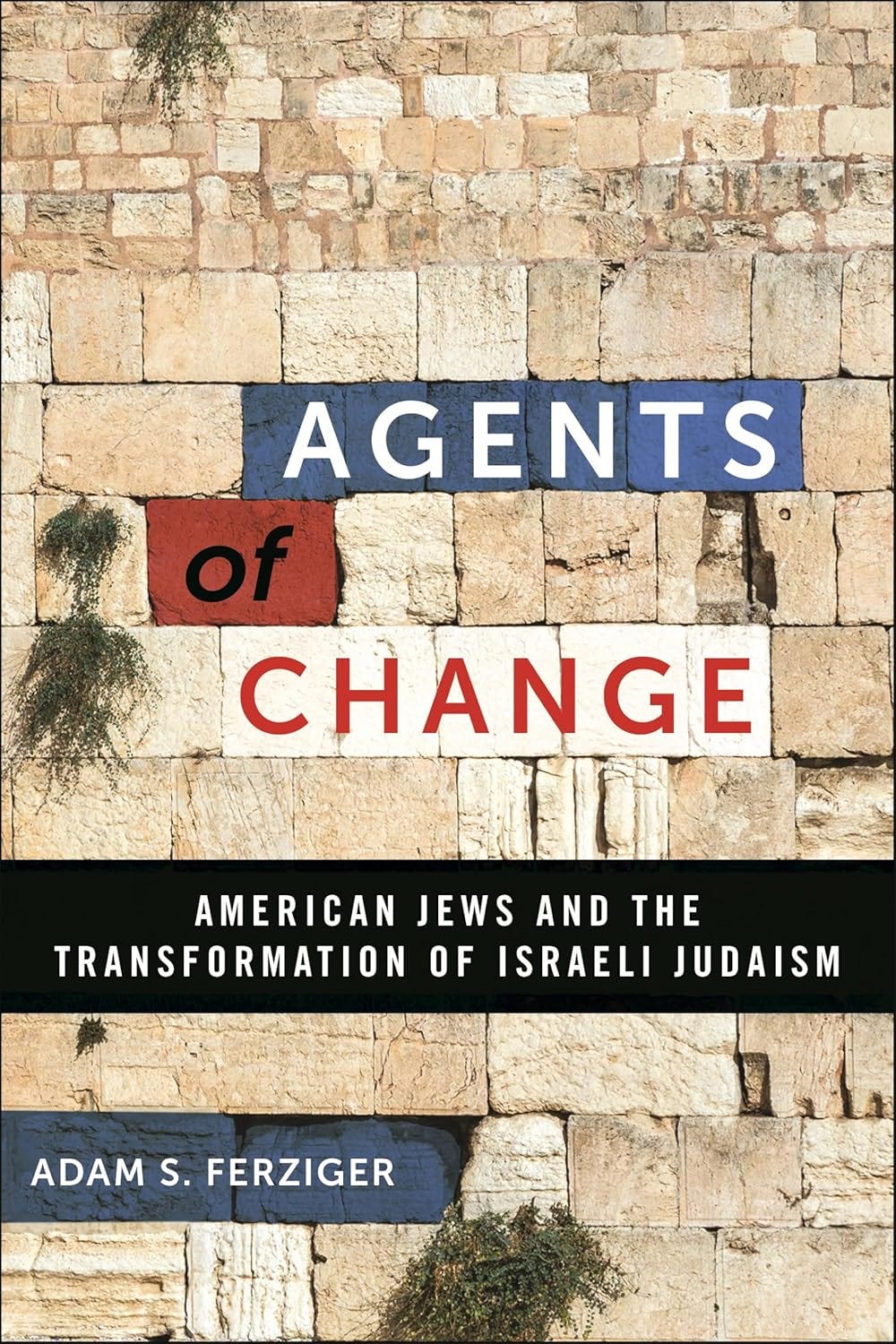
To those who look at Israel from abroad, traditional Israeli religious life might appear to be a monolith, but that is far from the case. And now, at long last, both for those of us who live here as well as those who do not, there’s a book by an important Israeli scholar (himself also an immigrant to Israel) — Professor Adam Ferziger — that lays out for us the profound impact that (especially) American immigration has had on the tapestry of Israeli life.

A quick reminder that with Pesach coming next week, we will be on a reduced schedule — as always during Jewish holidays — during the weeks of March 29 and April 5.
Out of consideration for our readers in the Diaspora who observe two days of Yom Tov at the beginning and end of the holiday, we will not post on those days.
Wishes for a joyous and meaningful Pesach.

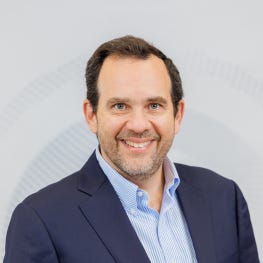
Adam S. Ferziger is professor and holds the Rabbi S.R. Hirsch Chair for Research on the Torah im Derekh Erez Movement in the Israel and Golda Koschitzky Department of Jewish History and Contemporary Jewry at Bar-Ilan University. He is a senior associate at the Oxford Centre for Hebrew and Jewish Studies, University of Oxford and co-convener of the annual Oxford Summer Institute on Modern and Contemporary Judaism.
His research focuses on the history of religious responses to modern and contemporary life in Western Europe, North America, and Israel. A past recipient of Bar-Ilan’s “Outstanding Lecturer” prize, Ferziger has served as a visiting professor or fellow in Australia, China, UK, as well as numerous American Universities. He is the author or editor of eight books, including Exclusion and Hierarchy (University of Pennsylvania Press, 2005), Jewish Denominations (Melton Institute – The Hebrew University of Jerusalem, 2012), and his monograph, Beyond Sectarianism (Wayne State University Press, 2015), was the winner of the National Jewish Book Award. His new book, Agents of Change: American Jews and the Transformation of Israeli Judaism (NYU Press) appeared in the summer 2025.
Professor Ferziger is an alumnus/graduate of SAR, Ramaz, Beit Midrash le-Torah (BMT), Yeshivat Har Etzion (Gush), YU (YC, RIETS, Revel), and Bar-Ilan. During the spring 2025 semester, he was the Robert Karady Fellow at the Herbert D. Katz Center for Advanced Jewish Studies of University of Pennsylvania.
Adam Ferziger and his wife Dr. Naomi Ferziger have lived in Israel since 1987, where they brought up their children and are now have several grandchildren. Ferziger was a congregational rabbi in Kfar-Sava and has dedicated over thirty years to performing weddings and providing religious services to a wide spectrum of Israeli Jews in a meaningful and nonjudgmental manner.
The link at the top of this posting will take free subscribers to an excerpted portion of today’s conversation.
For paid subscribers, the link at the top will take you to the full conversation; below, paid subscribers will also find a transcript for those who prefer to read, as always.