
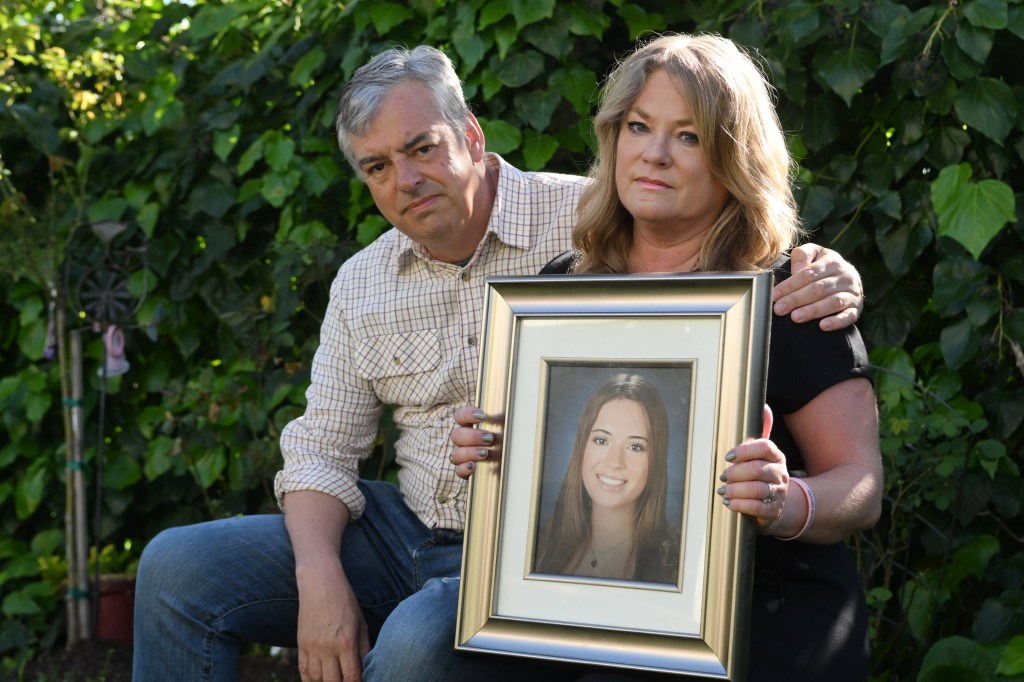
A bereaved Marin County couple were among the many people cheering a massive jury verdict Wednesday against Meta and YouTube.
The lawsuit in Los Angeles alleged the companies designed their platforms to hook young users without concern for their mental health. Jurors agreed and awarded a young plaintiff $6 million in damages.
For Paul and Victoria Hinks of San Rafael, the decision was a bright spot in a dark time. Their 16-year-old daughter Alexandra died by suicide in 2024, and they too have sued social media companies.
“I’m very happy the jury found Meta and YouTube liable on all counts,” Paul Hinks said. “Also, the jury recognized the companies were building a highly addictive product, and that they knew it was addictive and that it was harmful to children.”
Victoria Hinks said, “Finally, these companies are being held accountable and there is some justice.”
The trial has potentially broad implications. Thousands of families have also filed similar lawsuits against social media companies.
“For the parents whose children died as a result of social media harms, today’s verdict is a gigantic first step toward the truth, justice and accountability that Big Tech has spent years and billions of dollars to prevent,” said Sarah Gardner, chief executive of Heat Initiative, an online child safety nonprofit.
The organization is working with the Hinkses and scores of other parents who allege their children were harmed by becoming addicted to cellphone apps that fed them negative messages.
“This verdict is social media’s Big Tobacco moment — the harm these companies intentionally cause children has been proven in a court of law,” Gardner said.
“The hard truth is the design features at the heart of this trial are still running, right now, on the phones of millions of children, and there are thousands of other families still waiting for their day in court,” Gardner said. “This is only the beginning of the fight to keep kids safe online, but we will win.”
The Hinkses, who monitored the six-week trial and were in Los Angeles for the verdict, have been trying to boost awareness of the issue since their daughter died.
“Nobody’s saying social media companies have to be shut down,” Paul Hinks said. “What we’re saying is that they don’t care that they’re addicting children.”
Before she died, Alexandra was a junior at Redwood High School in Larkspur who struggled with social media addiction, her parents said. She was two months away from her 17th birthday.
“Alexandra was a kind, beautiful soul and full of life — until social media pulled her into a dark spiral,” Victoria Hinks said.
The Los Angeles case pitted the family of a 20-year-old woman who, starting at age 6, became addicted to cellphone apps, sometimes up to 16 hours a day — against the social media platforms YouTube and Instagram. Meta is the parent company of Instagram and Facebook.
Two other social media companies, Snapchat and TikTok, were also named in the lawsuit, but they settled for undisclosed sums, according to the Associated Press.
The complaint in the case, as well as the Hinkses’ lawsuit and all the others, points to features such as endless scrolling, “like” buttons, beauty filters and push notifications as contributing to users’ feelings of depression and lack of self-worth.
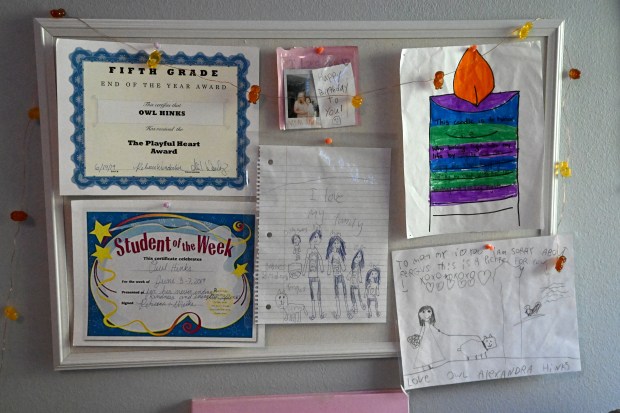 Awards for and artwork by Alexandra Hinks line the wall of her bedroom at her parents’ home in San Rafael, Calif., on Thursday, March 19, 2026. She died by suicide in 2024 at the age of 16. (Alan Dep/Marin Independent Journal)
Prior to the Los Angeles trial, the Hinkses had been working on the state level to help protect other children from falling prey to the same social media addictions they believe led to their daughter’s death.
Last year, they helped state lawmakers pass a bill that will mandate that social media companies add a black label on their apps that warns of mental health risks. The label will pop up upon opening the app, again after three hours of use and then again every hour.
Assembly Bill 56, or the “Social Media Warning Law,” becomes effective on Jan. 1.
The Hinkses also testified last week in Sacramento in favor of another proposed bill that would prohibit the use of cellphones for children under 16.
Alexandra Hinks, who went by the nickname “Owl” with family or friends, was the younger of two daughters, her parents said. From elementary school through eighth grade, she attended a private school in Marin, then went to Redwood High School.
She was a field hockey player and a distance runner, loved music and once memorized all the lyrics from the musical “Hamilton,” her mother said.
However, as anxieties around her appearance, bullying and other teen insecurities increased, Alexandra started spending more time on the social media apps, according to her parents.
Although their daughter told them she was only using the cellphone to connect with friends, they learned that some of the apps glamorized eating disorders, and some gave directions about self-harm and suicide, they said.
The Hinkses said they did everything they could to pull their daughter out of addiction, including taking the cellphone away at night and setting parental controls on the apps to limit use to one hour a day.
They also tried therapy and removing the door to Alexandra’s bedroom. Nothing worked.
“She doomscrolled for hours on end, growing more isolated every day,” Victoria Hinks said. “She was hooked.”
For Paul Hinks, the message to all parents is clear.
“These companies are feeding horrible content from complete strangers to vulnerable teenagers,” he said. “These apps are not benevolent; these apps are dangerous.”
The 988 Suicide & Crisis Lifeline, previously known as the National Suicide Prevention Lifeline, is available by dialing 988.