
While the Jewish community is keenly focused on Israel’s struggles over the past two and half years in countering dire threats from terrorist groups and antisemitic regimes, another serious threat to Israeli citizens may fall off the radar. That is the threat of hunger.
For over 23 years, Leket Israel: The National Food Bank has worked to build a nationwide web of partnerships to collect surplus agricultural produce and gather nutritious cooked meals, then distribute them throughout the country. In 2025 Leket Israel enlisted 120,000 volunteers, worked with 346 nonprofit partner agencies, dispatched 63 dedicated food rescue vehicles, distributed 33,795 tons of food, and served 470,000 Israelis in need on a weekly basis, with 2,243,221 hot meals provided annually. Leket Israel also held over 400 nutrition education workshops for at-risk populations.
One distinguishing feature of Leket Israel is the strong connection it has formed with leaders in all denominations. Leket Israel’s 2026 Rabbinical Circle has over 140 members from across the United States, including Rabbi Jacob J. Schachter, Rabbi Nathaniel Helfgot, Rabbi Rabbi Allen Schwartz, Rabbi Yitzchok Adler and Rabbi Ira Ebbin.
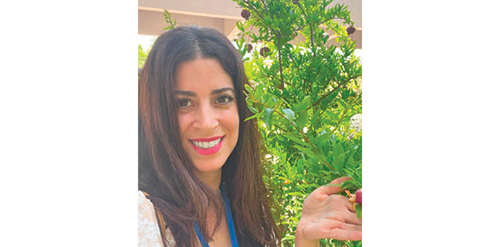 Lauren Yokèd
Lauren Yokèd, the executive director of the American Friends of Leket Israel (based in Teaneck), spoke with The Jewish Link about the work of the organization and opportunities for supporters to see and support its work.
What experience(s) have you had with or seen at Leket Israel, in Israel, that are most vivid in your mind?
I often think back to a conversation I had years ago with the manager of an elderly day care center in Bat Yam, a few miles outside of Tel Aviv. We were chatting and I casually asked her what type of produce her clients most enjoy receiving. She mentioned vegetables typically used in salads—lettuce, cucumbers, tomatoes and similar items. When I asked whether they might prefer vegetables like potatoes, carrots or beets—foods that are usually cooked—she said no. She explained that many of the elderly recipients avoid anything that requires cooking because they cannot afford to turn on the gas in their kitchens. Others have lost the ability to cook at all, or to cook safely. This moment made me realize just how vulnerable the elderly—including Holocaust survivors—are in Israel.
The idea that an elderly Israeli is unable to enjoy a hot meal is not something I can accept, and I don’t think we should accept it as a society. I continue to witness this fragility each time I visit our nonprofit partners serving the elderly. It is common to see people in their 80s and 90s standing in long lines that stretch around the block, waiting for food distribution to begin. They arrive hours before their scheduled collection time, worried that there will not be enough food left, or that the items they need will run out. So, they simply stand in the sun, heat and humidity and wait. Some bring umbrellas, hats or sunglasses to shield themselves, but it is always heartbreaking to witness. At Leket, we do everything possible to prioritize them and ease their burden. In addition to fresh produce, we provide critically important cooked meat meals and nutritious soups.
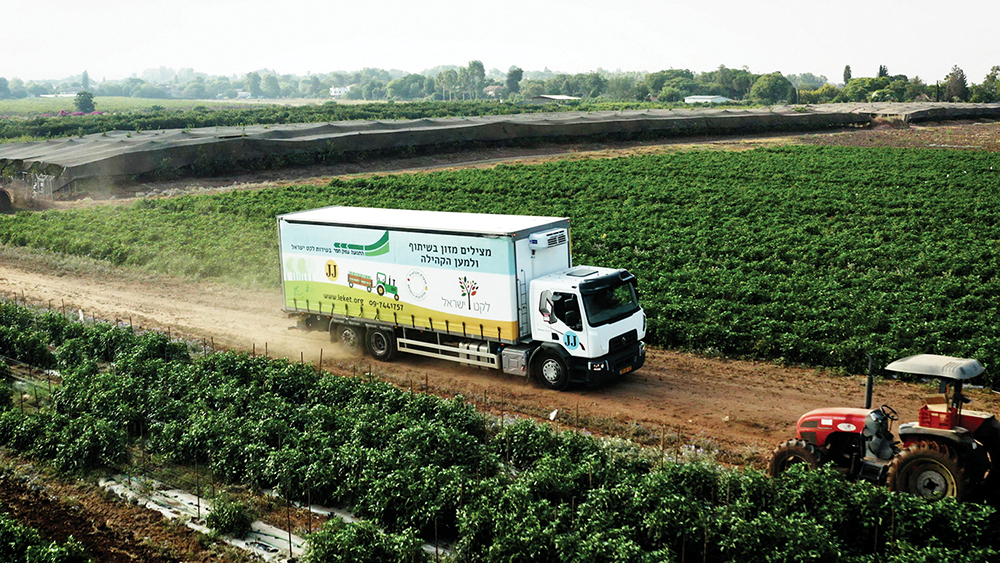 Leket Israel food truck.
What is the meaning of the organization’s name?
The name, Leket, means gleaning and derives from the biblical concept of caring for those in need. This mitzvah requires that ears of grain that fall to the ground at the time of harvest not be subsequently collected. Instead, these ears of grain should be left in the field for the poor to collect. At Leket Israel we see the organization as a sort of modern-day interpretation of this unique Torah commandment.
What partnerships with U.S. Jewish national organizations have been most beneficial to raising support for Leket Israel’s work?
We have developed some very special partnerships in the U.S. over the years, with foundations, synagogues and schools, and also with other food banks. Dozens of Jewish Federations across the U.S. support Leket Israel, and many have been with us almost since our inception.
What can you tell me about the Maot Chittim campaign?
In the opening paragraph of the Haggadah recited at the Seder, we declare: “All who are hungry, let them come and eat.” Each year Leket Israel runs a special Maot Chittim campaign for Pesach, enabling supporters around the world to fulfil the mitzvah of giving to the poor for Pesach. Each dollar donated enables the rescue and redistribution of about 6 pounds of fresh, surplus produce and cooked meat meals.
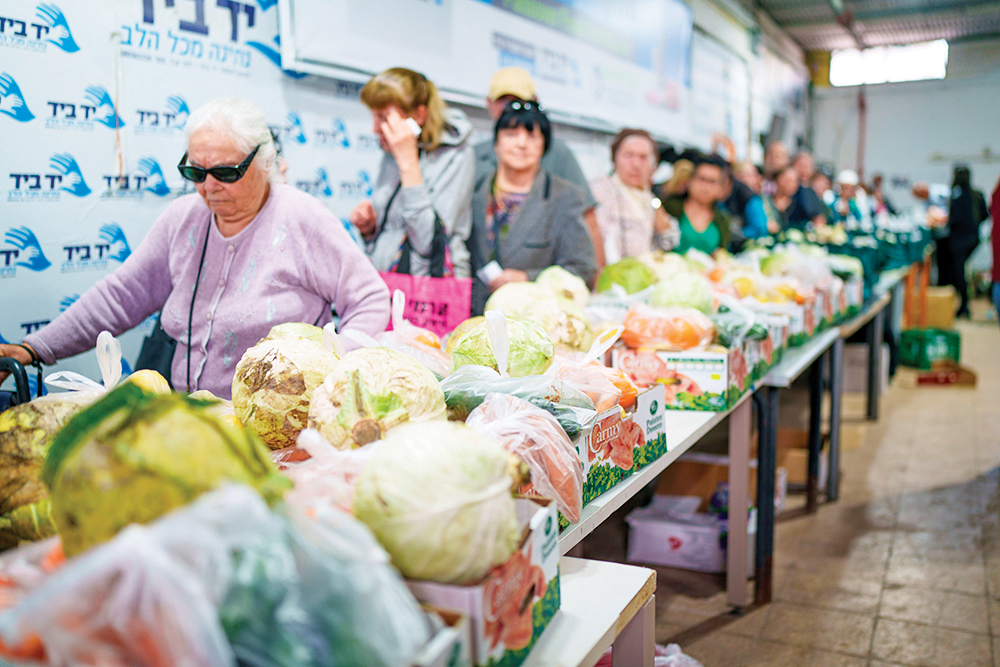 Leket Israel food distribution.
How can supporters in the U.S. see, and assist in, Leket Israel’s work when they’re in Israel?
We love volunteers! Last year over 120,000 visited us in the fields to harvest produce for those in need and in our Logistics Center, where volunteers pack and sort produce for distribution to our 300-plus nonprofit partners. Those interested in should visit https://www.leket.org/en/volunteer-en/
What else would you like to add?
Leket Israel, founded in 2003, is Israel’s National Food Bank and largest food rescue organization. Today, the organization feeds 470,000 Israelis of all backgrounds each week—nearly double the number served before Oct. 7. This work is made possible by rescuing 70 million pounds of fresh, surplus produce and 2.4 million cooked meat meals each year from hotels, the IDF, corporate cafeterias, and farms. Without our intervention, this food would be unnecessarily destroyed and end up in landfills. Due to the war with Iran, Leket Israel is once again operating in emergency mode and working tirelessly to ensure that the flow of food continues, reaching those in great need, including families under fire, the elderly and homebound, kids at risk and many others.
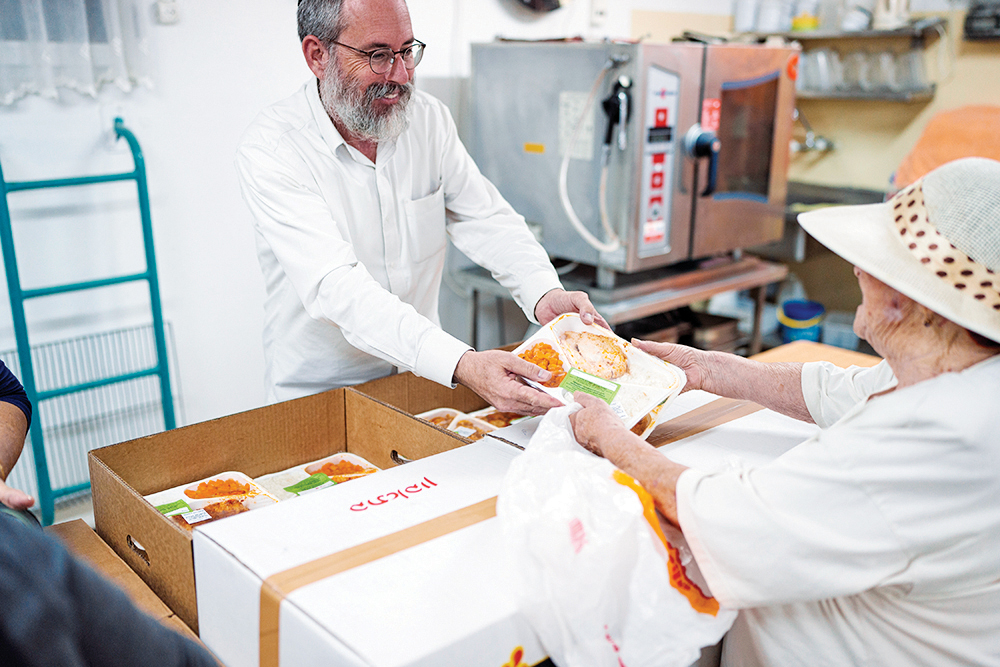 Leket Israel food distribution.
Tax-deductible donations can be made online at https://tinyurl.com/5b2p2sy3 or via check made payable to “American Friends of Leket Israel” and mailed to P.O. Box 2090, Teaneck, NJ 07666 (please include “Maot Chittim” in the memo).
To learn more, visit www.leketusa.org or contact [email protected].
Harry Glazer is the Middlesex County editor of The Jewish Link. He can be reached at [email protected] and he welcomes reader feedback.