
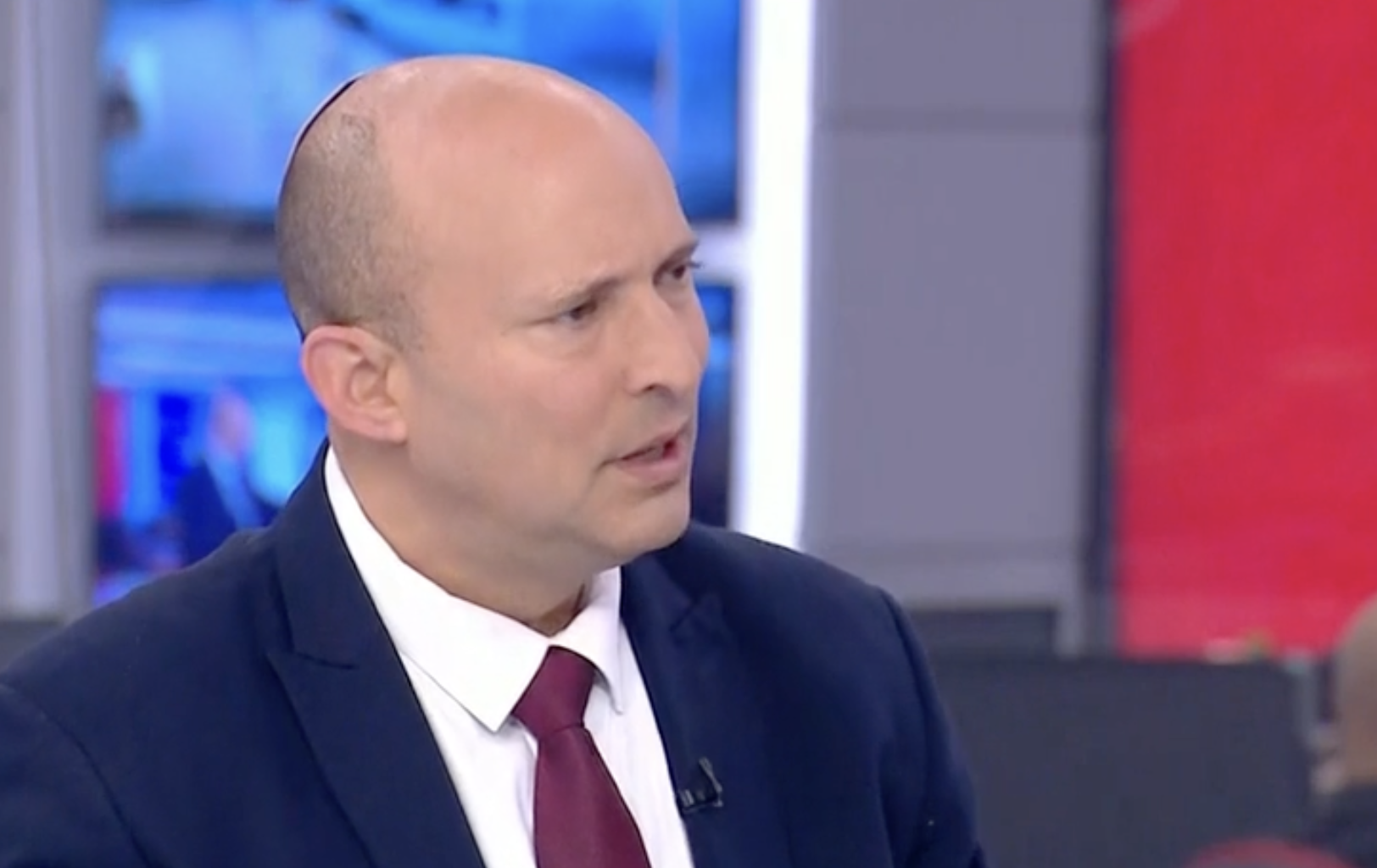
Former premier Naftali Bennett vowed Thursday to replace Prime Minister Benjamin Netanyahu and stay out of any government led by him, but avoided ruling out the incumbent as a potential future coalition partner.
After 30 years in politics, roughly half of them as premier, Netanyahu “needs to go home,” Bennett told the Ynet news site. “Of course I won’t serve under him — I’m going to replace him.”
“Netanyahu in his actions is tearing the State of Israel apart,” said Bennett, accusing the premier of pushing “controversial legislation” in wartime, working to codify the Haredi exemption from the draft, and continuing to employ aides who were paid lobbyists for Hamas-backer Qatar.
Bennett made similar comments in a slew of interviews to Hebrew media on Thursday. In the interviews, Bennett also expressed support for the ongoing war with Iran, calling it “justified,” but stressed that success must be measured in terms of strategic outcomes and not declarations of victory.
The right-wing former premier, who frequently appears in international media, last spoke to Israeli media about a year ago. Asked by Ynet why he was doing so now, Bennett asserted that he “chose to be interviewed to lift up the heads of the people of Israel.”
Get The Times of Israel’s Daily Edition
by email and never miss our top stories
By signing up, you agree to the terms
“There is an amazing and strong nation here, and a powerful military, but they’re looking at the leadership, at the hapless government,” he said.
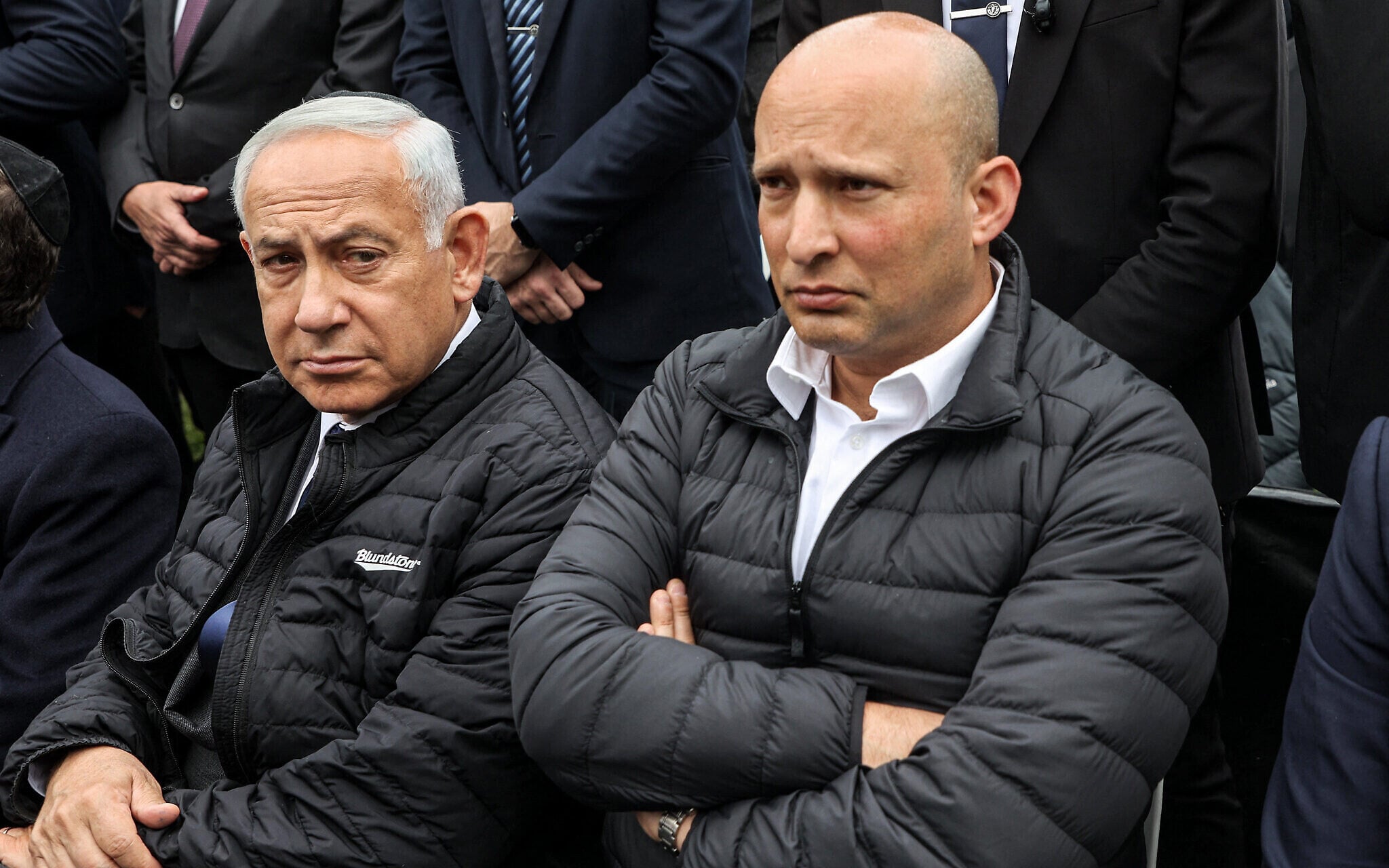
Prime Minister Benjamin Netanyahu (left) and former prime minister Naftali Bennett (right) attend the funeral of Rabbi Haim Drukman, at Merkaz Shapira, near Kiryat Malachi, on December 26, 2022. (Gil Cohen-Magen/ AFP)
Bennett also insisted in the interviews that he was the only candidate to lead the Zionist anti-Netanyahu bloc in the next elections, which are scheduled for October at the latest.
The comments came after recent polling showed Bennett trailing fellow bloc leader Gadi Eisenkot, a former IDF chief, both in terms of personal popularity among opposition voters and in the number that each of their parties would secure in the Knesset.
“I am the only person who has replaced Netanyahu as prime minister in the last generation. I know how to do it, I’ve done it and I’ll do it again,” added Bennett, who in 2021 assumed the premiership atop a short-lived, ideologically diverse coalition that also included one Arab party.
Bennett claimed that he made a “serious, generous offer” to Eisenkot six months ago about joining forces, but Eisenkot is sitting on the offer.

Former IDF chief of staff Gadi Eisenkot visits Kibbutz Yiftah near the Israeli border with Lebanon amid the ongoing war with Iran and Hezbollah, March 9, 2026. (Ayal Margolin/Flash90)
“The door is open, but I’m moving forward. I assume that in the end we’ll come (to the election) as a unified force. In any case, I’ll take the credit for winning the election,” Bennett told the Israel Hayom newspaper.
He also told other outlets that Eisenkot was a “worthy man” and would be given a “significant role” in a government he leads.
Bennett: ‘Anyone who can serve in Gaza’ is a potential partner
Asked by Channel 12 who he would include in his own government, Bennett said “whoever wants to tear apart the State of Israel” would be excluded.
Far-right National Security Minister Itamar Ben Gvir would be excluded because “today he is tearing apart the State of Israel, he’s tearing apart the police,” said Bennett.
However, Bennett avoided completely ruling out Netanyahu or Finance Minister Bezalel Smotrich as coalition partners. Asked about each of them in two separate interviews, Bennett told his interviewers to “ask me this question” only after Netanyahu and Smotrich take certain actions.
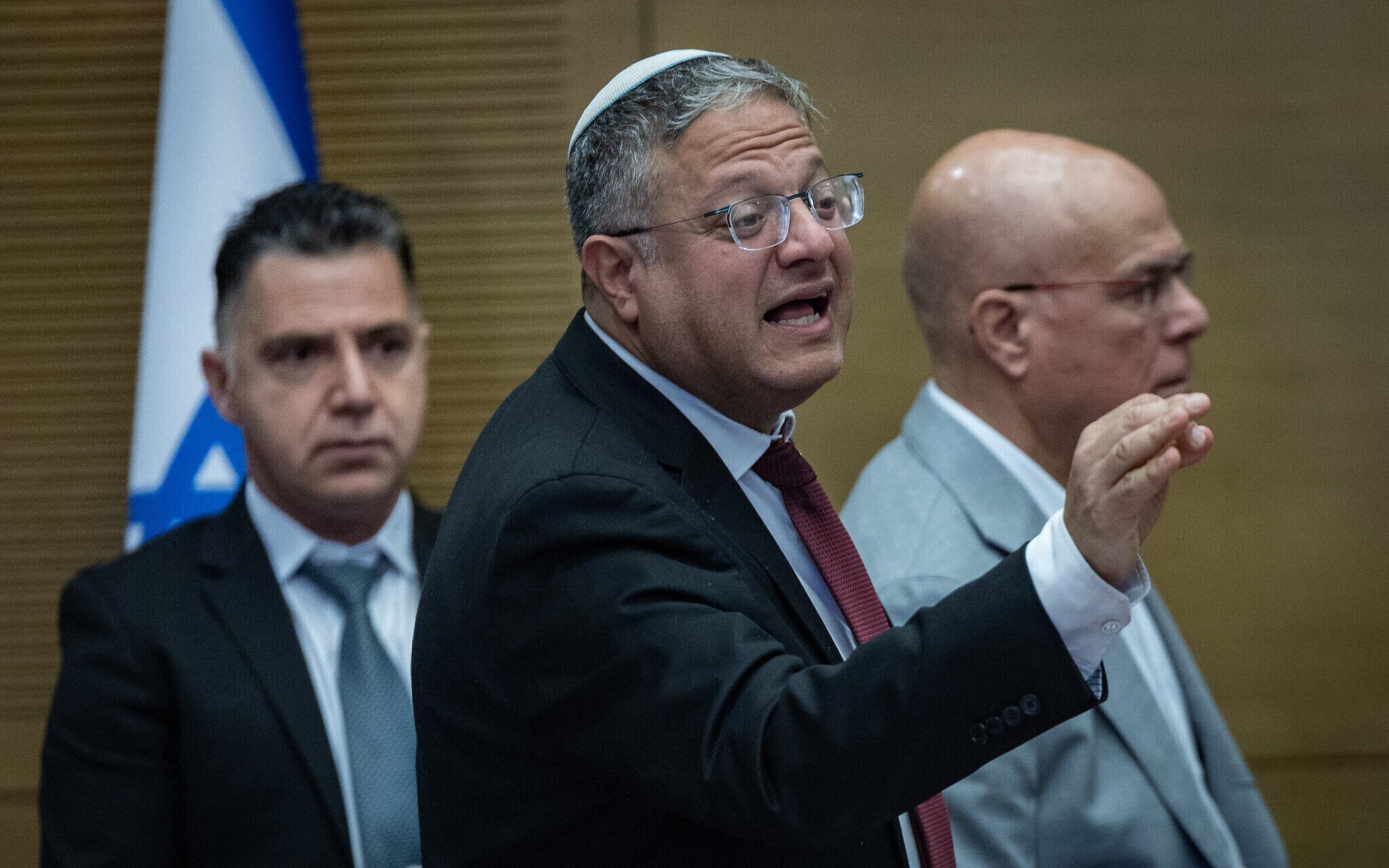
National Security Minister Itamar Ben Gvir at a Knesset National Security Committee meeting, March 24, 2026. (Yonatan Sindel/Flash90)
For Smotrich, Bennett told Channel 12 that the finance minister, whom he called “the architect of the draft-dodging law,” had to “cancel all the draft-dodging actions he’s promoting”; transfer funds from Haredi draft-dodgers to people who do enlist; and “cancel all these inane disagreement laws,” apparently referring to the government’s bid to enact bills weakening the judiciary even after the start of the war with Iran on February 28.
For Netanyahu, Bennett told the Israel Hayom newspaper that the long-time premier had to acknowledge his own responsibility for the failure to prevent the Hamas-led atrocities of October 7, 2023, that sparked the Gaza war; call for a state commission of inquiry into the debacle around the onslaught; and cancel all the “draft-dodging” funds given to Haredi institutions that fail to meet enlistment quotas.
“Anyone who can serve in a tank in Gaza can be part of my government, if they accept the principles,” Bennett told the newspaper.
Bennett said his bloc commanded a “solid Jewish majority,” citing polls awarding it around 60 of the Knesset’s 120 seats, whereas Netanyahu’s bloc scored around 50, including “15 who are against IDF service and are anti-Zionist.”
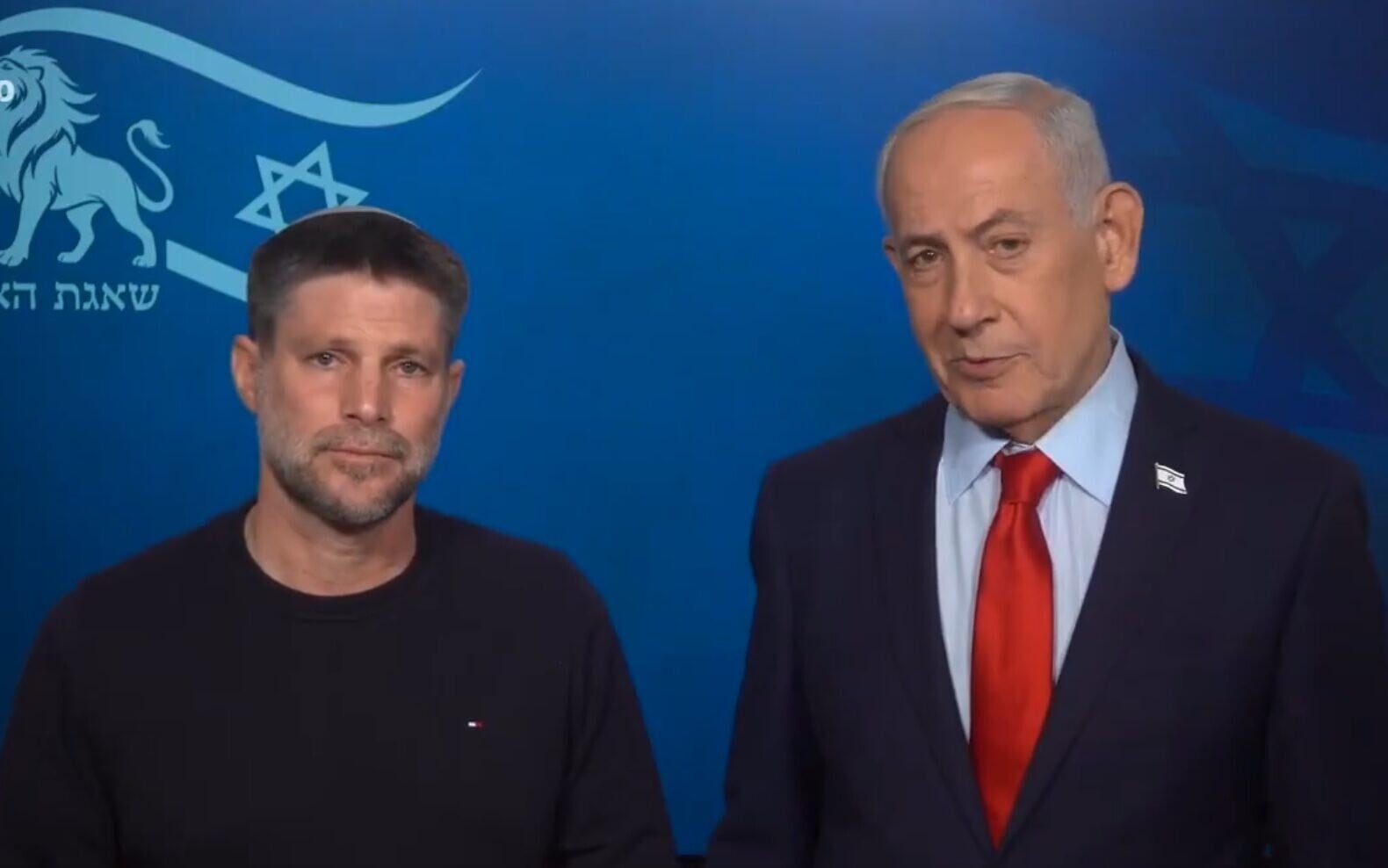
Prime Minister Benjamin Netanyahu, right, and Finance Minister Bezalel Smotrich issue a joint statement from Jerusalem, March 10, 2026. (Screenshot/GPO)
He also hinted that he was working to get people to defect from Netanyahu’s bloc, saying, “If I were the other side, I would be very worried about my flanks — surprises are expected, I’m at work.”
The former premier also said his views “are the same and even deeper.”
“I’m against giving away an inch of land. I’m against a Palestinian state,” said Bennett. “But I’m here to say that there is also a unifying right wing; there is a liberal right wing.”
Netanyahu’s government, Bennett claimed on Channel 12, was putting politics ahead of national security by failing to draft some 100,000 eligible Haredi men, even amid a personnel crunch in the IDF.

Haredi men protest against the military draft in Jerusalem, January 11, 2026. (Chaim Goldberg/Flash90)
“We’ve established a Haredi state here,” said Bennett, calling for the further integration of the ultra-Orthodox community into Israeli society and for government benefits to be conditioned on employment and service: “Whoever doesn’t work doesn’t get a penny. Whoever doesn’t serve doesn’t get a penny.”
“There’s a political echelon that keeps the IDF from winning,” Bennett said, arguing that the current leadership “does not know how to win anywhere — not in Gaza nor in Lebanon, or Iran.”
“The IDF is 20,000 soldiers short. There are 100,000 young Haredim of military age in good health today, and if they only recruited a fifth of them, there would be no problem. But the government puts politics above everything, and that’s why we’ve reached this point,” he said.
You appreciate our wartime journalism

You clearly find our careful reporting of the Iran war valuable, at a time when facts are often distorted and news coverage often lacks context.
Your support is essential to continue our work. We want to continue delivering the professional journalism you value, even as the demands on our newsroom have grown dramatically during this ongoing conflict.
So today, please consider joining our reader support group, The Times of Israel Community. For as little as $6 a month you’ll become our partners while enjoying The Times of Israel AD-FREE, as well as accessing exclusive content available only to Times of Israel Community members.
Thank you,
David Horovitz, Founding Editor of The Times of Israel