
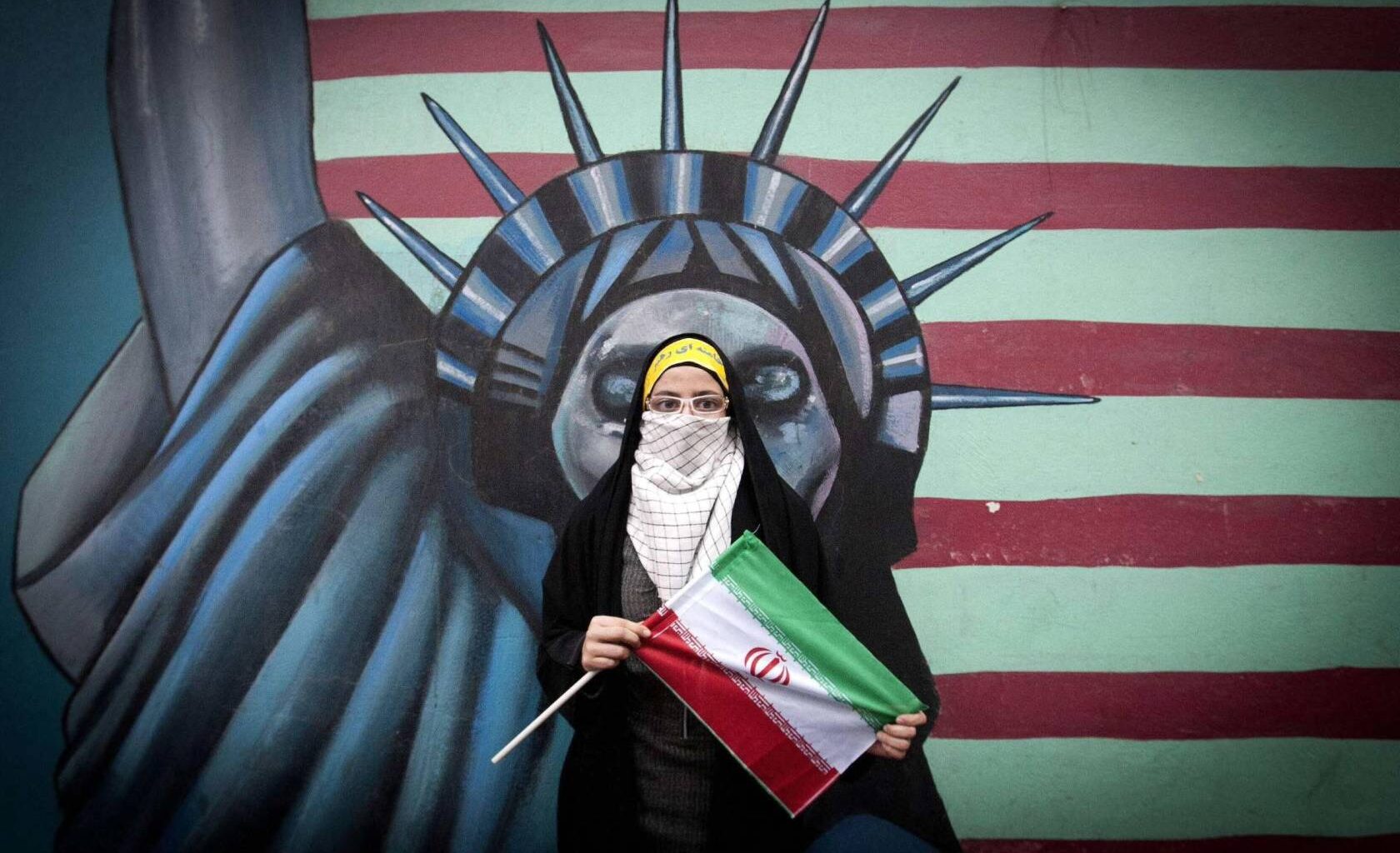
In 2020, Palestinian historian Rashid Khalidi published The Hundred Years’ War on Palestine: A History of Settler Colonial Conquest and Resistance, 1917-2017, arguing that Zionist aspirations to rule historic Palestine served as an instrument of British and American imperialism and amounted to a century-long war on the Palestinian people. As of 2026, the Israeli-Palestinian conflict continues. But the United States and Israel are also engaged in another war that has already spanned nearly half a century and may yet run for decades to come.
It may be easy to view the US-Israel war against Iran as a sudden watershed moment, but, in reality, this conflict is merely the latest chapter in a struggle that has unfolded for nearly 50 years. The sectarian, ideological and geopolitical currents driving the tensions were set in motion 47 years ago. Like the French and Russian revolutions before it, the 1979 Iranian Revolution – described by French historian and philosopher Michel Foucault as ‘the most modern and most insane’ – irrevocably altered global dynamics and challenged assumptions about modernity. Today’s drone wars and its ripple effects are not the final act but the latest turn in a figurative ‘Fifty Years War’, whose underlying political and ideological contests will continue long after the missiles stop flying. Indeed, the current crisis risks exacerbating pre-existing grievances and leaving them unresolved; it threatens to turn the US-Iran antagonism into a century-long confrontation akin to the conflict in Palestine that began with the Balfour Declaration in 1917.
The overthrow of Iran’s Shah Mohammad Reza Pahlavi in February 1979 and the emergence of the Islamic Republic under Ayatollah Ruhollah Khomeini caused a seismic shift in regional politics and ideology, placing the current US-Israel war against Iran within a longer continuum. The consequences unfolded quickly. In March 1979, Egypt’s peace treaty with Israel removed Cairo as the region’s leading frontline power in the conflict with Tel Aviv, creating a vacuum that Iraq under Saddam Hussein would seek to fill. By November, Iranian students seized the US embassy in Tehran, ushering in decades of hostility with Washington, while militants took control of the Grand Mosque in Mecca, challenging Saudi authority and foreshadowing the rise of jihadist movements. Even the Soviet invasion of Afghanistan later that year, although not directly tied to Iran, contributed to the volatility. Taken together, these shocks forged the political and military landscape that underpins the 2026 war.
Against this backdrop, Iraq became the first major theatre of a protracted regional struggle. In 1979, a newly ascendant Saddam Hussein, who became president of Iraq that year, viewed both Israel and revolutionary Iran as impediments to his ambition for pan-Arab leadership. In 1980, he launched a full-scale invasion of Iran, expecting a swift victory, but the conflict instead dragged into an eight-year war that devastated the economies and societies of both sides while exacerbating sectarian divides. Iraq’s use of chemical weapons, including chlorine and nerve agents, met with little response from the global community, giving Tehran an understandable rationale to pursue a deterrent to prevent such attacks in the future. The immense costs of what became the longest conventional war of the 20th century left Iraq heavily indebted, contributing to Saddam’s decision to invade Kuwait in 1990.
More significantly, these wars acted as accelerants for ideological currents unleashed by Iran’s revolutionary upheaval. As former Iraqi deputy prime minister and historian Dr Ali Allawi notes, ‘Two dynamics are critical to understanding the aftermath of 1979. One is the rise of state-sponsored Sunni extremism, particularly by Saudi Arabia, as a counterweight to what was seen as a Shia Islamist threat. The other is the framing of the Iranian Revolution as the antithesis of western liberal, rights-based, democratic identity.’
Following the revolution in Iran, Sunni Islamist movements across the Arab world, from the Muslim Brotherhood to militant jihadist groups, increasingly sought to challenge entrenched regimes. The Islamic Republic itself offered a powerful model of Shia political Islam that unsettled the legitimacy of Saudi Arabia’s monarchy and heightened regional anxieties.
In November 1979, armed followers of Juhayman al-Otaybi seized the Grand Mosque in Mecca, directly contesting the Saudi monarchy’s religious legitimacy and marking the first major domestic revolt since the Ikhwan rebellion of the 1920s. These shocks prompted Riyadh to double down on a more austere form of Wahhabism, which it would also export beyond its borders. A young Osama bin Laden witnessed the Saudi military’s use of tanks and artillery, and the intervention of French commandos, to retake Islam’s holiest site, an experience that would inform his later opposition to the House of Saud, especially after American forces defended the Kingdom in 1990. The subsequent Afghan-Soviet war turned Pakistan and Afghanistan into incubators for these movements, providing training, safe havens and experience, with Saudi-funded madrasas producing a generation of fighters who would later form the Taliban. Over time, this militant ecosystem evolved into al-Qaeda and eventually the Islamic State (ISIS), leaving an indelible imprint on the region and connecting the revolutionary currents of the late 20th century directly to the ongoing 2026 war.
One enduring legacy of 1979 was to ingrain a deep-seated fear of the ‘other’, which has guided decades of policy decisions by global powers, particularly the United States and its allies. In a non sequitur, George W. Bush administration’s response to the 9/11 attacks included Iraq and Iran in its ‘War on Terror’, labelling them part of an ‘Axis of Evil’. The 2003 invasion of Iraq and the overthrow of Saddam Hussein created the conditions for al-Qaeda in Iraq to form in the ensuing chaos, eventually breaking away to become ISIS in 2014, a group that took years to defeat militarily and still poses a threat.
That shadow is now on full display in the 2026 US-Israel war with Iran, where US President Donald Trump assumed he could conduct regime change through targeted aerial strikes alone and without a ground invasion. On 28 February, coordinated attacks hit multiple strategic sites in and around Tehran, killing Iran’s supreme leader Ayatollah Ali Khamenei, successor to Khomeini. Iran responded with missile and drone strikes against US and Israeli positions across the Gulf. The conflict has resulted in widespread casualties, disrupted the Strait of Hormuz and rattled global energy markets, yet its implications extend far beyond the battlefield. From revolutionary upheaval to transnational militancy, the forces unleashed in 1979 continue to define the contours of modern war.
This is, of course, not the first time the US has confronted Iran directly. In 1980, Americans did deploy ‘boots on the ground’ in a failed attempt to rescue the embassy hostages, only for American helicopters and an aircraft to crash in a salt flat south of Tehran. Later, during the Tanker War of 1987-88, US naval forces engaged Iran in the Gulf, claiming to protect shipping and keep the Straits of Hormuz open, a goal that has eluded Trump in 2026. If the conflict has lasted this long already, America’s war with the Islamic Republic could span another half-century. Indeed, the current round of fighting appears to be inconclusive, a far cry from the decisive victories Trump thought he could achieve in four weeks.
The year 1979, much like the Arab Spring of 2011, stands as a hallmark for the region. It transformed the regional power configuration and set in motion forces whose reverberations are still felt globally, nearly half a century later. What the revolution ultimately challenged was not only political authority but the very assumption that modern statecraft in the region would follow secular, western-aligned models. Instead, it asserted that religion, identity and revolutionary ideology could form the basis of governance, reshaping how states perceive legitimacy, project power and confront both domestic and external threats. To fully grasp the stakes of the ongoing US-Israel war on Iran, and to chart any path towards a durable resolution, it is important to understand this trajectory.
Yet history is not predetermined. After 47 years of conflict, violence and accumulated trauma, resolution appears unlikely without a fundamental shift in prevailing American narratives about Iran. Absent such a shift, this ‘Fifty Years War’ may continue well into the 21st century.