

The large contingent of warships and aircraft that Donald Trump ordered to the Middle East in the weeks leading up to the war against Iran suggested that the U.S. president had an air offensive in mind. The reinforcement of thousands of soldiers now en route or recently mobilized foreshadows a new phase in the conflict: the deployment of troops on Iranian soil. While the Republican president is pressuring Tehran to accept an agreement immediately, the White House is promising, otherwise, to “unleash hell.”
On the day before the deadline Trump gave the Iranian regime to accept his terms, and two days before the war entered its fifth week, the president decided to extend that deadline to April 6, “As per Iranian Government request,” he announced on Truth, his social media platform. “I am pausing the period of Energy Plant destruction by 10 Days to Monday, April 6, 2026, at 8 P.M., Eastern Time. Talks are ongoing and, despite erroneous statements to the contrary by the Fake News Media, and others, they are going very well.”
But despite this latest gesture, on Thursday there were few signs of rapprochement, especially after Israel killed Alireza Tangsiri, head of the Revolutionary Guard’s naval forces. Both sides maintain their maximalist and opposing positions. Tehran, seeing no reason to yield to Washington, demands reparations payments, continued control of the strategic — and currently blockaded — Strait of Hormuz, and the withdrawal of U.S. troops. The Republican administration demands the opening of Hormuz, Iran’s renunciation of nuclear weapons, and the withdrawal of its support for radical Islamist groups in the Middle East.
Both sides are promising a fiercer fight in this new phase if ongoing diplomatic talks fail: Iran is fortifying Kharg Island, considered a likely target for U.S. forces, according to CNN. The White House is threatening an attack against its adversary “greater than any it has ever suffered.” The problem, in its case, is that it has already launched one: as the administration likes to point out, it has killed a good portion of the pre-war leadership, sunk the Iranian fleet, and decimated its arsenals. Its capacity to exert pressure is thus diminished.
If he cannot convince Tehran — and a sudden withdrawal that would leave things as they were, or worse, is out of the question — Trump’s only remaining option is escalation. He must do something he promised during his campaign he would never do, while claiming his electoral rivals would: deploy troops on the ground in an overseas war.
Following a closed-door briefing Tuesday before the House Armed Services Committee, U.S. lawmakers appeared to have ruled out such an operation. Republican Representative Nancy Mace tweeted: “Just walked out of a House Armed Services briefing on Iran. Let me repeat: I will not support troops on the ground in Iran, even more so after this briefing.”
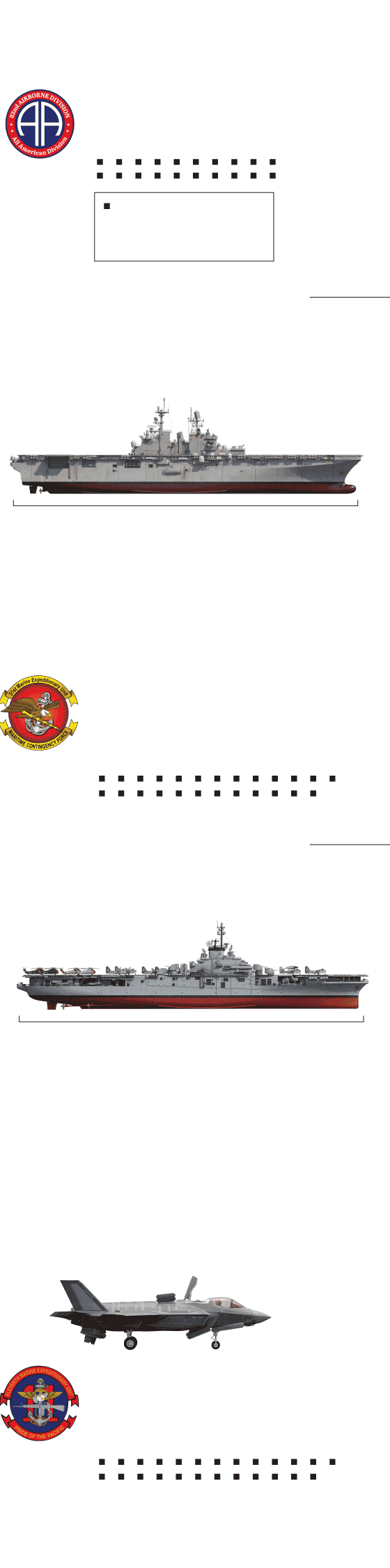
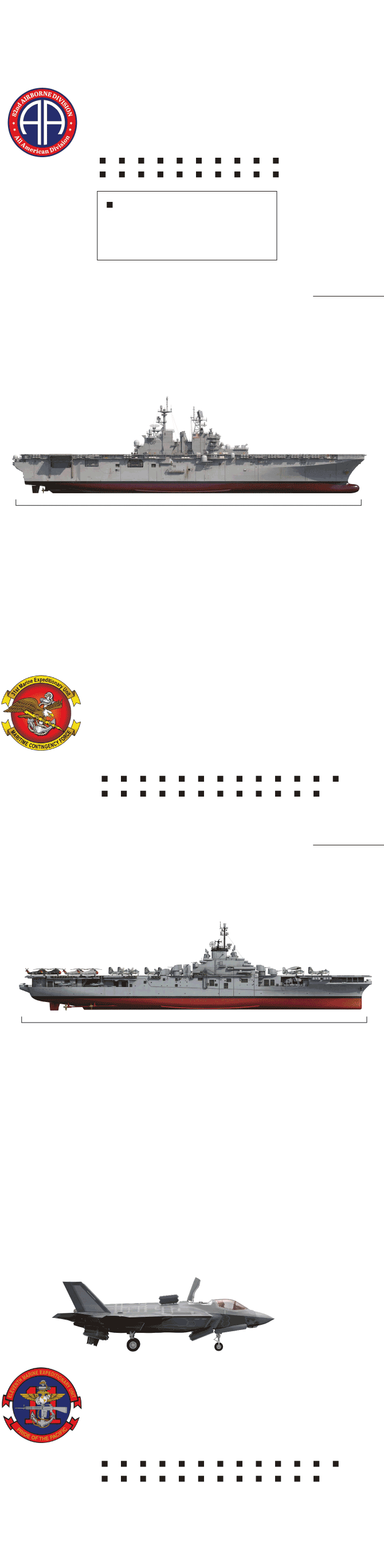
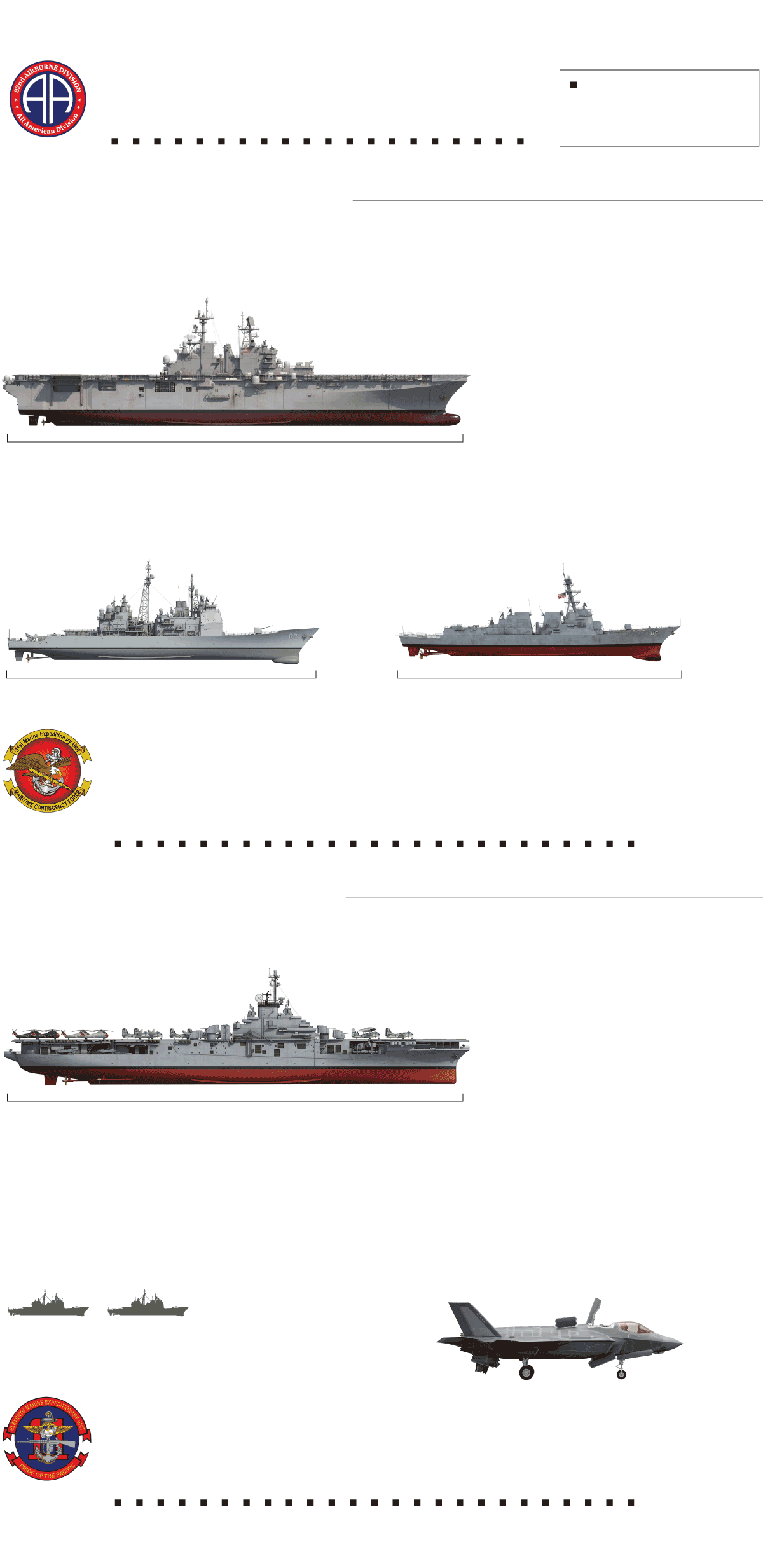
Central Command, responsible for U.S. forces in the Middle East, is about to receive significant reinforcements that offer it a whole range of options if Trump ultimately orders an escalation: a divisional command structure, elite paratroopers, amphibious assault ships — equipped with fighter jets among their arsenals — and some 5,000 Marines.
Reinforcement of 7,000 troops
and two amphibious assault groups
Each square represents
100 soldiers
TRIPOLI AMPHIBIOUS READY GROUP
Deployed from Diego Garcia Island
in the Indian Ocean
Displacement
Speed
Complement
Aircraft
45,700 tons
20 knots
1,000-1,200 Marines
20-30
31st Marine
Expeditionary Unit
BOXER AMPHIBIOUS READY GROUP
Deployed from San Diego (California)
Displacement
Speed
Complement
Aircraft
40,722 tons
24 knots
1,000 Marines
42
Both strike groups carry, among other aircraft, F-35B fighter jets
11th Marine
Expeditionary Unit
Source: NYT, Al Jazeera and in-house production
R. SILVA – D. GRASSO / EL PAÍS
Reinforcement of 7,000 troops
and two amphibious assault groups
Each square represents
100 soldiers
TRIPOLI AMPHIBIOUS READY GROUP
Deployed from Diego Garcia Island
in the Indian Ocean
Displacement
Speed
Complement
Aircraft
45,700 tons
20 knots
1,000-1,200 Marines
20-30
31st Marine
Expeditionary Unit
BOXER AMPHIBIOUS READY GROUP
Deployed from San Diego (California)
Displacement
Speed
Complement
Aircraft
40,722 tons
24 knots
1,000 Marines
42
Both strike groups carry, among other aircraft, F-35B fighter jets
11th Marine
Expeditionary Unit
Source: NYT, Al Jazeera and in-house production
R. SILVA – D. GRASSO / EL PAÍS
Reinforcement of 7,000 troops and two amphibious assault groups
Each square represents
100 soldiers
TRIPOLI AMPHIBIOUS READY GROUP
Deployed from Diego Garcia Island in the Indian Ocean
31st Marine
Expeditionary Unit
BOXER AMPHIBIOUS READY GROUP
Deployed from San Diego (California)
The USS Boxer is accompanied by two support vessels
Both strike groups carry, among other aircraft, F-35B fighter jets
11th Marine
Expeditionary Unit
R. SILVA – D. GRASSO / EL PAÍS
Source: The New York Times, Al Jazeera and in-house production
On Tuesday, the Pentagon sent mobilization orders to the top commanders and some 2,000 soldiers of the highly decorated 82nd Airborne Division, famous for its participation in the Normandy landings in 1944, Vietnam, and, more recently, in the evacuation of Kabul airport in 2021. The mobilized brigade can reach any part of the world in just 18 hours.
Furthermore, a group of amphibious assault ships, ideal for landings, is expected to arrive in the waters under the responsibility of Central Command in the Middle East starting this Friday. The contingent, which refueled on March 23 at the British-American base on Diego Garcia in the Indian Ocean, carries approximately 2,500 soldiers from the 31st Marine Expeditionary Unit. These Marine units are renowned for their versatility and have participated in both humanitarian missions — such as after the 2010 Haiti earthquake — and land deployments. The 31st participated in Operation Desert Fox, patrolling Kuwait in 1998.
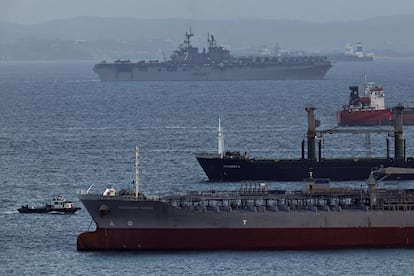 The USS ‘Tripoli’ at Diego Garcia island in the Indian Ocean.Edgar Su (REUTERS)
“An expeditionary unit (MEU) is like the entire Marine Corps compressed into a group of 2,500 soldiers. It includes everything from F-35 fighter jets, among the most advanced and technically sophisticated in existence, to a single soldier armed with his rifle and bayonet. An MEU provides a whole range of options to the commander leading the combat force,” explained retired Lieutenant General Sam Mundy in a videoconference this Monday.
Leading this group, based in Japan, is the USS Tripoli, which, at 261 meters long, can act as a mini-aircraft carrier for F-35B fighter jets. The ship is escorted by the destroyers Robert Smalls and Rafael Peralta, both equipped with guided attack missiles.
This contingent will be joined in the coming weeks by a similar one, also consisting of a three-ship amphibious assault group with a combined force of approximately 2,000 sailors, and some 2,500 troops from the 11th Marine Expeditionary Force, which was deployed to Iraq’s Najaf province during the Iraq War. Led by the assault ship USS Boxer, which is also capable of transporting F-35Bs and helicopters, this contingent set sail this week from its base in San Diego, California, and, given that it has to cover a distance of about 22,000 kilometers (13,670 miles), is not expected to arrive until mid-April.
In total, the 7,000 additional soldiers and 2,000 sailors already en route are nowhere near enough for a ground operation in Iran similar to the 2003 invasion of Iraq, a country with a third of Iran’s territory and a much less challenging terrain. According to The Wall Street Journal, the Pentagon is considering sending another 10,000 infantry soldiers and armored vehicles soon. But that wouldn’t be enough either. The George W. Bush administration sent 160,000 troops to Iraq.
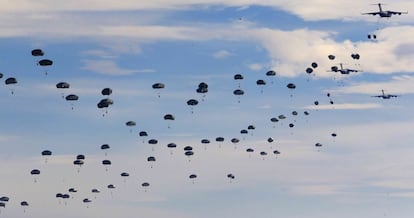 Paratroopers from the 82nd Airborne Division jump from C-17 Globemasters at the end of the Trident Juncture 2015 NATO exercise.Bernardo Pérez
The specializations and numbers of the reinforcements suggest a possible attempt to seize some of the Iranian islands in the Strait of Hormuz in order to force the passage open, or perhaps Kharg Island, where the United States attacked military targets, including its airfield, two weeks ago. That island, 26 kilometers (16 miles) off the Iranian mainland coast, is the heart of the country’s oil industry. Another possibility would be a limited incursion to try to recover Iranian uranium, buried many meters underground beneath the rubble of the nuclear facilities that U.S. forces attacked last June in Operation Midnight Hammer.
In the case of Kharg, “the size of the target is proportional to the force being prepared,” says Lieutenant General Mundy, former commander of the Marine Corps at Central Command. But, he points out, one must also consider “the possibility that some military capability may still remain” on the island after the attacks of a few days ago. Also, “what are the sympathies of the workers there on the island — will they pose a problem?” And “how long will it last? [The soldiers] will need fuel, water, food, perhaps ammunition. And those are finite resources.”
To date, Central Command has approximately 50,000 personnel deployed at bases in the Middle East and on the fleet the Pentagon has deployed for this war. A carrier strike group led by the aircraft carrier Abraham Lincoln is in the Gulf region. A second aircraft carrier, the Gerald R. Ford, the most modern in the U.S. fleet, has had to withdraw to the Suda naval base in the eastern Mediterranean for repairs after a fire broke out on board.