
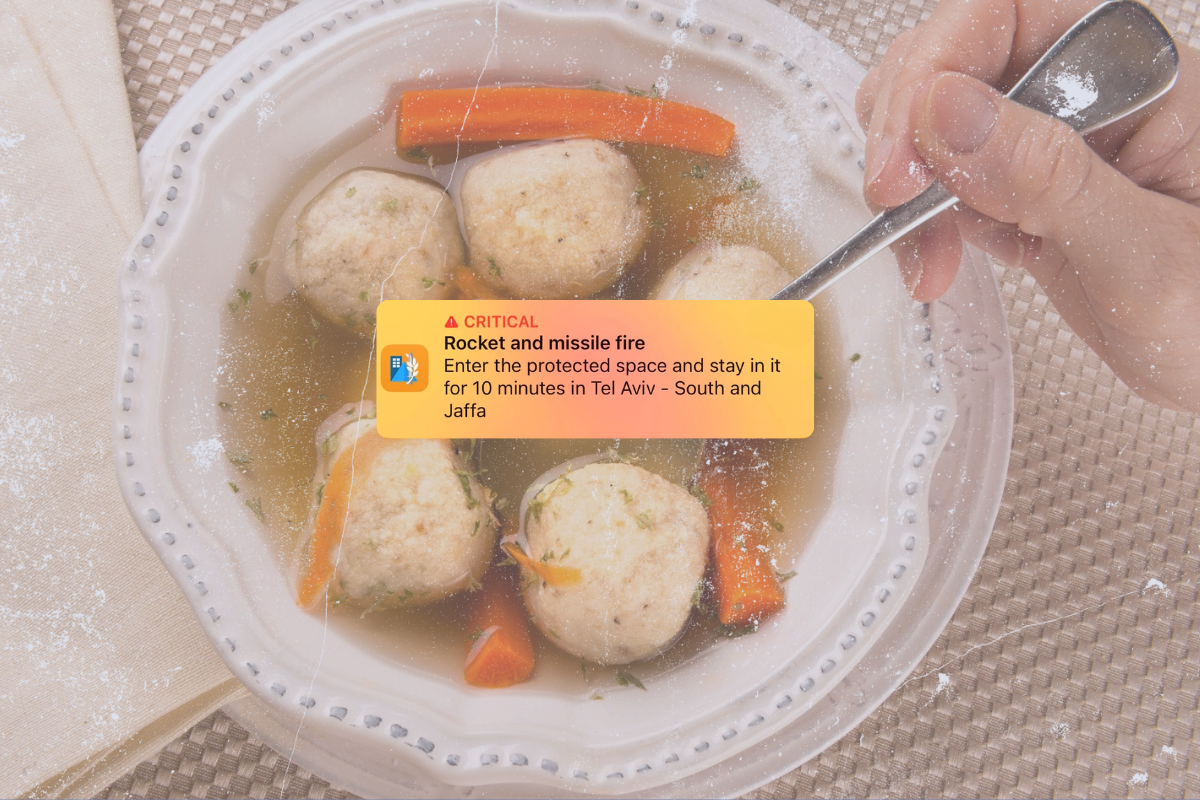
One shelf below the two dozen recyclable poke bowls purchased for our canceled Purim party, and two shelves below my husband’s and my neatly folded, never-worn Hawaiian costumes for the same occasion, four boxes of matzah sit waiting for Passover. Whether they will be eaten at the seder table or in our safe room is still to be determined.
With Purim beginning just three days after the war between Israel and Iran, the holiday was celebrated almost COVID-style, with little fanfare. The prohibition against large gatherings meant the Book of Esther was read over Zoom instead of at synagogue, and the poke bowls would need to be saved for quieter times.
We cannot predict what tomorrow will look like, let alone whether we will be able to celebrate Passover in the traditional sense. Yet we continue to plan for tomorrow, and the day after, trying our damndest to live in a state of unknowing.
Amid perpetual tension, fear and uncertainty, life goes on because it must. We continue with our schedules as much as possible, albeit zombie-like and sleep-deprived. Depending on our geographic locations, we might be woken only once overnight, or multiple times — first by a blaring phone alert warning of an incoming rocket, and then, more often than not, by a siren that jolts us out of bed as we grasp for the light switch, grab our phones and run to wake cocooned teenagers, reluctant to leave their beds for yet another trip to the fluorescent-lit safe room.
Work continues, even as schools and daycares remain closed indefinitely. Meetings, interrupted by sirens, resume after the all-clear as if nothing happened, because deadlines must be met and reports are due.
People run errands and walk their dogs. Pickleball and tennis games continue as scheduled, the courts just feet away from public bomb shelters. Parents and children stroll leisurely along the town’s main street, stopping for pizza, or ice cream, or both — sometimes for the third time in a week, because the kids need to get out.
A group of senior gentlemen play backgammon and puff cigarettes, a block away from the teeming playground. Shoppers negotiate narrow grocery store aisles as they cross off their Passover lists, and get-togethers are arranged with friends and family as everyone endeavors to resume routines and normalcy at a time when nothing is normal.
On an hour-long train ride to my parents in Israel’s center, the conductor announces that due to an incoming missile, he will speed up the train to reach the next stop sooner so everyone can seek shelter.
We disembark and cram into a safe room along the tracks, standing silently shoulder to shoulder, most scrolling on our phones — some mindlessly, others intentionally scanning the news. Ten minutes later, we receive the all-clear, reboard the train, and continue our respective journeys, arriving at our destinations behind schedule.
I meet my parents at a local mall filled with hundreds of people of all ages and religions. Jews, Muslims and Christians order ice cream, browse shoe stores, reminisce over coffee and play arcade games. We arrive in time for brunch and enter a popular café. The waitress approaches, but even before she can take our orders, our phones beep in unison, alerting us to another incoming rocket.
Quietly and orderly, the crowds descend the escalators to the second-level parking garage. Some escort seniors, others carry infants and parents calmly lead small children by the hand. I marvel at everyone’s composure as I record the scene for friends outside Israel.
This is the life our children are growing up in — the only life they know. It is this very life we are determined to change, not only for them, but for their children.
For now, we can only dream that we will make it through our hours-long seder siren-free, where the only interruptions involve spilled wine and salt water, and the guest who should have switched to grape juice after the second cup. An evening where our family sits carefree, joining in song, sharing laughs and savoring the matzah ball soup that somehow always tastes better on Passover, while reflecting on how truly fortunate we are to live in Israel, even during this terribly uncertain and traumatic time.
This year, “next year in Jerusalem” will be accompanied by prayers for next year in peace. Next year with friends who feel comfortable traveling to visit us up North.
Next year with family members whose flights aren’t cancelled. Next year, when the words “in every generation they rise up to destroy us” will feel like memory rather than lived experience.
Back at the mall, the all-clear text flashes on our phones, and an employee in a yellow vest announces over a loudspeaker that the incident has ended. Slowly and patiently, we wait our turn to return to the second floor.
Once seated, I finally order my long-awaited shakshuka. It tastes just as it should – like home.
Keep Kveller Kvelling. Your support ensures that anyone seeking laughter, community and Jewish joy can find it here, without needing to cross the Red Sea (or a paywall).
Aviva Engel
Aviva Engel is an award-winning freelance journalist, proudly living in Zichron Yaakov, Israel.