
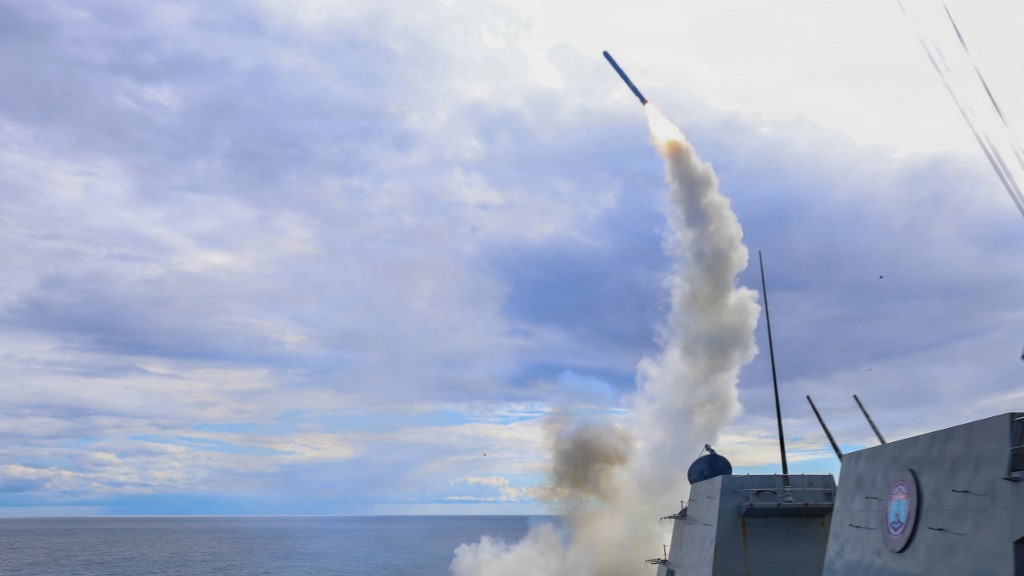
The US and Israel are “burning through” their supply of Tomahawk and interceptor missiles in their war on Iran, alarming some in the Pentagon.
According to officials speaking to the Washington Post, the US has fired more than 850 Tomahawk cruise missiles in four weeks of its war with Iran.
Only a few hundred of the cruise missiles are manufactured each year and while the Pentagon does not publicly disclose its numbers, one official told the news outlet the number of Tomahawks left in the Middle East is “alarmingly low”.
Tomahawks can travel more than 1,000 miles, which allows the US military to hit targets in Iran without sending pilots into a hostile airspace.
However, the shrinking supply of Tomahawks is likely to increase speculation about a proposed ground operation into Iran, after the air campaign and killing of senior leaders failed to dislodge the Islamic Republic.
New MEE newsletter: Jerusalem Dispatch
Sign up to get the latest insights and analysis on
Israel-Palestine, alongside Turkey Unpacked and other MEE newsletters
Stocks running low
The warning comes after repeated reports on the running down of US-Israeli interceptor missile stocks and other resources in its almost month-long war with Iran.
According to figures released by British security think tank RUSI, US-Israeli forces expended 11,294 munitions in the first 16 days of the conflict, at a cost of approximately $26bn.
‘It will likely take at least five years to replenish the 500-plus Tomahawk missiles already fired in the war’
– RUSI report
In a report released on Tuesday, the think tank warned that long-range interceptors and “precision strike weapons” were “nearing exhaustion”.
“It will likely take at least five years to replenish the 500-plus Tomahawk missiles already fired in the war,” it said.
One official told the Washington Post that Secretary of War Pete Hegseth had personally urged defence firms to speed delivery of key weapons.
Based on figures provided by the Iranian Red Crescent, more than 1,900 people have been killed and at least 20,000 wounded in Iran since the start of US and Israeli attacks in February.
The attacks, which early on saw the killing of Supreme Leader Ali Khamenei, have so far failed to deliver a killing blow to the Islamic Republic while Iran’s retaliation has caused chaos in the Gulf.
In recent days, US President Donald Trump has said his government was in talks with Tehran over the war and on Thursday announced a further pause in plans to strike the country’s energy infrastructure.
Though he said talks, mediated through Pakistan, were going “very well”, Tehran denied any talks were taking place and rejected his 15-point proposal to end the war.