
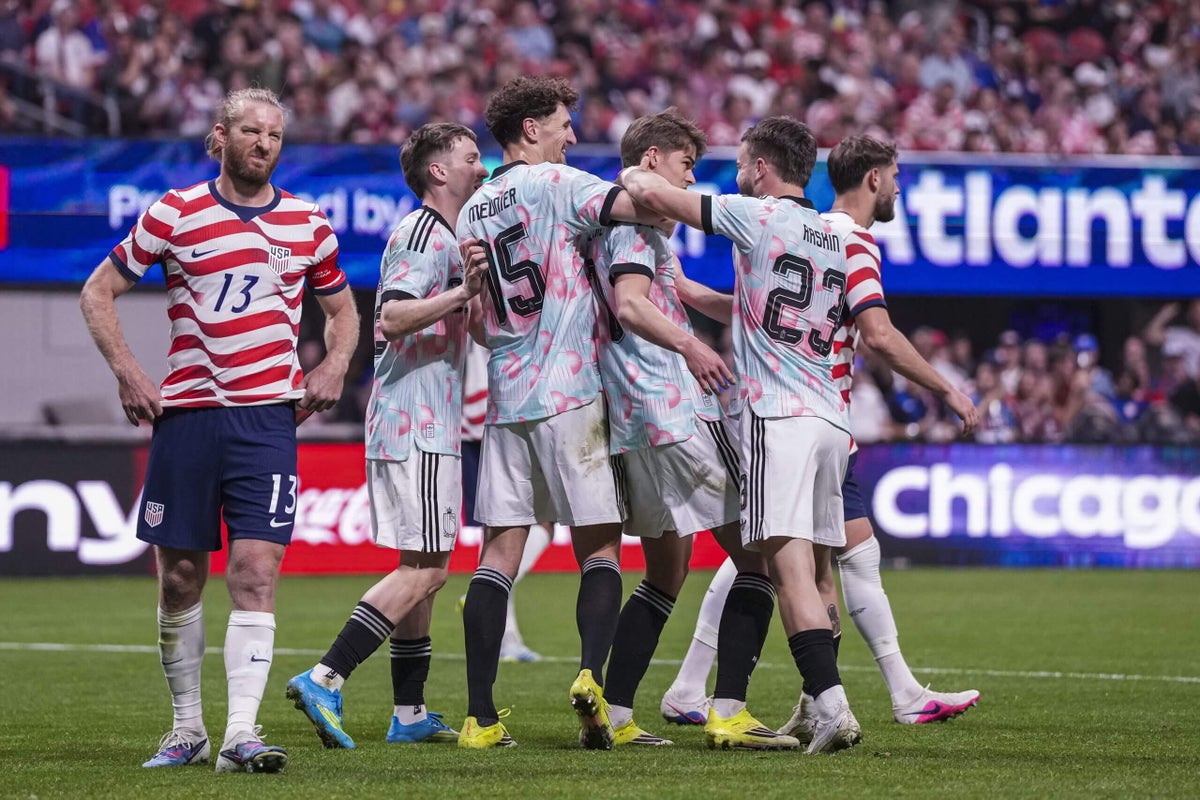
ATLANTA — Sometimes getting smacked in the face with reality is exactly what you need.
What happened last fall was great for this U.S. men’s national team. Wins are nice. A victorious run was important and valuable to build confidence and belief. There were real lessons and legitimate positives to take out of defeating Japan, Australia, Paraguay and Uruguay. And it is the right message from U.S. coach Mauricio Pochettino to encourage this team to “be realistic and do the impossible.”
But the U.S. cannot afford to forget the first part of that tag line. “Be realistic.” Saturday’s 5-2 loss to Belgium was as clear a reminder as a team can get.
“I think it’s a good reality check for us,” Pochettino said.
The very best U.S. teams play with an underdog mentality. It doesn’t mean you have to concede dominance in the game. It doesn’t mean you are required to play in a shell and defend. What it means is that, against the best teams in the world, it requires 100 percent output from start to finish. The U.S. isn’t good enough to relax against the elite. It can’t coast to the latter stage of the World Cup that Pochettino dreams of and has stated as a target.
Even a team hyped as the “golden generation” of American soccer cannot forget American soccer’s place in the global pecking order. It cannot afford to drop its intensity — not against the strongest of opponents. It has to match and surpass the work of those opponents in order to get the results it’s seeking.
“Those are the habits that we talk (about), the habit is to be intense, intense, intense in every single action, and to put all this intensity together in the way that it demands (when you) play in a World Cup,” Pochettino said. “I think today was fantastic, because when we talk about, ‘This is not enough.’ It’s not enough.”
This is not an impossible task.
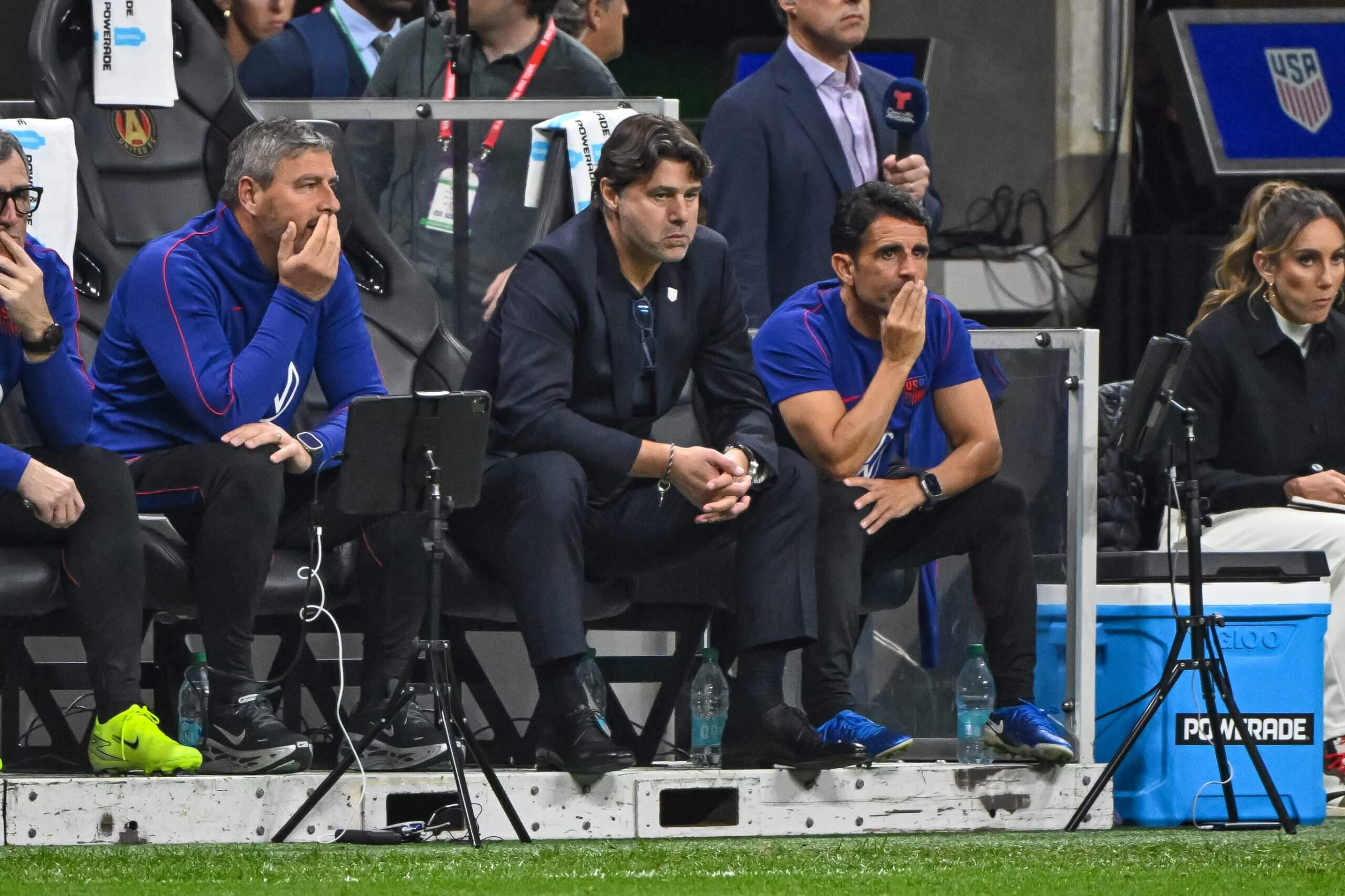
USMNT manager Mauricio Pochettino had plenty of reason to sport a long face Saturday vs. Belgium (John Adams / Icon Sportswire / Getty Images)
Pochettino was quick to point out that he didn’t see the 5-2 margin as entirely deserved. That may be fair. The U.S. was good for much of the first half, playing some of their best soccer under Pochettino in stretches. They looked athletic, confident and skillful. If the U.S. was more efficient in the final third, maybe the result would have turned differently.
But it was all of those things because it had more energy than Belgium. As the Red Devils started to creep back into the game, they took the inch the U.S. gave them and shoved their foot in the door to tie things at 1-1 just before the half.
In the second half, Belgium came out with more energy. The visitors’ quality simply overwhelmed the U.S.
“We’re going to have to beat teams like this if we want to have a chance to go far in the tournament, there’s no doubt,” Christian Pulisic said. “So that’s why we want to have these good tests. And it wasn’t our best today. But like I said for 60 minutes of a game, it felt like we were in it. And then just a couple things happen, and that’s it.”
The U.S. has to avoid that sort of dropoff if it is going to have a successful World Cup. Winning the intensity battle is a prerequisite to summer progress.
Its best players will set that tone: Pulisic, Weston McKennie, Tyler Adams, Antonee Robinson and Tim Weah. But it can’t be just some. As Pochettino said after the game, it needs to be an identity that permeates from the first name on the roster to the 26th.
“We cannot arrive (at the World Cup) with the wrong ideas, that, ‘We are so good,’ ‘We are so handsome,’ ‘We are so well dressed,’ and ‘We are Americans,’” he said. “If we want to win the World Cup, if we want to go to the next stage in the group, and we want to beat Paraguay, and we want to beat these type of (teams), do you think that they are not going to fight?
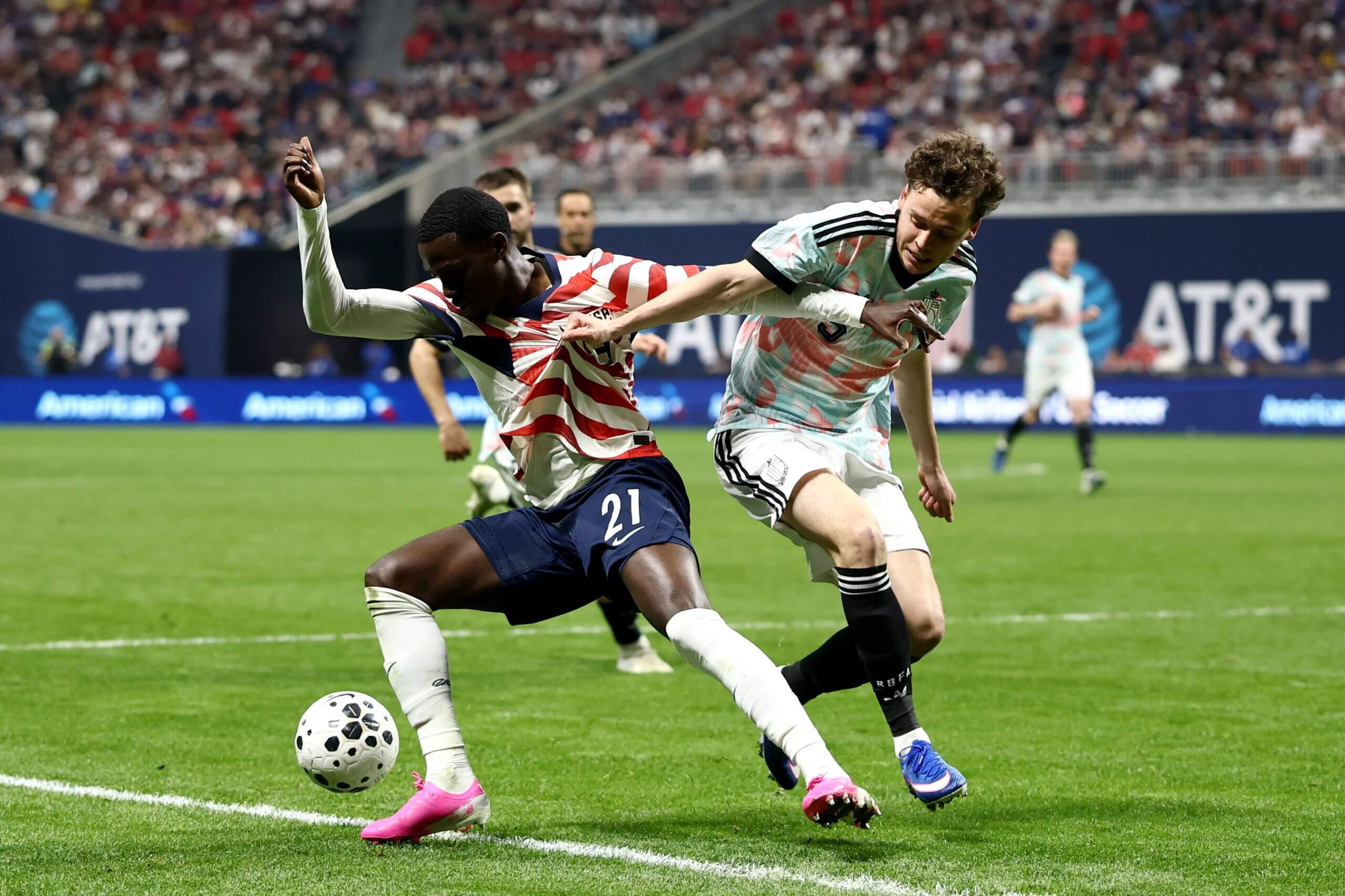
Tim Weah (left) battling against Belgium. (Jared C. Tilton / Getty Images)
“Today I was listening to some comments from different games, and always after the game, when the team wins it’s because we fight, we won everything, we were intense. Yes,” Pochettino said.
“When we drop in that intensity, we saw today (what happens). If we keep our intensity… But that is to create (the team’s new) reality. And for that, we need to have 26 players that believe in that. That have the capacity to be intense in every single action.”
This U.S. team had that capacity: in 2022 in Qatar against England. It is very much in the DNA of this group. It’s always been at the base of what the best American teams have.
Amid the hope and hype, the U.S. can’t lose sight of the importance of that identity. “We were so happy against Uruguay or against Paraguay,” Pochettino said. “Now you need to feel, sometimes, the pain. It’s good. I think for me, we need to learn from this type of result.”
Saturday was a warning. Tuesday, against another world-class team in Portugal, is the first chance to show the U.S. can take its lesson, turn around and set things right.
It’s why a 5-2 loss to Belgium in March, unpleasant as it was, could end up being a good thing come June.