
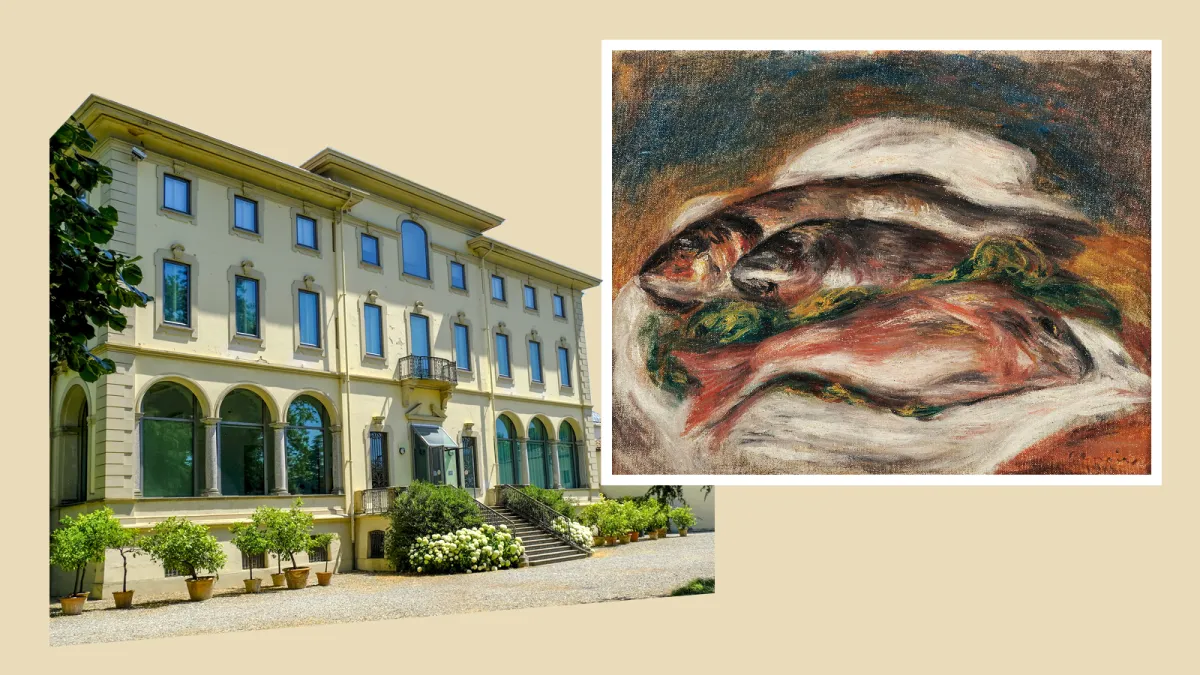
When thieves broke into one of Italy’s most important private art collections, making off with three valuable impressionist paintings by Renoir, Cézanne and Matisse, their audacious heist quickly became the talk of the town.
The break-in at the Magnani-Rocca Foundation’s “Villa of the Masterpieces” near Parma occurred on the night of March 22 and was first reported on Sunday.
According to the state-funded RAI broadcaster, the robbers had made a “big win”. One specialist art magazine called the heist “sensational”. The stolen items, one local paper said, were a “golden trio”.
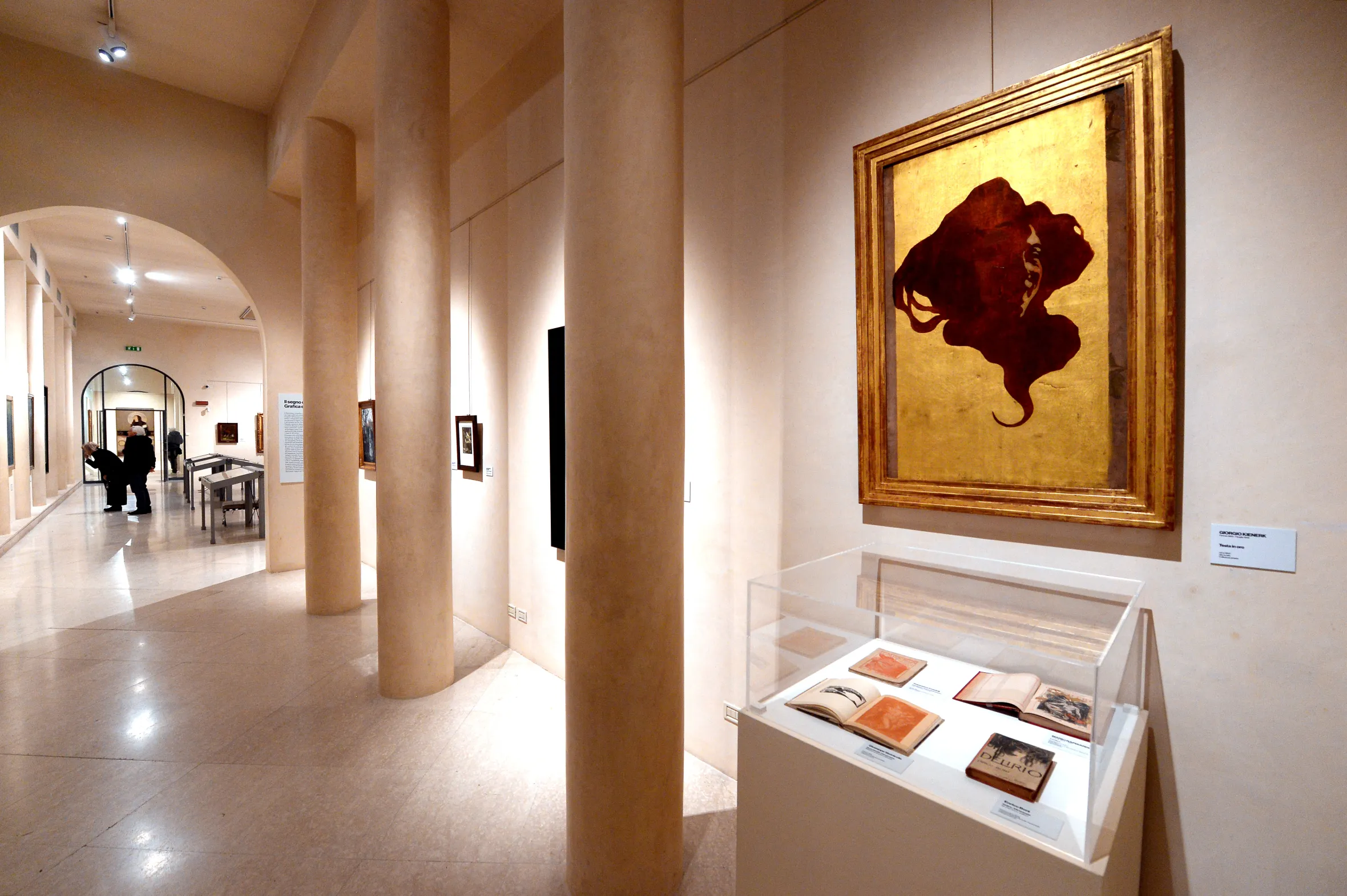 The foundation is hosting an exhibition entitled Symbolism in ItalyRoberto Serra/Iguana Press/Getty Images
For Italy’s most controversial art critic, however, the robbery was staged by a bunch of amateurs.
“They are not masterpieces and are small in size,” Vittorio Sgarbi, a former culture ministry undersecretary in both Silvio Berlusconi and Giorgia Meloni’s governments, told Italian daily La Stampa. “Similar items can also be easily resold on the black market.”
Sgarbi, known for his polarising blend of expletive-filled rants on television and his authoritative insights into Renaissance art, continued: “I get the sense this wasn’t a heist orchestrated by professionals.”
Police said masked burglars had forced open a door to the building, in the village of Mamiano di Traversetolo, which is surrounded by an extensive park, and stole three works valued at millions of euros. Four burglars were involved, according to investigators, who said the break-in had lasted a few minutes and may have been commissioned by an unscrupulous collector. A fourth painting was reportedly abandoned by the thieves after an alarm went off.
Italy’s specialist art police are studying video of the heist. Italian media initially reported the theft of Les Poissons (The Fish), a 1917 oil painting by Pierre-Auguste Renoir. Dating from the painter’s maturity, it was one of very few works by the impressionist master to be housed in a permanent Italian collection.
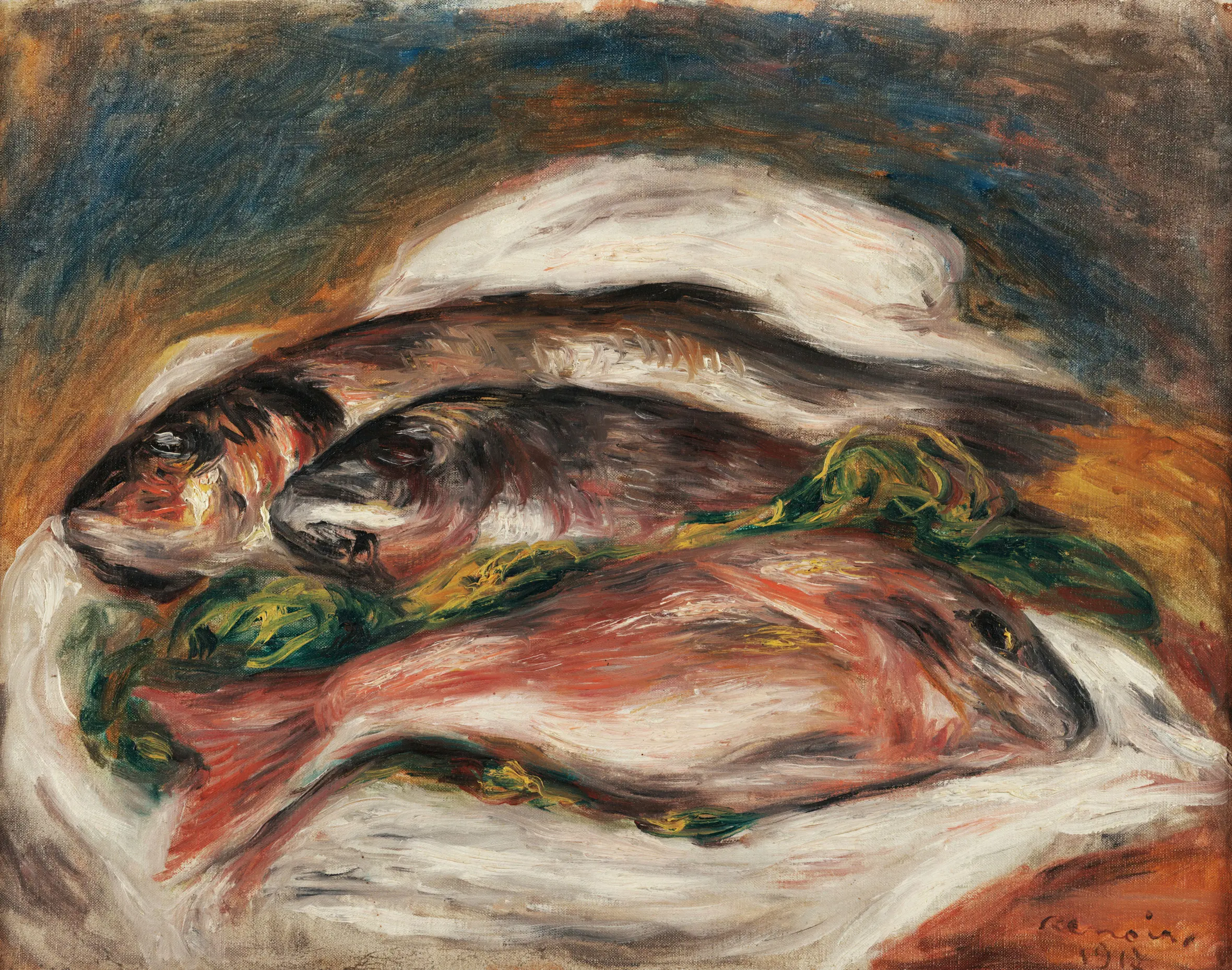 Les PoissonsALAMY
It subsequently emerged that two other valuable French works had been stolen from the villa: Odalisque sur la terrasse (Odalisque on the terrace), an aquatint on paper by Henri Matisse, from 1922, which reproduced an oil painting of the same subject from the previous year, and Tasse et plat de cerises (Cup and plate of cherries), a watercolour by Paul Cézanne from about 1890.
Sgarbi conceded that Matisse, Cézanne and Renoir were great artists. However, he pointed out, Odalisque sur la terrasse was a mere print, while Tasse et plat de cerises “feels unfinished” compared to his most important canvases. The Renoir, he concluded, “isn’t particularly striking”.
“Perhaps, in their haste, they chose those three paintings simply for convenience, overlooking works of greater value and failing to take anything else before the police, having noticed the theft, arrived on the scene,” Sgarbi hypothesised.
The robbers have been compared to the four masked individuals who famously broke into the Louvre in Paris, stealing a priceless array of jewellery belonging to France’s royals — including tiaras, necklaces and brooches — in just seven minutes.
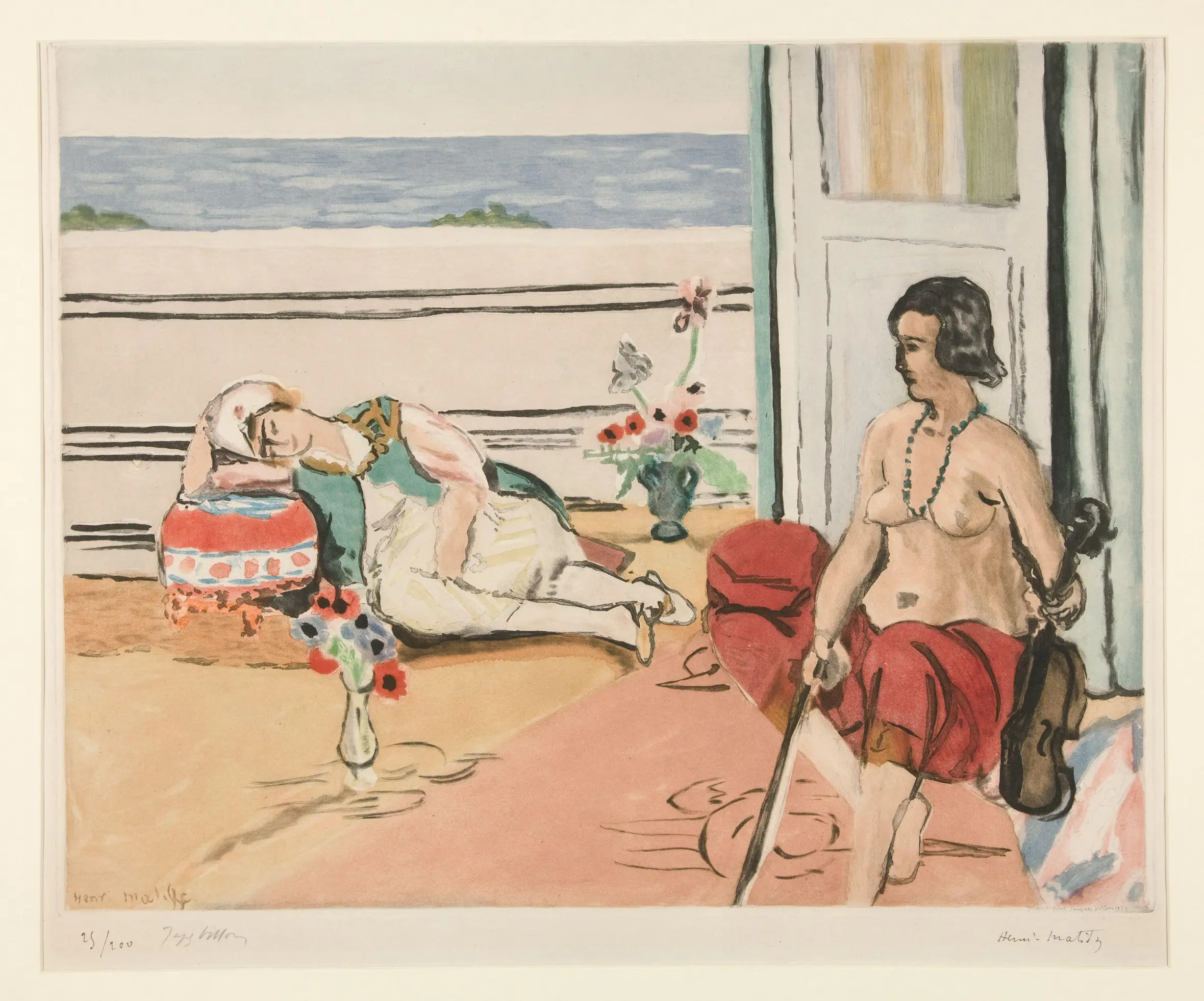 Odalisque sur la terrasseALAMY
James Ratcliffe, the director of the Art Loss Register, a UK-based database of stolen and lost art, suggested the Parma thieves would have a tougher time than their Parisian counterparts, because paintings cannot be melted down or sold as precious stones.
“Selling stolen artworks worth millions on the legal market is now nearly impossible,” Ratcliffe said, citing the organisation’s collaboration with 160 auction houses as well as dealers and art fairs.
Giovanni Damiani, an auctioneer at Arte Arcadia, a Rome auction house, said that the most valuable prize taken by the thieves was Cézanne’s watercolour of the cherries.
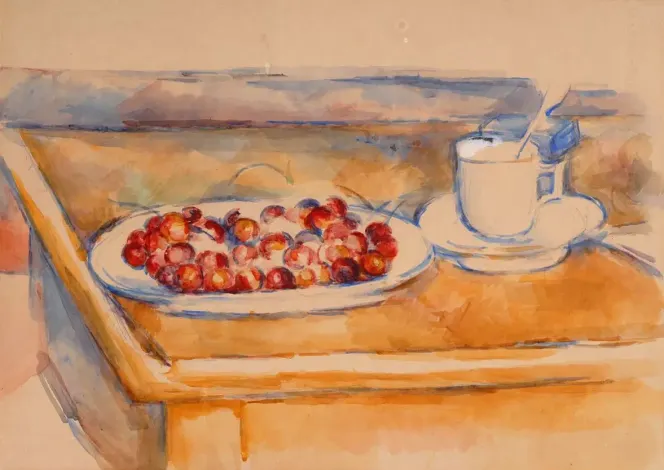 Tasse et plat de cerises
“It’s something very rare, very beautiful and certainly very valuable,” Damiani said. “I’d say it could be worth between €6 million and €10 million. Cherries are a much-loved subject.”
Renoir’s Les Poissons was a late work and could be worth only €500,000, while the Matisse print would fetch about €30,000, he suggested.
The Magnani-Rocca Foundation was established by Luigi Magnani in 1977 and contains important art dating from the 11th to the 20th century, featuring works by Titian, Dürer, Rubens, Van Dyck and Goya.
Magnani was a writer, collector and art critic, whose lifelong friendship with the Italian painter Giorgio Morandi helped him to accumulate an exceptional collection of about 50 paintings, drawings and prints illustrating the entire career of the Bolognese artist.
Les Poissons was on display next to another late work by Renoir, Paysage de Cagnes (Cagnes landscape), which was not stolen. Both were painted during the period when the artist moved to Cagnes-sur-Mer, in southern France, and was influenced by a long journey through Italy between 1881 and 1882 and by his struggles with the infirmities of old age.
Magnani’s collection of French artists, built up in the second half of the 20th century, is unique in Italy. “It’s this rarity, even before the question of price, that makes the theft a wound on the national heritage,” the local Gazzetta di Parma newspaper said.
Magnani began opening his collection to the public in 1983, the year before his death and it has been functioning as a museum since 1990. It is hosting an exhibition of 140 works on Symbolism in Italy, which runs until June 28.
As for the possibility of recovering the works, Sgarbi was characteristically downbeat. “The fact that they aren’t masterpieces might actually make them easier to sell.”