
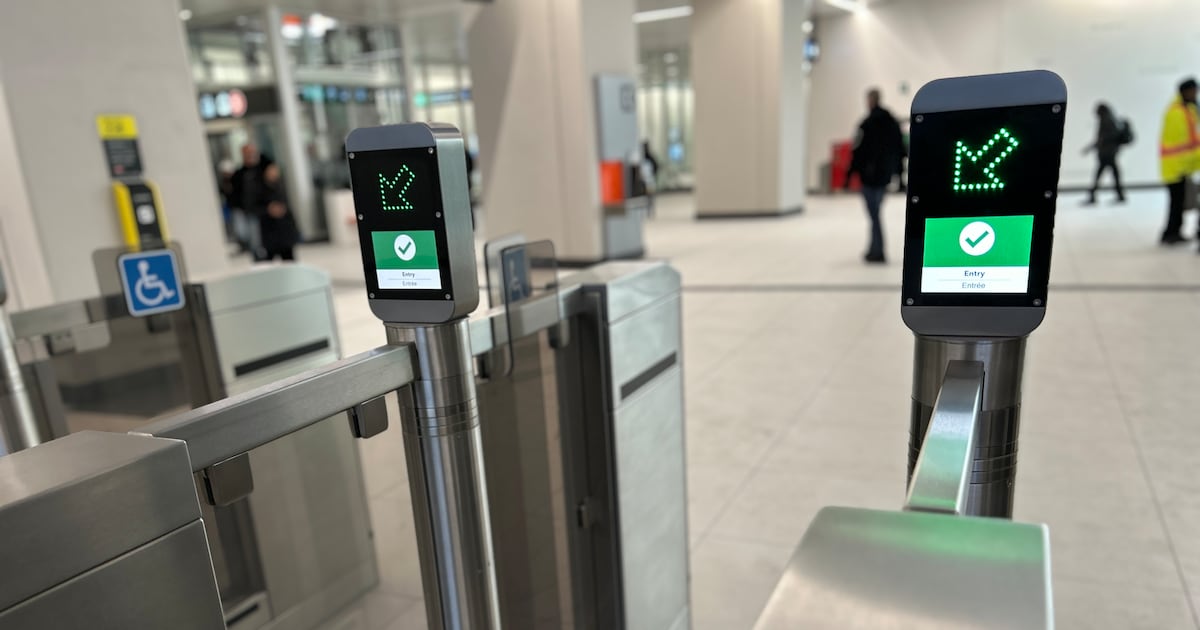
The province is looking to expand the One Fare program, requiring transit agencies across the GTHA to adopt a unified fare structure.
The Ontario government says it is eyeing a raft of transit changes that could include harmonized fare prices across the Greater Toronto and Hamilton Area and improved services across municipal boundaries.
The changes are included as part of the wide-ranging Building Homes and Improving Transportation Infrastructure Act, new legislation being introduced at Queen’s Park.
The One Fare system was introduced Back in 2024 to allow people to transfer between different municipal transit agencies within the GTHA without having to pay twice. According to the province, the program has saved Ontarians over $230 million so far.
Provincial officials said Monday the new legislation will advance a new vision, dubbed One Fare 2.0.
The new system would require transit agencies across the GTHA to adopt a single unified fare structure with common fares, discounts and free transfers.
Officials say there have been early discussions about what that might look like, including the possibility of a zoned system where riders might pay according to how far they travel as opposed to a single flat fare.
There have also been early preliminary discussions with Toronto and other municipalities about what harmonizing fares might look like.
At the moment, Toronto relies heavily on TTC fairs to fund the transit system, with any changes to pricing having a noticeable impact on the city’s budget.
Officials have said there has been a promise to the city to have deepened and regular engagement on the matter as soon as the legislation is introduced.
The province will also be cracking down on those who skip out on fares while using GO Transit. The penalty for a first-time offence is set to jump from $35 to $200, Increasing to as much as $500 for a fourth offence. The maximum penalty at the moment is $200.
Other proposed transit changes include the harmonization of GO station designs and a previously announced plan to allow all users to use HOV lanes at certain times on provincial highways.
When it comes to housing, the province is also eyeing a whole raft of changes, including standardization of municipal plans, making it easier to issue minister’s zoning orders (MZOs) for minor or time-sensitive issues, eliminating the ability of municipalities to implement mandatory green standards above the building code, and establishing minimum lot sizes of around 1,884 square feet in urban serviced areas outside the Greenbelt.