
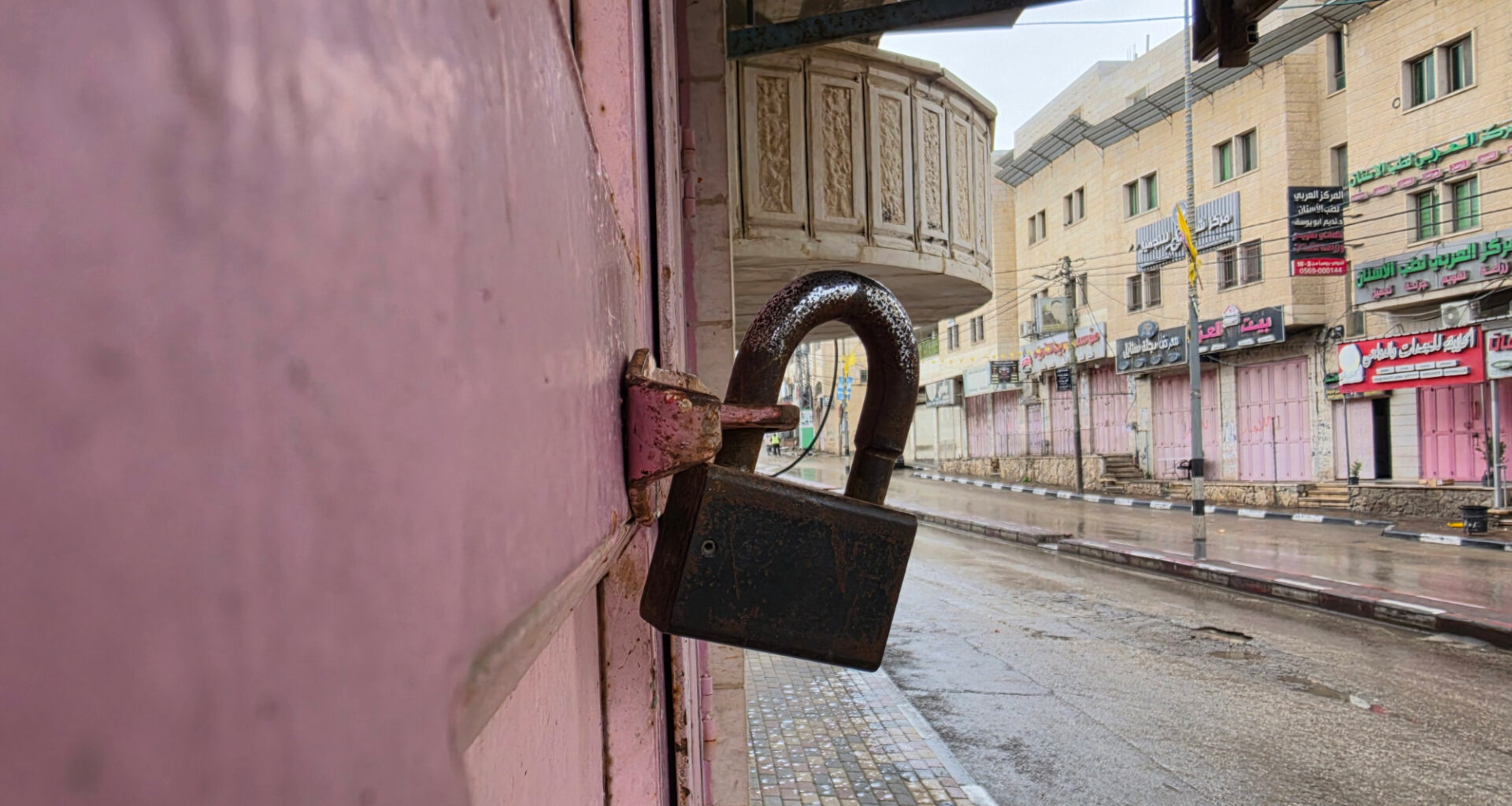
Palestinians across the occupied West Bank observed a general strike on Wednesday in protest against a new Israeli law allowing the execution of prisoners, as international condemnation mounted.
Fatah, the movement led by Palestinian Authority President Mahmoud Abbas, called for the strike, describing the legislation as a “dangerous escalation” against Palestinians.
“This criminal law will not break the will of our people or the determination of our prisoners, but will instead strengthen our resolve to continue the struggle for their freedom and legitimate rights,” it said in a statement.
The Knesset approved the bill in its final readings on Monday by 62 votes to 48, despite international calls to abandon it.
The legislation has drawn widespread criticism for violating the right to life and for its potentially discriminatory application.
New MEE newsletter: Jerusalem Dispatch
Sign up to get the latest insights and analysis on
Israel-Palestine, alongside Turkey Unpacked and other MEE newsletters
 The father of former prisoner Jaafar Awad, who died in custody, and whose other son Wared remains detained, said mobilisation was the only response to the decision.
“Sitting at home will not plant any seeds of success,” he said.
He argued the move was politically driven, saying: “In all Israeli elections, campaigns have always traded on Palestinian blood.”
“This decision did not come out of nowhere,” he added, accusing Prime Minister Benjamin Netanyahu of using it to secure parliamentary support and public backing.
‘We are all at risk of being killed. It is as if we are dead souls walking the streets’
– Fitah Arrar, mother of Palestinian prisoner
Under the law, anyone who “intentionally causes the death of another person with the intent to harm an Israeli citizen or resident, or to threaten the existence of the State of Israel” could face the death penalty or life imprisonment.
The wording effectively targets Palestinians, while Jewish Israelis who kill Palestinians would face, at most, a prison sentence.
Human rights groups and legal experts have strongly opposed the bill, citing Israel’s broad use of “terrorism” charges against Palestinians and a sharp rise in reports of torture and deaths in custody since the war on Gaza began.
Fitah Arrar, the mother of prisoner Ubay Abu Maria, said the law showed Israelis had “no red lines” and warned it would not distinguish between detainees.
She said families were left in the dark about the fate of their relatives and unable to secure support from any authority or organisation.
“There’s no other option for us but to go out and protest on the streets,” she said, despite the risk of violence.
“We are all at risk of being killed. It is as if we are dead souls walking the streets… No one will defend our rights if we do not defend them ourselves.”
War crimes
Yusuf Abu Maria, a political activist from Beit Ummar in Hebron, said that general strikes have historically been used as a “weapon to protect the Palestinian people” against occupation and other forms of aggression.
“Today’s strike is a way for us to stand in solidarity with Palestinian detainees,” he said. “We have always observed such protests and shop closures to show Israel and the world that Palestinians are one body, one nation, united with one another.”
He added that this is the least families of detainees can do, vowing that the “oppressive” decision – which was pushed by Israeli National Security Minister Itamar Ben Gvir – will be overturned eventually.
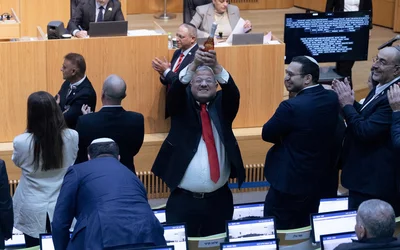
Israel’s Ben Gvir celebrates death penalty law by drinking wine in parliament
The UN High Commissioner for Human Rights on Tuesday called on Israel to repeal the law, warning that it could constitute a “war crime”.
“It is deeply disappointing that this bill has been approved by the Knesset,” Volker Turk said, describing the legislation as “deeply discriminatory”.
“The death penalty is profoundly difficult to reconcile with human dignity, and it raises the unacceptable risk of executing innocent people,” he added.
“Its application in a discriminatory manner would constitute an additional, particularly egregious violation of international law. Its application to residents of the occupied Palestinian territory would constitute a war crime.”
Outgoing Arab League Secretary-General Ahmed Aboul Gheit also strongly condemned the decision in a statement on Tuesday.
He said the bill “contravenes the most basic principles of international humanitarian law, flagrantly undermines the requirements of justice, entrenches blatant discrimination against Palestinians, and constitutes a disgraceful manifestation of apartheid.”
Gheit’s spokesperson added that the legislation reflects “the complete dominance of an extremely radical and racist current over political decision-making” in Israel.
“The international community’s inability to take action against Israel is deeply shameful,” the statement continued, warning that Israel’s policies could push the occupied territories – and the wider region – towards chaos.
The law has also drawn criticism from numerous countries, including Ireland, the Netherlands, Egypt, Jordan, Germany, France, Italy, the United Kingdom, Canada, and Slovenia.