
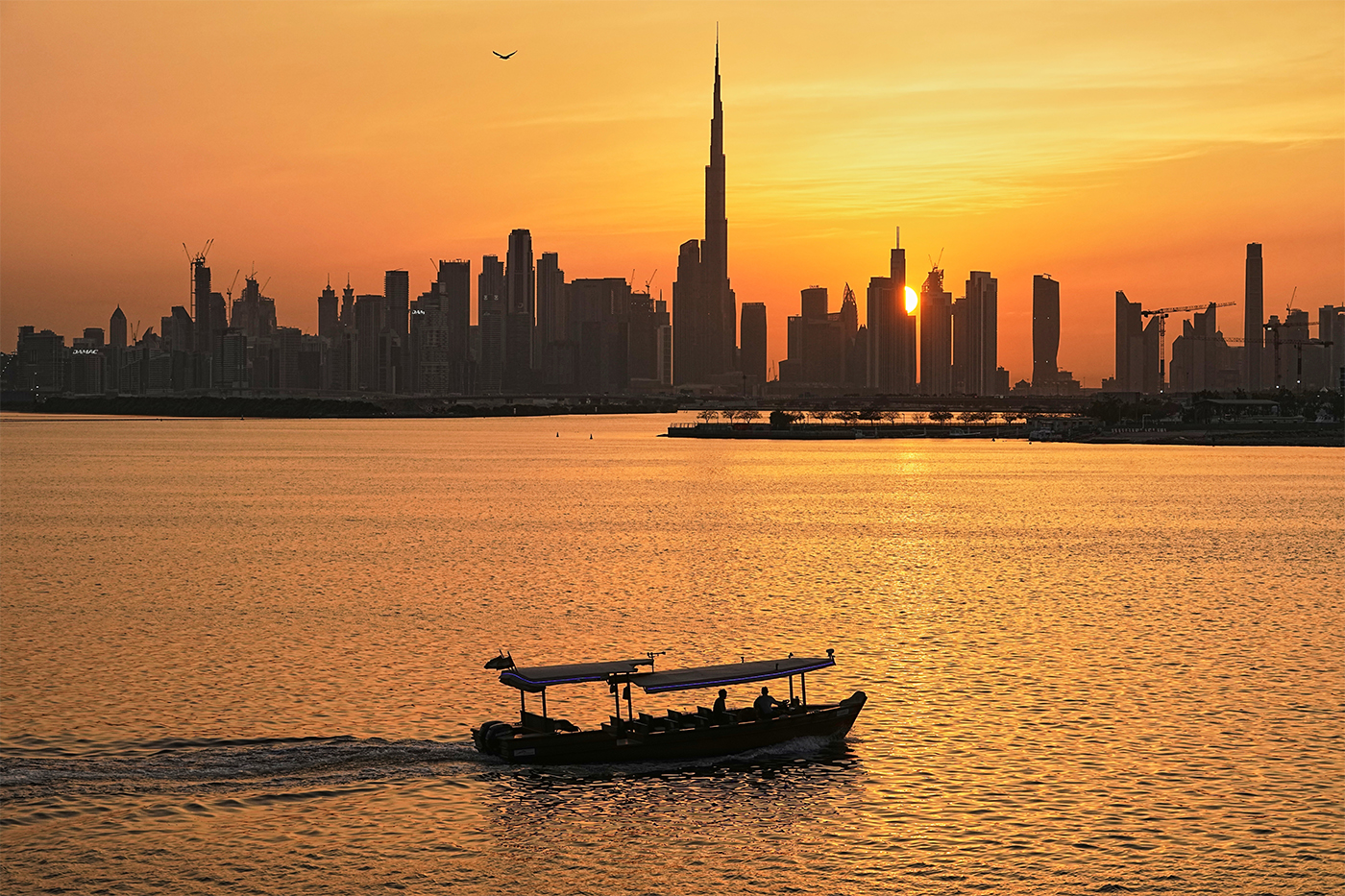
In less than a century, Dubai has grown from a small fishing and trading port to the home of the world’s tallest building, manmade archipelagos filled with luxury properties, and two of the world’s largest trading ports.
But the “City of Gold” hasn’t been without its controversies and is now staring down some major sustainability challenges that are only amplified by the war in Iran, Northeastern University urbanists said.
“They’ve really built themselves a global image of being open, tax-free, good for business, good for a holiday destination, etc. that’s worked until now,” said Jonathan Rock Rokem, associate professor of politics and sustainability at Northeastern University London. “But they were always afraid of Iran ruining that image.”
Serena Alexander, associate professor in public policy and urban affairs and civil and environmental engineering, said that a lack of natural resources like fresh water and a reliance on modern technology and engineering puts the city’s future at risk — particularly amid geopolitical instability.
“Dubai heavily relies on foreign direct investment and tourism and petro dollars to be able to function, which brings in some level of vulnerability,” Alexander said. “If something happens to those things, then there’s always the chance that it would impact the economy in a negative way.”
The discovery of oil in 1966, transformed Dubai from a sleepy port to an international hub of luxury as its rulers invested in infrastructure and enacted free trade zones and glossy marketing to attract tourists, foreign investment and wealthy expats.
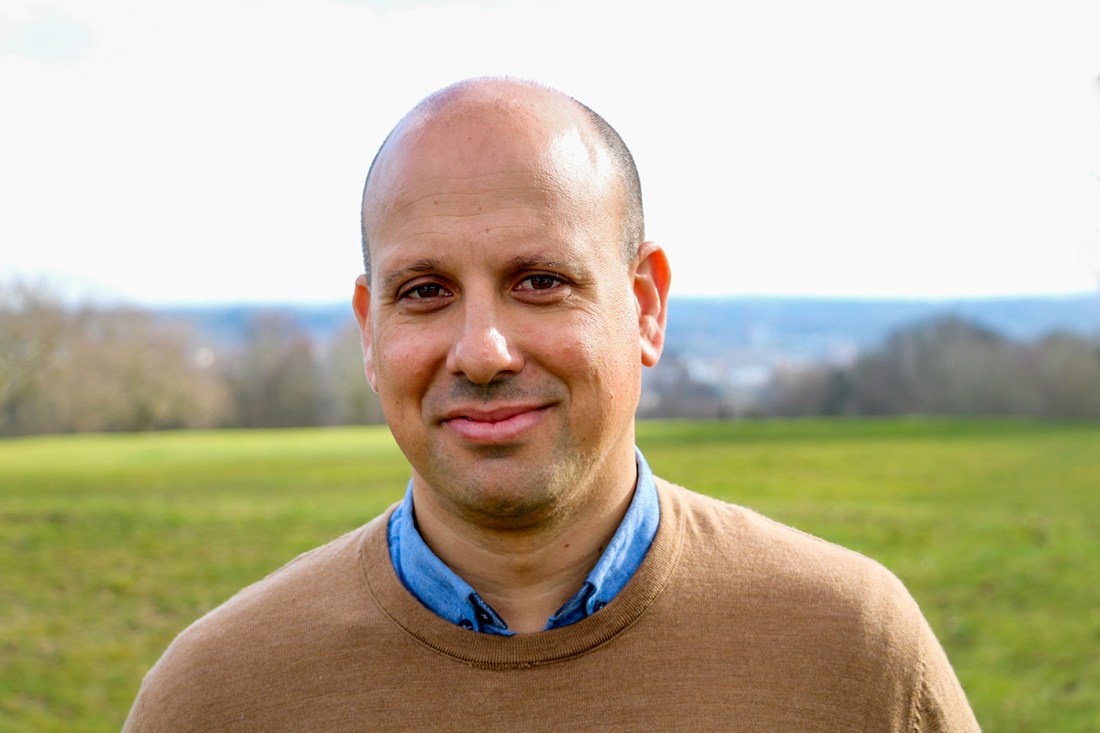 Jonathan Rock Rokem
 01/23/24 – BOSTON, MA. – Serena Alexander, associate professor with a joint appointment in the schools of Civil and Environmental Engineering and Public Policy and Urban Affairs, poses for a portrait on Jan. 23, 2024. Photo by Matthew Modoono/Northeastern University
Jonathan Rock Rokem, left, associate professor of politics and sustainability at Northeastern University London, and Serena Alexander, associate professor in public policy and urban affairs and civil and environmental engineering. Courtesy and Photo by Alyssa Stone/Northeastern University
But Iran has attacked Dubai’s airport multiple times since the beginning of the U.S.-Israel war in Iran.
Dubai’s marketing and political machines have rushed to the city’s defense with “an aggressive counteroffensive,” that cracks down on social media dissension and promotes its image as “still the safest place on Earth,” according to the Wall Street Journal.
Alexander and Rock Rokem said that the city also faces other issues that the war highlights.
“The first challenge that is actually extremely difficult, almost impossible to handle, is the fact that Dubai has almost no fresh water resource,” Alexander said.
While most major cities — London, Paris, New York, Shanghai — are built along rivers, Dubai relies on desalination plants, which are also under threat, for its fresh water.
But these are very energy-intensive and polluting, Alexander noted, as the brine is released back into the Persian Gulf.
Dubai’s iconic buildings consume a lot of energy.
“For the design of the buildings, the main purpose was to have this nice image, and not necessarily to think about how we design in a way that it’s smart to reduce energy consumption,” Alexander said. “Dubai is heavily reliant on air conditioning and engineering for cooling.”
And although the city’s economy is no longer dependent on oil, the city’s energy comes almost exclusively from fossil fuels like oil and natural gas, according to the International Energy Agency.
With the war, the oil and natural gas trade in the region has slowed down significantly, sparking an international energy crisis.
To be sure, Dubai recognizes its reliance on fossil fuels must change, promoting energy diversification and sustainability plans.
The question is whether these technological alternatives will be enough to compensate for the city’s lack of natural resources.
Alexander was skeptical. She said that environmentalists and urbanists are moving beyond thinking about the concept of sustainability, or reducing our harm to the environment, to the concept of regeneration.
“Now we’re saying that even if a city was designed to be sustainable, it wouldn’t be enough,” Alexander said.
“I suspect that in the future we will be more and more cautious about decisions that we make and an over-reliance on technology to do things that don’t make a lot of sense from an environmental perspective,” Alexander said. “In modern history, we moved away from that and we said ‘we can do it’ — Dubai is a very good example of that attitude.”