

Listen to this article
Estimated 4 minutes
The audio version of this article is generated by AI-based technology. Mispronunciations can occur. We are working with our partners to continually review and improve the results.
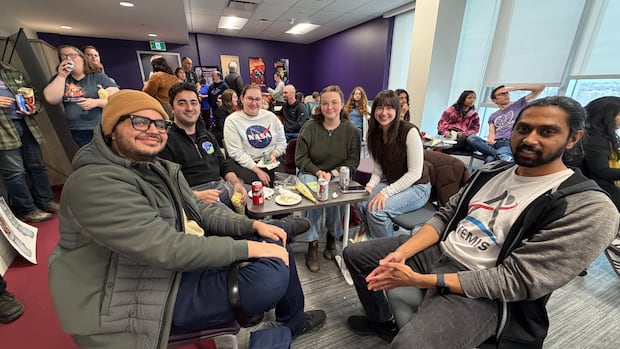
Excitement and nerves were in the air at London, Ontario’s Western University Wednesday as dozens of teachers and students gathered to watch as Canadian astronaut Jeremy Hansen and his fellow NASA colleagues took off to the moon in the Artemis II.
Hansen, who grew up just outside of London in Ailsa Craig is part of the historic mission that is sending humans around the moon for the first time in more than 50 years. For Londoners watching the rocket launch, it was a heartfelt moment that brought the moon to his hometown.
“It’s hard to believe, you think London’s just this kind of small town in southwestern Ontario and now we have this hometown astronaut going up to the moon. That’s something new for me,” said Catherine Neish a professor at Western’s department of Earth Sciences.
Neish was among those cheering on the astronauts at the watch party at the “Mission Control” facility at Western’s Institute for Earth and Space Exploration.
The crowd eagerly awaited the launch, which happened shortly after 6:35 p.m. ET. Cheers and applauses filled the room once the rocket finally took off, but it did leave many spectators in disbelief.
“There was a part of me that was not really truly convinced this was actually about to happen after waiting for so long so when the rockets led off, I just felt a shudder of excitement,” said PhD candidate Jack Hostrawser.
“It was so cool that this is actually happening. We’re going back to the moon!”
Artemis II is a 10-day mission designed to test systems and equipment ahead of a planned lunar landing in the coming years. It marks a major step forward for NASA’s Artemis program, which aims to return humans to the moon for the first time since the Apollo era.
For Hostrawser, not only was it an opportunity to watch history in the making, it also reminded him of Canadian astronauts like Julie Payette, David Saint-Jacques, Chris Hadfield and others, who inspired his interest in space research.
“I’m here today at Western because when I was a kid, I was inspired by astronauts who were Canadians who made it all the way up to the International Space Station, showing that that is something a Canadian can do,” he said.
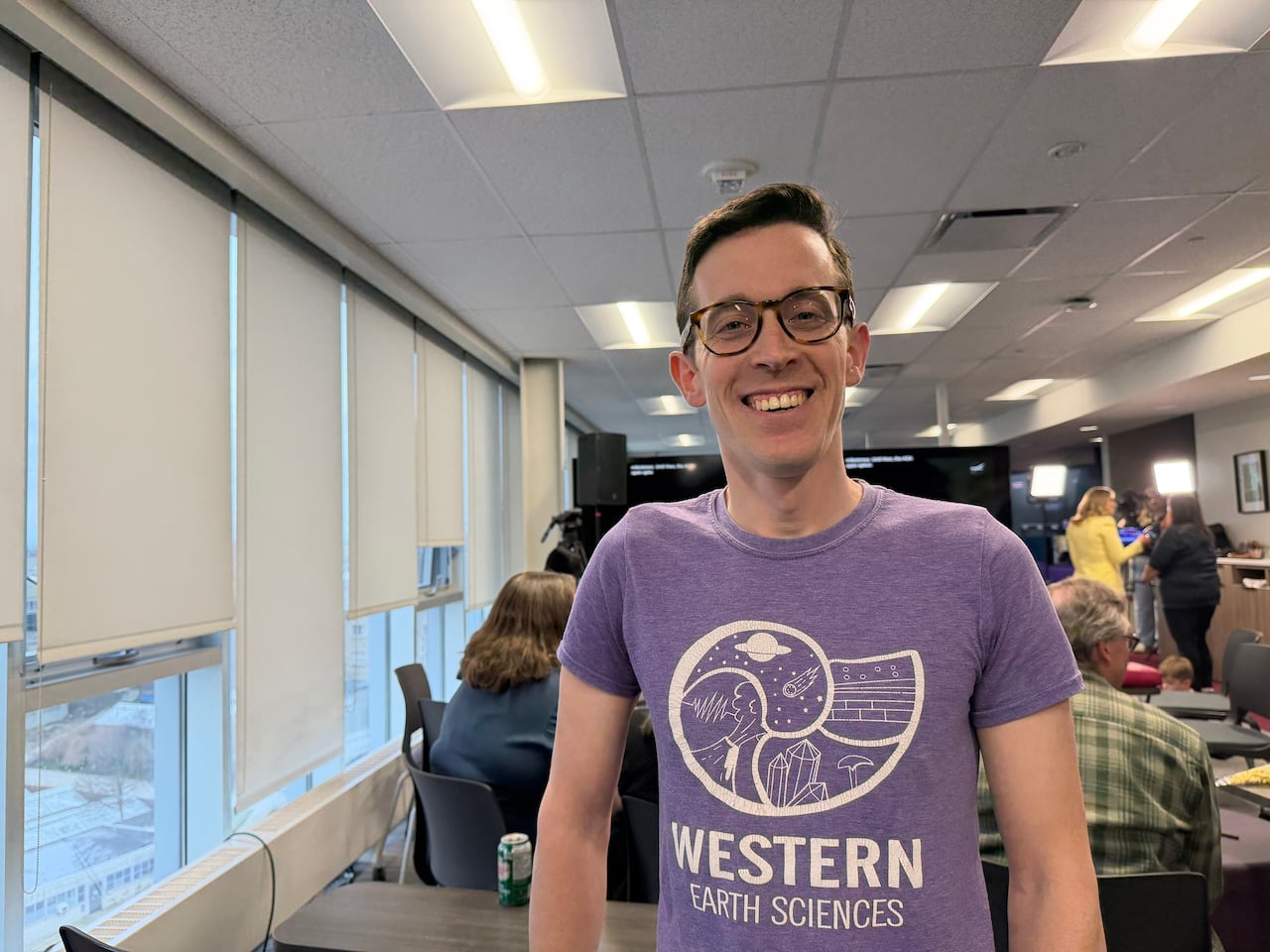 Jack Hostrawser is a PhD candidate at Western University. (Isha Bhargava/CBC)
“I can only imagine what it’s going to mean for kids today to see that there’s a Canadian going all the way to the moon and back,” Hostrawser added.
Neish said she witnessed lots of curiosity among her students and others at Western. She believes this mission will help humans explore new frontiers and learn new things.
WATCH | NASA astronauts launch into space: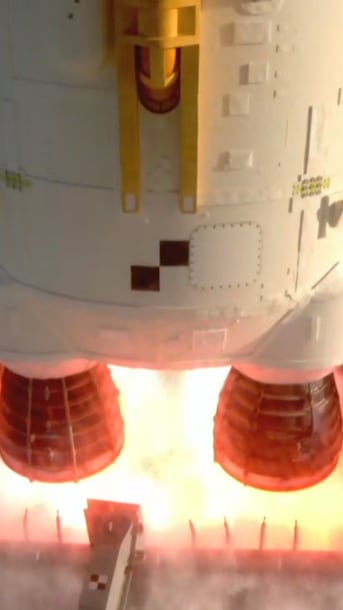
Watch as Artemis II departs Earth
NASA’s Artemis II mission will send the astronauts around the moon and back, farther from Earth than any previous human spaceflight. Among the crew is Canadian Jeremy Hansen who is set to become the first Canadian to reach deep space.
Western University planetary geologist, Gordon Osinski spent more than a decade helping train Hansen. The two worked closely for about 15 years, including leading geology training expeditions in the Canadian Arctic, an environment he said mirrors some of the challenges astronauts will face.
“We’d fly into the middle of nowhere… working in small teams in a hostile environment,” Osinski told CBC’s London Morning on Tuesday. “That’s very much what the astronauts will be doing… on the surface of the moon.”
“It’s an incredibly important mission. This is our first time back to the moon since 1972. There’s a lot of pressure on the astronauts, all the engineers and scientists.”
LISTEN | Gordon Osinski on Jeremy Hansen preparing to launch on Artemis II:
London Morning8:05Artronaut Jeremy Hansen’s geology professor
Canadian astronaut Jeremy Hansen has spent years training for the Artemis II mission to the moon. Western University Professor of planetary geology Gordon Osinski taught Hansen and told London Morning Jeremy is well trained and has the right aptitudes to stay calm under pressure.
Osinski describes Hansen as calm, capable and well-prepared for the mission.
“He’s incredibly humble… an amazing ambassador for Canada,” Osinski said. “But perhaps the one thing that stands in good stead for this mission is he’s incredibly calm under pressure.”
That calm will be critical, as astronauts face both mental and physical strain.
“Their bodies will literally be under pressure, experiencing multiple times the force of gravity,” Osinski said. “The combination of mental and physical challenges is not something we can understate.”