
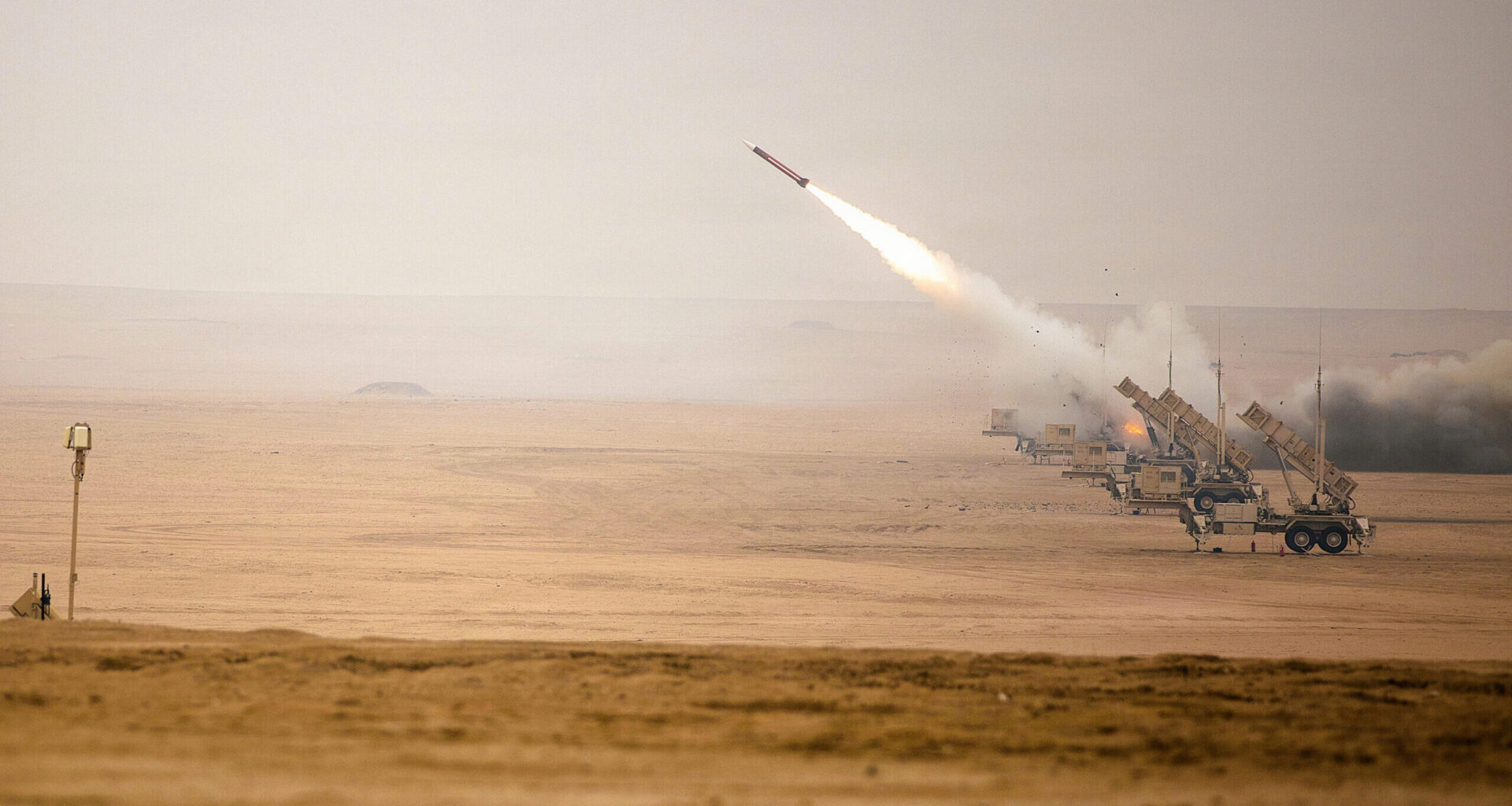
With active conflict in the Middle East ongoing, it may seem premature to consider implications for the defense sector and defense industrial cooperation. But the conflict will force regional powers to rethink funding, procurement, and partnerships for what is likely to be a complex and costly process of defense capability realignment—leading to longer-term impacts on a key defense market.
Saudi Arabia, the UAE, Qatar and others will need to cast a wide net to replenish and redevelop their defense capabilities. As a result, despite the formidable display of American military might and an impressive legacy of defense industrial ties, US industry may face an uphill battle in maintaining and growing its market share in the region going forward.
Regardless of when the active phase of the conflict with Iran ends, Gulf countries and defense stakeholders will face a new geostrategic reality in the region. It will be imperative to rapidly restore the free flow of energy and agricultural commodities through the Strait of Hormuz and protect vital energy and water infrastructure. Gulf countries will scramble to rebuild vital economic sectors such as tourism, travel, real estate, IT, and finance that depend on safety, access, and normalcy, which the region has excelled at until the present conflagration. A reassessment of defense posture and investments will be needed.
While this conflict has highlighted the merit of US weapons systems and military capabilities, it has exposed a split between the Gulf countries and the United States. There are signals that the Gulf countries perceive US communication on the operation as inadequate, resulting in a lack of local military preparation. Once the conflict started, Iran appears to have surprised both the US and Gulf countries with the ferocity and geographic breadth of its retaliatory attacks, extending well beyond US military assets and facilities in the region. Iranian attacks have had limited military impact on the Gulf countries but have resulted in considerable economic cost and geopolitical fallout.
Countries in the region cannot afford a repeat and are likely to undertake a series of investment and operational changes, and US industry will struggle to meet this demand by itself. Among the likely moves:
Restocking AMD Inventories: Rebuilding stockpiles of AMD interceptors is an obvious and immediate task for Gulf militaries. Reliable estimates of Gulf countries’ interceptor use remain scarce, but numbers will be in the thousands. While investments in this segment are certain, it is unclear when and how US suppliers will be able to accommodate them, faced with huge domestic DOW orders, and a robust pre-conflict global export backlog. Competitors such as the Franco-Italian SAMP/T AMD system could replicate its recent success in Denmark, thanks in part to a substantially better delivery timelines.
Rebalancing AMD Capabilities: Considerable costs of high-end interceptors coupled with endemic shortages will force Gulf defense planners to rethink their arsenal. Low costs solutions like BAE’s APKWS guided rocket, Ukrainian unmanned drone hunters, or non-kinetic directed energy, high-power microwave, and jamming solutions will all be appealing to defense customers.
Investing in Airborne C-UAS Platforms: Ukraine has been employing lower technology and older aircraft for counter-drone missions. Providers of low-cost counter insurgency aircraft such as Embraer’s A-29 Super Tucano are enhancing their aircraft with air-to-air missiles, gun systems, sensing, and AI-enabled targeting for airborne interdiction of UAVs. Gulf counties may consider rebalancing their air force fleets, including similar locally developed solutions such as the UAE Calidus B-250 aircraft.
Expanding Airborne Early Warning & Control (AEW&C): Indiscriminate Iranian attacks on its neighbors have highlighted the value of airborne surveillance, which can provide vital lead time to prepare and engage air defense countermeasures. Indeed, at the start of the conflict, Australia dispatched one of its E-7 Wedgetail aircraft to the region. Gulf countries may double down on existing AEW&C investments, for example Saab’s GlobalEye aircraft, to monitor for Iranian attacks. Large unmanned assets, including a modified version of General Atomics MQ-9B, can also fulfill this function.
New Maritime Investments: Historically, naval investments have been deprioritized in the Gulf region, with countries largely dependent on the U.S. Navy to patrol and maintain freedom of navigation in the Gulf waterways. This capability gap has been belatedly acknowledged in recent years, resulting in naval modernization campaigns in Saudi Arabia, shipbuilding in UAE, and similar investments. Growing attention will need to be focused on asymmetric threats, notably Fast Inshore Attack Craft (FIAC), the weapon of choice for the Iranian Revolutionary Guard Corps maritime units. Mine detection and disposal will also be vital, driving investments in surface, subsea and airborne mine hunting assets including drones, naval helicopters and laser, acoustic, and magnetic sensors and countermeasures.
Improving Sensing, Command & Control, and AI Capabilities: None of these systems will be optimized without significant upgrades to sensing and command & control, alongside a digital backbone that can identify, sort, and process incoming threats and direct countermeasures effectively. Improved land, naval, and airborne radars, sonar, and other sensors, effectively networked with AI processing and decision support will be a vital element of this capability but also present a cost and integration challenge for local armed forces.
Alliances And The Industry Landscape
As unwitting participants to the conflict, Gulf countries are sure to look to their traditional providers, often US-based, for this equipment and technology. Strained US supply chains, existing backlog, and new domestic demand, however, are likely to crowd out some opportunities.
European and Asia-Pacific providers will likely fill this gap but could face interoperability and integration challenges as new kit is coupled with existing capabilities. No doubt, defense providers from China will also be looking to grow market share.
One major challenge that may arise for foreign providers? Expanding Gulf localization initiatives, driven by a growing desire for defense industrial self-sufficiency, sure to be catalyzed by strained international defense supply chains.
Alongside historic ties with the US and other allies, the Gulf countries have gradually increased regional cooperation over the last decades. The Gulf Cooperation Council (GCC), comprising Saudi Arabia, UAE, Bahrain, Kuwait, Oman, and Qatar, has a mutual protection clause and operates the Riyadh-based Unified Military Command (UMC) coordination organization. This conflict is testing the GCC’s mettle like never before. Post-conflict GCC security functions will have to evolve, potentially moving towards more joint command & control or coordinating defense procurements. (Assuming, of course, that recent diplomatic disputes with Qatar and ongoing rivalry between Saudi Arabia and UAE will be overcome.)
Gulf-area governments and other stakeholders must prepare for an uncertain future facing a gravely wounded and antagonistic regime in Tehran that wields asymmetric threats to regional security and global economic stability. These challenges demand a careful reassessment of defense investments and posture that will have significant implications for military procurement, security alliances, and the global defense industry.
American firms cannot sit on their laurels, and other players on the global defense market are poised to jump in.
Aleksandar (Alek) Jovovic is Deputy Director at the Center for the Industrial Base (CIB) and a Senior Fellow in the Defense and Security Department at the Center for Strategic and International Studies (CSIS) in Washington, DC.