
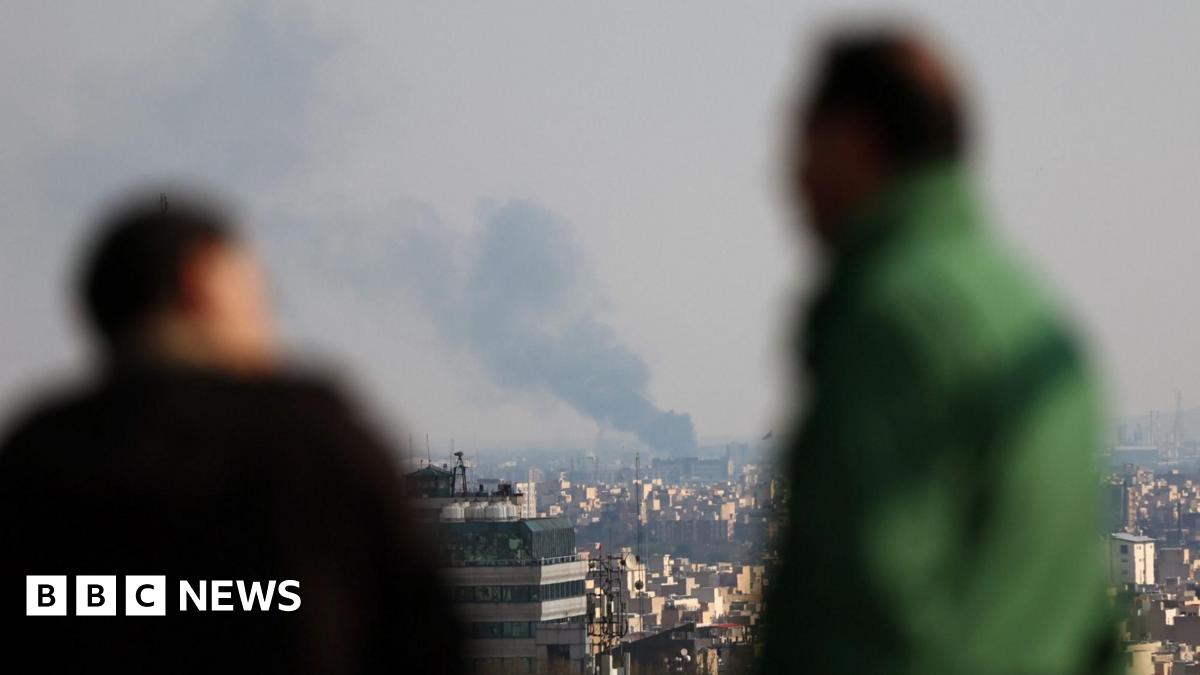
Despite strict state censorship, the BBC has been able to use trusted sources on the ground to obtain testimony from a range of Iranians in different parts of the country.
We cannot give Setareh’s real name or say what kind of work she does – no detail that might possibly identify her to the regime’s secret police. But we can say that she is a young woman from Tehran who loved going to work, where she could meet her friends, share stories of their lives and, of course, there was the guarantee of weekly wages.
Now the nightly bombing has stolen her ability to sleep naturally. She lies awake worrying about the present, and the future.
“I can honestly say I haven’t slept for several nights and days in a row. I try to relax by taking very strong painkillers so I can sleep. The anxiety is so intense that it has affected my body. When I think about the future and imagine those conditions, I truly don’t know what to do.”
By “those conditions” she means economic hardship and her fear of future street fighting between the regime and its enemies. The war has cost Setareh her job and she is running out of money.
Millions of Iranians are in a similar position. Even before the war, the economy was in deep crisis, with food prices rising by 60% in the previous year. Setareh describes mounting desperation as people run out of resources to survive.
“We cannot afford even basic food. What’s in our pockets does not match market prices… Iran has also been under sanctions for years, and the problems created by the Islamic Republic means that during this time we couldn’t build any savings, at least enough to survive now or depend on something. To put it simply, the people I thought might have money to lend also don’t have anything.”
Economic hardship spurred the huge nationwide protests of late 2025 and early 2026, and Setareh believes it will happen again.
“I don’t know how this massive wave of unemployment will be handled. There is no support system and the government will do nothing for all these unemployed people. I believe the real war will start if this war ends without any outcome.” The outcome she wants is the end of the regime.
We received information from sources on the ground in six different cities. These were conversations with individuals from a cross-section of society – shopkeepers, taxi drivers, public sector workers and others.
All described growing economic pressure and most spoke of their hope that the war might bring about the fall of the government.