

Listen to this article
Estimated 3 minutes
The audio version of this article is generated by AI-based technology. Mispronunciations can occur. We are working with our partners to continually review and improve the results.
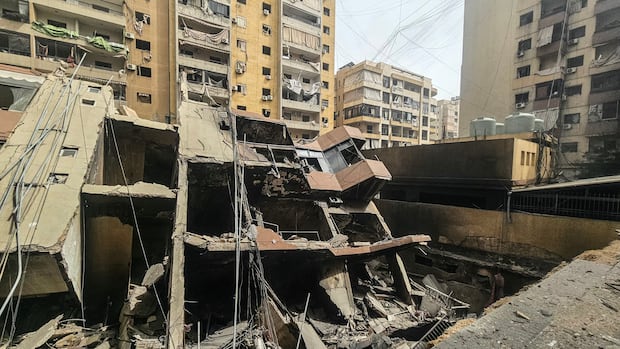
Israel pounded Beirut with airstrikes on Friday that the military said targeted what it called militant “infrastructure” in the Lebanese capital, as the U.S. warned Iran could target universities in the country while war in the Middle East raged.
Israel has invaded southern Lebanon and pledged to raze all Lebanese villages in the border area in a fight against the Iran-backed militant group Hezbollah that has become the most violent spillover of the U.S.-Israeli war with Iran.
It has also frequently struck Beirut, particularly Hezbollah-controlled southern suburbs. Earlier Friday, Israel’s military warned residents to leave seven neighbourhoods in the southern suburbs, saying strikes were imminent.
Reuters reporters heard three loud blasts echoing across the city around sunset Friday, when many in the country — home to Muslims and Christians — were marking Good Friday despite the escalating hostilities.
Lebanese media outlets said the strikes had hit the southern suburbs. There were no immediate reports of damage or casualties.
Israel’s military said it was “striking terror infrastructure in Beirut,” without providing details.
Israel has pledged to occupy southern Lebanon up to the Litani River as part of a “security zone” it says is aimed at protecting its own northern residents.
More than a million people have fled the area, as well as other parts of the country, with families fleeing Israeli strikes saying they were exhausted by repeated rounds of conflict.
Israel launched its campaign after Hezbollah fired into Israel on March 2 in solidarity with Iran after the U.S. and Israel began joint strikes on Iran.
The conflict has since expanded, with Iranian strikes on Israel, U.S. bases and Gulf states.
Iran threatens universities
This week, Iran warned it would retaliate against U.S. universities in the region after its own universities were struck in attacks.
As a precaution, the American University of Beirut moved classes online on Monday and Tuesday.
On Friday, the U.S. embassy in Beirut warned that “Iran and its aligned terrorist militias may intend to target universities in Lebanon.”
The embassy repeated a warning for U.S. citizens to leave the country.
More than 1,300 people have been killed in Israeli strikes, and about a fifth of Lebanon’s population has been displaced. Israel has issued evacuation orders covering about 15 per cent of Lebanese territory.
Tens of thousands of Lebanese have remained in their homes in southern Lebanon, even as Lebanese troops withdraw from the area to avoid confronting Israeli forces.
They include about 9,000 Lebanese Christians living in a cluster of border towns who told Reuters they were determined to stay despite the advancing military operations.
WATCH | Lebanon, Syria facing multiple emergencies amid Iran conflict repercussions: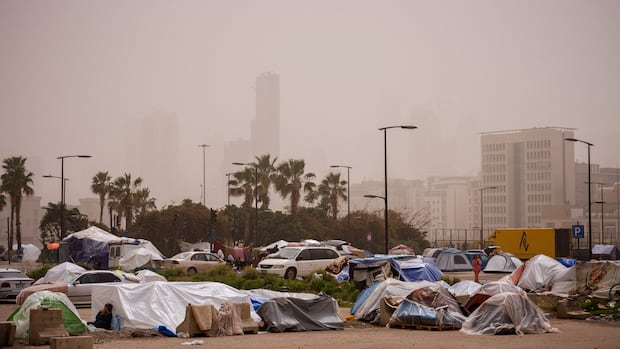
Lebanon and Syria in ‘triple emergency’: IRC president
As the war in the Middle East enters its second month, an estimated one million people in Lebanon have been displaced, according to the United Nations High Commissioner for Refugees. Lebanon and Syria are facing a ‘triple emergency’ from direct damage to infrastructure and basic necessities, rising oil prices and broader geopolitical repercussions, says David Miliband, president of the International Rescue Committee.More UN peacekeepers injured
Also on Friday, three peacekeepers with the UN Interim Force in Lebanon (UNIFIL) were injured — two of them seriously — in an explosion inside a UN position in southern Lebanon near the border, a UNIFIL spokesperson said.
The source of the explosion was not known, the spokesperson said.
Israel’s military did not immediately respond to a request for comment on the incident.
Three UNIFIL peacekeepers were killed earlier this week.