
Iran rejects latest ceasefire proposal as Trump’s deadline approaches
It’s *** great honor to be with you. Happy Easter. We had *** great Easter. This is one of our better Easters, I think, in *** lot of different ways. I can say militarily. It’s been one of the best. So good afternoon. We have quite *** bit to discuss. We’ll go into pretty good detail. And we have the people that are most involved. We’ll give you. Exactitude And we’re here today to celebrate the success of one of the largest, most complex, most harrowing combat searches. I guess you would call it *** search and rescue mission. Ever attempted by the military, generally when planes are knocked down in war, especially when you’re fighting *** Yeah, *** strong group, an evil group. You can’t really do this because you send in 200 men to pick up one. And it’s something that’s usually not attempted as much as you want to attempt. And bad things happen to that 1 or 2. And in this case we did too, and it might not have been attempted before, but we did. And we got, we had great talent, we got *** little luck too, I would say. And uh we were helped by *** lot of people, *** lot of great people. And it was an honor to be involved with it. It’s very historic. This is ***. *** rescue that’s very historic. It’ll go down in the books late Thursday night. An American F-15 fighter jet went down deep inside enemy territory in Iran while participating in Operation Epic Fury, where we’re doing unbelievably well, uh, well at *** level that nobody’s ever seen before. The entire country can be taken out in one night, and that night might be tomorrow night. Both members of the crew ejected from the aircraft and landed alive on Iranian soil. I immediately I was asked to make *** decision. I ordered the US armed forces to do whatever was necessary to bring our brave warriors back home, *** risky decision. Because we could have ended up with 100 dead as opposed to 1 or 2. It’s *** hard decision to make. But in the United States military, we leave no American behind. We don’t do it. Within hours our armed forces deployed 21 military aircraft into hostile airspace, many flying at very low altitude, being shot by bullets. You bring rifles into play when you’re going that low, but there are also certain advantages. And in broad daylight over Iran for 7 hours at times facing very, very heavy enemy fire. We have *** helicopter that’s got *** lot of bullets in it. It’s amazing. We just realized how good those Those weapons are those our machines are nobody has, nobody has the equipment that we have and nobody has the military that we have, not even close. We’re the most powerful military anywhere in the world by far. The flight crews and warfighters aboard those aircraft took extraordinary risks to rescue their fellow service members. This first wave of search and rescue forces successfully located the pilot of the F-15. And he was extracted from enemy territory by an HH 60 Jolly Green 2 helicopter, fabulous machine, as our warriors faced gunfire at very close range. It’s amazing that When you look at the machinery, what happened that nobody was even injured. Meanwhile, the second crew member, *** weapons system officer, highly respected colonel, had landed *** significant distance away from the pilot when you’re going at those speeds, even if you go out 2 or 3 seconds later, it’s miles, it’s miles and miles away. Cause you’re going fast. He was injured quite badly and stranded in an area teeming with terrorists from the Islamic Revolutionary Guard Corps RUF Group, as well as besieged militia and local. Authorities, many, uh, on top of everything else, they told the communities actually within inside of Iran, the people of Iran, they were given *** tremendous incentive to find this pilot. Despite the peril, the officer followed his training and climbed into the treacherous mountain terrain and. Started climbing toward *** higher altitude, something they were trained to do in order to evade capture, uh, they want to always go as far away from the site. Of the shoot down, you want to go as far away because they all head right to that site. You want to be as far away as you can. And he was injured and he was an amazing, amazing thing. He scaled cliff faces, bleeding rather profusely, treated his own wounds, and contacted American forces to transmit his location. They have *** very sophisticated beeper type. Apparatus that is on them at all times. And when they when they go out on these missions, they make sure they have lots of battery space and they’re in good shape. And this one worked really well, amazingly, saved his life. We immediately mobilized *** massive operation to retrieve him from the mountain holdout. And he kept going higher and higher. The mountain kept getting rougher and rougher and really very, very hard to find. The second rescue mission involved 155 aircraft including 4 bombers, 64 fighters, 48 refueling tankers, 13 rescue aircraft, and more. We were bringing them all over, and *** lot of it was subterfuge. We wanted to have them think he was in *** different location because they had *** vast military force out there. Thousands, thousands of people were looking. So we wanted them to look in different areas so we were scattered all over like we were right on top of them. We had 7 different locations where they thought and they were very confused. They said, well, wait *** minute, they’ve got groups here, they’ve got groups there, it’s amazing. Thing I was listening to. These great people, these great generals, General Raising Cane’s amazing, and Pete Hegseth was amazing, but I listened to the whole thing. It was pretty amazing. So they had all these different sites where everybody thought he was located. We think we have him over there because they have 9 planes circling *** little area that’s 25 miles down the coast. So in *** Breathtaking show of skill and precision, lethality and force, America’s military descended on the area, the real area, engaged the enemy, rescued the stranded officer, destroyed all threats. And exited Iranian territory while taking no casualties of any kind. The heroic F-15 weapons system officer had evaded capture on the ground in Iran. For almost 48 hours, that’s *** long time when you’re in tough shape and when you’re bleeding, it’s *** long time when, uh, when we left, as you probably know, we had two large planes, old, pretty old planes that carried *** lot. We needed *** lot more equipment going in than coming out obviously because going in we needed to be able to scale mountains. And we had *** lot of equipment, but the uh sand was, it was sandy wet sand, so we thought there may be *** problem taking off because of the weight of the plane and then we also had all the men jumping back onto the planes and they got pretty well bogged down and we had *** contingency plan which was unbelievable where lighter, faster aircraft came in. And they took them out. We blew up the old planes. We blew them up to smithereens because we had equipment on the planes that frankly we’d like to take, but I don’t think it was worthwhile spending another 4 hours there taking it off, so we didn’t want anybody to have we have the best, best equipment anywhere in the world. We didn’t want anybody examining our, uh, anti-aircraft and other equipment, so these were large planes that, uh, were old and pretty old, and we blew them up. And we had faster, lighter planes come in, and they were able to land on the sand. We needed the bigger planes because we had so much equipment that we needed. We took 3 helicopters over there which were very strongly used and couldn’t have lived without them. They did and they performed unbelievably well. And if you’d see it, you wouldn’t believe it. They came off the plane and these guys had them, the, the. The rotors were off. They rebuilt these helicopters in less than 10 minutes. And that was one of the more amazing things. These are helicopters. Small, unbelievably powerful, but small, very small, so it can get into certain areas. And they got them off the plane and they rebuilt all three of them in *** matter of less than I would say less than 10 minutes. It’s pretty amazing what the, the genius of these people who would think that you’d think it would take 5 days to build them and in some companies it would take 5 days and they wouldn’t do it well, but they served us well as commander in chief, I never. Forget the extraordinary risks taken by the warriors that we send into battle and the genius. I mean, think of it, having *** contingency of 3 planes waiting because we think the sand is so bad that we probably won’t be able to take off and the planes really got bogged. The sand was, this was not much of *** runway. This was *** farm, not *** runway, it’s *** farm, but, uh, it did the trick. But to have *** contingency as opposed to having to wait two days, can you imagine right in the middle this was central. This was right, you would call it central casting if you were doing *** movie for location. And uh the probably the toughest area of Iran where we’d be sitting there, so these planes came in, those pilots came in so fast and so quick and got out of there. Everybody got aboard and just got 15 minute intervals, one load out, one load out, one load out. It happened. And we were watching and we said that’s amazing. It’s in many ways I was, I was almost more impressed by the contingency that we had than. The fact that you know we would have had *** runway or decent soil, but it was an amazing thing but we thank God for every single one of them and the talent, the genius is not even talent, it’s genius, it’s the whole ball game, every one of them. If you look at what we did with Maduro, we went into *** military compound, *** massive with thousands and thousands of soldiers, and within *** matter of minutes, and he lived behind iron doors. There were steel doors, broke them down so quickly, and within almost minutes he was in the back of these planes. It was *** similar group, incredible. We have incredibly talented people. And if the time comes, we move heaven and earth to bring them home safely. We’re going to bring our people home safely. I want to thank every member of the US armed forces involved in these historic operations. They really were historic. It’s just not something that’s done. And you’d understand that not that they don’t want to do it, but when you’re going into areas, when you look at these helicopters, when you look at the amount of bullets and everything else that they took, when you go into these areas. You don’t come out like we came out. God was watching us tell you, well, it was the Easter we were. In the eastern territory I guess, but God was watching us amazing because when you look at the machinery they took, they took damage tells you first thing I said is these are unbelievable machines how they flew back and not even much of *** problem. But these two extraordinary rescues because it was 2, and as you probably know, we didn’t talk about the first one for An hour and then somebody leaked something which we’ll hopefully find that leaker we’re looking very hard to find that leaker and talked about there’s somebody missing. They basically said that we have one and there’s somebody missing. Well, they didn’t know there was somebody missing until this leaker gave the information. So whoever it is, we think we’ll be able to find it out because we’re going to go to the. Media company that released it and we’re going to say national security, give it up or go to jail. And we know who and you know who we’re talking about because some things you can’t do because when they did that all of *** sudden the entire country of Iran knew that there was. *** pilot that was somewhere on their land. I was fighting for his life. And it also made it much more difficult for The pilots and for the people going in to search for him all of *** sudden uh they know that there’s somebody out there they see all these planes coming in it became *** much more difficult operation because *** leaker leaked that we have one we’ve rescued one. But there’s another one out there that we’re trying to get. So actually the country Iran put out *** major notice you all saw it offering *** very big award for anybody that captures the pilot. So in addition to *** hostile, very talented, very good, very evil military, we had. Millions of people trying to get an award, so. When you add that to it, but we have to find that leaker because that’s *** sick person. Probably didn’t realize the extent of how bad it was. I can’t imagine that the person did, but we’re gonna find out. It’s national security and the person that did the story. Will go to jail if he doesn’t say, and that doesn’t last long and I think everybody would understand that they put this mission at great risk. They put that man at great risk and they put the hundreds of people that went in looking for him because everyone now knows that we’re going in. Over the past 37 days, America’s armed forces have carried out more than 10,000 combat flights over Iran, unheard of. Striking more than 13,000 targets, the F-15 we lost last week was the first manned aircraft downed by the enemy in this entire operation with thousands and thousands of flights. They got lucky. It was *** lucky hit. You know, eventually you get lucky. But we got lucky too because we got both of them back, but it’s *** record that is unparalleled in the history of military air operations. Nobody’s ever seen anything like it. It’s such an honor to be. Involved with it. We were up late at night. And then we were waiting for those. Contingent planes to come in and we say, come on, let’s go get in because they’re waiting out on this uh farm without *** runway with wet. Crummy soil, sand, mostly sand, wet sand, and it eats planes alive and we’re waiting and we’re saying, I hope that one can land and take off. And they came in like magic boom boom boom, one after another it was like genius. I’m so impressed by that because we were *** little concerned we said boy. If they don’t get in and get up fast, we’re sitting in them and that’s called Iran Prime, right, General? That’s, that’s where the whole bed is and here we are sitting there waiting for *** plane, but they came in so fast and so hard and these guys knew exactly what to let’s go. Come on, get in. Let’s go wah. They came one right after another, not at the same time. They don’t want to come at the same time. They had to come right after each other. They didn’t have any room. There was barely any room to land, tiny little patch of very wet. Earth and sand. So I just, I’m so proud of the people that I have standing up here with me and many others that worked. I mean, so many. Steve Witkoff’s over here, he’s doing fantastically. Jared Kushner. But the people that are here, the job they did is amazing.
By JON GAMBRELL, DAVID RISING, SAMY MAGDY and BASSEM MROUE Associated Press
Iran on Monday rejected a 45-day ceasefire proposal and said it wants a permanent end to the war, even as Israel attacked a major gas field and U.S. President Donald Trump’s Tuesday ultimatum to open the Strait of Hormuz loomed. “We only accept an end of the war with guarantees that we won’t be attacked again,” Mojtaba Ferdousi Pour, head of Iran’s diplomatic mission in Cairo, told The Associated Press. He said Iran no longer trusts the Trump administration after the U.S. bombed the Islamic Republic twice during previous rounds of talks.Iran’s state-run IRNA news agency said Tehran conveyed its response through Pakistan, a key mediator.And yet a regional official involved in talks said efforts had not collapsed. “We are still talking to both sides,” he said, speaking on condition of anonymity to discuss closed-door diplomacy.Video below: CIA Director John Ratcliffe talks about Iran airmen rescueTrump later stepped up his threats against Iran, telling a press conference: “The entire country can be taken out in one night, and that night might be tomorrow night.”Iranian and Omani officials were working on a mechanism for administrating the strait, through which a fifth of the world’s oil is shipped in peacetime. Iran’s grip on it has shaken the world economy. Tehran has refused to let U.S. and Israeli vessels through after they started the war on Feb. 28.Israel strikes massive gas field, and Trump sets deadlineIran’s rejection came after Israel struck a key petrochemical plant in the South Pars natural gas field and killed two paramilitary Revolutionary Guard commanders.The gas field attack aimed at eliminating a major source of revenue for Iran, Israel said. The field, the world’s largest, is shared with Qatar. It is critical to electricity production, but the strike appeared to be separate from Trump’s threats.Video below: Defense Secretary Pete Hegseth on Iran airmen rescueAn earlier Israeli attack on the field in March prompted Iran to target energy infrastructure in other Middle East countries, a major escalation.Trump has warned Iran that the U.S. could set the country “back to the stone ages.”Word of Iran’s rejection came while Trump addressed an Easter event on the White House lawn, and it was not clear whether he was aware.He threatened to go further on Iran. “If I had my choice, what would I like to do? Take the oil,” he said, suggesting it could be done easily, but “unfortunately the American people would like to see us come home.”Asked if Tuesday at 8 p.m. Washington time was his final deadline, Trump replied simply, “Yeah.”Proposal had called for a 45-day ceasefireEgyptian, Pakistani and Turkish mediators had sent Iranian Foreign Minister Abbas Araghchi and U.S. Mideast envoy Steve Witkoff a proposal calling for a 45-day ceasefire and the strait’s reopening, two Mideast officials told the AP. The officials spoke on condition of anonymity to discuss the private negotiations.Iran’s foreign ministry spokesman Esmail Baghaei earlier told journalists that “negotiations are entirely incompatible with ultimatums, crimes and threats of war crimes.”Former Iranian foreign minister Ali Akbar Velayatir urged Arab countries to discourage Trump from striking power plants, warning the entire region would go “dark” if that happens.Brent crude oil, the international standard, rose to $109 in early Monday spot trading, about 50% higher than when the war started, then wavered. U.S. stocks mostly held steady.Israel threatens to ‘hunt’ Iranian officialsExplosions boomed in Tehran, and low-flying jets could be heard for hours.The head of intelligence for Iran’s paramilitary Revolutionary Guard, Maj. Gen. Majid Khademi, was killed, according to Iranian state media and Israel’s defense minister. Israel said it also killed the leader of the Revolutionary Guard’s undercover unit in its expeditionary Quds Force, Asghar Bakeri.“We will continue to hunt them down one by one,” Israeli Defense Minister Israel Katz said of top officials.Israel’s military later said it struck three Tehran airports overnight — Bahram, Mehrabad and Azmayesh — hitting dozens of helicopters and aircraft it said belonged to the Iranian Air Force.A Tehran resident said “constantly there is the sound of bombs, air defenses, drones,” speaking on condition of anonymity for her safety. Another resident said he takes sleeping pills to get through nightly bombardments, and said people worry about power, gas and water cuts. “Stop this war,” he said.Separately, Kuwait, the United Arab Emirates and Saudi Arabia activated air defenses to intercept Iranian missiles and drones. Tehran has kept up pressure on Gulf neighbors, including strikes against infrastructure like oil fields.In Israel, Iranian missiles hit the northern city of Haifa, where four people from one family were found dead in the rubble of a residential building.W2lmcmFtZSBzcmM9Imh0dHBzOi8vaGVhcnN0dGVsZXZpc2lvbmRhdGFqb3VybmFsaXNtLmh0dmFwcHMuY29tL2p1eHRhcG9zZS1pbWFnZS9zdHJhaXQtb2YtaG9ybXV6L3Rlc3QzL2p1eHRhcG9zZS5odG1sIiBmcmFtZWJvcmRlcj0iMCIgaGVpZ2h0PSI1MDBweCIgd2lkdGg9IjEwMCUiIHNjcm9sbGluZyA9ICJubyJdWy9pZnJhbWVd Airstrikes kill more than 25 across IranSmoke rose near Tehran’s Azadi Square after an airstrike hit the grounds of the Sharif University of Technology. Multiple countries have sanctioned the university for its work with the military, particularly on Iran’s ballistic missile program.Iranian media reported damage to buildings and a nearby natural gas distribution site. The university is empty as the war forced schools into online classes.A strike near Eslamshar, southwest of Tehran, killed at least 15 people, authorities said. Five were killed in a residential area in Qom, and six were killed in strikes on other cities, the state-run IRAN daily newspaper reported. Three people were killed at a home in Tehran, state television reported.In Lebanon, where Israel has launched air attacks and a ground invasion that it says target the Iran-linked Hezbollah militia, an airstrike hit an apartment in Ain Saadeh, a predominately Christian town east of Beirut. It killed an official in the Lebanese Forces, a Christian political party strongly opposed to Hezbollah, his wife and another woman.“We had always felt safe here,” family friend Nadine Naameh said.More than 1,900 people have been killed in Iran since the war began, but the government has not updated the toll for days.More than 1,400 people have been killed in Lebanon and more than 1 million people have been displaced. Eleven Israeli soldiers have died there.In Gulf Arab states and the occupied West Bank, more than two dozen people have died, while 23 have been reported dead in Israel and 13 U.S. service members have been killed.
DUBAI, United Arab Emirates —
Iran on Monday rejected a 45-day ceasefire proposal and said it wants a permanent end to the war, even as Israel attacked a major gas field and U.S. President Donald Trump’s Tuesday ultimatum to open the Strait of Hormuz loomed.
“We only accept an end of the war with guarantees that we won’t be attacked again,” Mojtaba Ferdousi Pour, head of Iran’s diplomatic mission in Cairo, told The Associated Press. He said Iran no longer trusts the Trump administration after the U.S. bombed the Islamic Republic twice during previous rounds of talks.
Iran’s state-run IRNA news agency said Tehran conveyed its response through Pakistan, a key mediator.
And yet a regional official involved in talks said efforts had not collapsed. “We are still talking to both sides,” he said, speaking on condition of anonymity to discuss closed-door diplomacy.
Video below: CIA Director John Ratcliffe talks about Iran airmen rescue
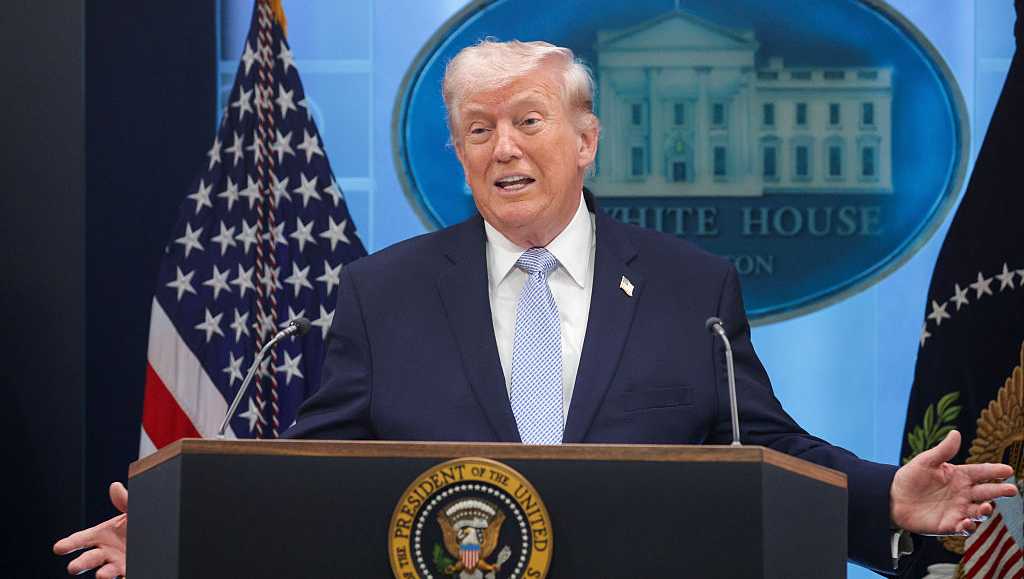
Trump later stepped up his threats against Iran, telling a press conference: “The entire country can be taken out in one night, and that night might be tomorrow night.”
Iranian and Omani officials were working on a mechanism for administrating the strait, through which a fifth of the world’s oil is shipped in peacetime. Iran’s grip on it has shaken the world economy. Tehran has refused to let U.S. and Israeli vessels through after they started the war on Feb. 28.
Israel strikes massive gas field, and Trump sets deadline
Iran’s rejection came after Israel struck a key petrochemical plant in the South Pars natural gas field and killed two paramilitary Revolutionary Guard commanders.
The gas field attack aimed at eliminating a major source of revenue for Iran, Israel said. The field, the world’s largest, is shared with Qatar. It is critical to electricity production, but the strike appeared to be separate from Trump’s threats.
Video below: Defense Secretary Pete Hegseth on Iran airmen rescue
An earlier Israeli attack on the field in March prompted Iran to target energy infrastructure in other Middle East countries, a major escalation.
Trump has warned Iran that the U.S. could set the country “back to the stone ages.”
Word of Iran’s rejection came while Trump addressed an Easter event on the White House lawn, and it was not clear whether he was aware.
He threatened to go further on Iran. “If I had my choice, what would I like to do? Take the oil,” he said, suggesting it could be done easily, but “unfortunately the American people would like to see us come home.”
Asked if Tuesday at 8 p.m. Washington time was his final deadline, Trump replied simply, “Yeah.”
Proposal had called for a 45-day ceasefire
Egyptian, Pakistani and Turkish mediators had sent Iranian Foreign Minister Abbas Araghchi and U.S. Mideast envoy Steve Witkoff a proposal calling for a 45-day ceasefire and the strait’s reopening, two Mideast officials told the AP. The officials spoke on condition of anonymity to discuss the private negotiations.
Iran’s foreign ministry spokesman Esmail Baghaei earlier told journalists that “negotiations are entirely incompatible with ultimatums, crimes and threats of war crimes.”
Former Iranian foreign minister Ali Akbar Velayatir urged Arab countries to discourage Trump from striking power plants, warning the entire region would go “dark” if that happens.
Brent crude oil, the international standard, rose to $109 in early Monday spot trading, about 50% higher than when the war started, then wavered. U.S. stocks mostly held steady.
Israel threatens to ‘hunt’ Iranian officials
Explosions boomed in Tehran, and low-flying jets could be heard for hours.
The head of intelligence for Iran’s paramilitary Revolutionary Guard, Maj. Gen. Majid Khademi, was killed, according to Iranian state media and Israel’s defense minister. Israel said it also killed the leader of the Revolutionary Guard’s undercover unit in its expeditionary Quds Force, Asghar Bakeri.
“We will continue to hunt them down one by one,” Israeli Defense Minister Israel Katz said of top officials.
Israel’s military later said it struck three Tehran airports overnight — Bahram, Mehrabad and Azmayesh — hitting dozens of helicopters and aircraft it said belonged to the Iranian Air Force.
A Tehran resident said “constantly there is the sound of bombs, air defenses, drones,” speaking on condition of anonymity for her safety. Another resident said he takes sleeping pills to get through nightly bombardments, and said people worry about power, gas and water cuts. “Stop this war,” he said.
Separately, Kuwait, the United Arab Emirates and Saudi Arabia activated air defenses to intercept Iranian missiles and drones. Tehran has kept up pressure on Gulf neighbors, including strikes against infrastructure like oil fields.
In Israel, Iranian missiles hit the northern city of Haifa, where four people from one family were found dead in the rubble of a residential building.
Airstrikes kill more than 25 across Iran
Smoke rose near Tehran’s Azadi Square after an airstrike hit the grounds of the Sharif University of Technology. Multiple countries have sanctioned the university for its work with the military, particularly on Iran’s ballistic missile program.
Iranian media reported damage to buildings and a nearby natural gas distribution site. The university is empty as the war forced schools into online classes.
A strike near Eslamshar, southwest of Tehran, killed at least 15 people, authorities said. Five were killed in a residential area in Qom, and six were killed in strikes on other cities, the state-run IRAN daily newspaper reported. Three people were killed at a home in Tehran, state television reported.
In Lebanon, where Israel has launched air attacks and a ground invasion that it says target the Iran-linked Hezbollah militia, an airstrike hit an apartment in Ain Saadeh, a predominately Christian town east of Beirut. It killed an official in the Lebanese Forces, a Christian political party strongly opposed to Hezbollah, his wife and another woman.
“We had always felt safe here,” family friend Nadine Naameh said.
More than 1,900 people have been killed in Iran since the war began, but the government has not updated the toll for days.
More than 1,400 people have been killed in Lebanon and more than 1 million people have been displaced. Eleven Israeli soldiers have died there.
In Gulf Arab states and the occupied West Bank, more than two dozen people have died, while 23 have been reported dead in Israel and 13 U.S. service members have been killed.