
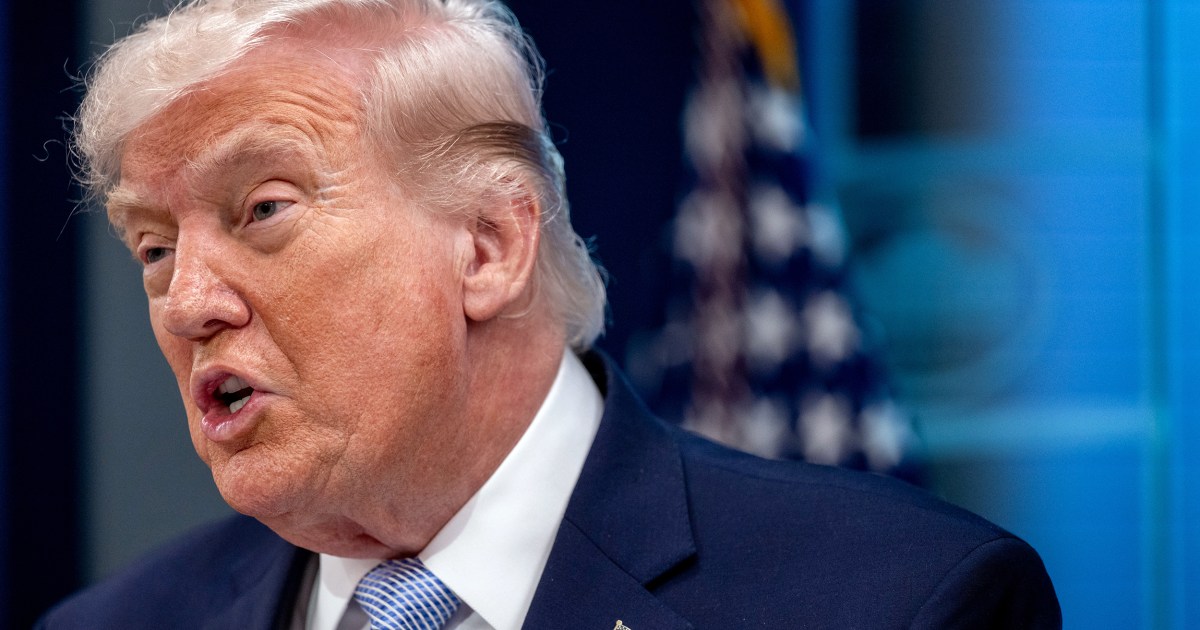
At a press conference on Monday, President Donald Trump did more than just defend his morally reprehensible threat to attack Iran’s civilian infrastructure if the country does not comply with his demand to reopen the Strait of Hormuz by 8 p.m. on Tuesday night. He warned that all of Iran “can be taken out” in one night.
The president’s advocacy of potential war crimes comes amid his increasingly desperate bid to get a leg up on Iran. But while the threats are ominous, the intimidation is highly unlikely to succeed strategically — and could even backfire.
Typically, even the most bellicose political leaders maintain a public pretense of striking only military targets.
At his White House press conference, Trump attempted to sound blasé about obliterating Iranian society. As he began speaking, he tossed out the extreme claim that “the entire country can be taken out in one night, and that night might be tomorrow night.” That comment seemed to echo his more specific (and vulgar) post on Truth Social on Sunday: “Tuesday will be Power Plant Day, and Bridge Day, all wrapped up in one, in Iran. There will be nothing like it!!! Open the F‑‑‑in’ Strait, you crazy bastards, or you’ll be living in Hell – JUST WATCH! Praise be to Allah.” And that seemed to reprise his threat on Wednesday to “hit each and every one” of the country’s power plants — a clear indication that he was not distinguishing between power plants for civilian use and those that might also be used for military purposes.
If the United States does in fact conduct such strikes, they would disable much of Iran’s economy, wreak havoc on its health care system and otherwise cause untold suffering across the civilian population.
When a New York Times reporter pointed out to Trump at the press conference that deliberately attacking civilian infrastructure would violate the Geneva Conventions and international law, and raised concerns that such attacks could amount to war crimes, Trump responded, “I hope I don’t have to do it.” But he then argued that the mere possibility of a nuclear Iran is so intolerable that it justifies breaking international law:
We’re never going to let Iran have a nuclear weapon. And if you think it’s okay for people that are sick of mind, that are tough, smart and sick, really sick …. from from a policy standpoint, from a …. any which way you want to say, mentally, these are disturbed people. If you think I’m going to allow them — and powerful and rich — to have a nuclear weapon, you can tell your friends at the New York Times, not going to happen.
Typically, even the most bellicose political leaders maintain a public pretense of striking only military targets to stay within the boundaries of international law. The Times, citing historians, former U.S. officials and legal experts, observed that, in light of Trump’s recent threats, “No other recent American president has talked so openly about committing potential war crimes.”
In an open letter published by Just Security last week, over 100 legal experts and lawyers laid out the legal problems with Trump’s threats against civilian energy infrastructure such as power plants.
“International law protects from attack objects indispensable to the survival of civilians, and the attacks threatened by Trump, if implemented, could entail war crimes,” the letter noted. The authors also said that even if some of the power plants are used for both civilian and military purposes, under international law, the U.S. strikes could theoretically be defensible, but would still be bound by “the principles of proportionality and precautions.” Proportionality refers to the idea that civilian harm should not be excessive relative to the military advantage gained through a specific strike.
Play
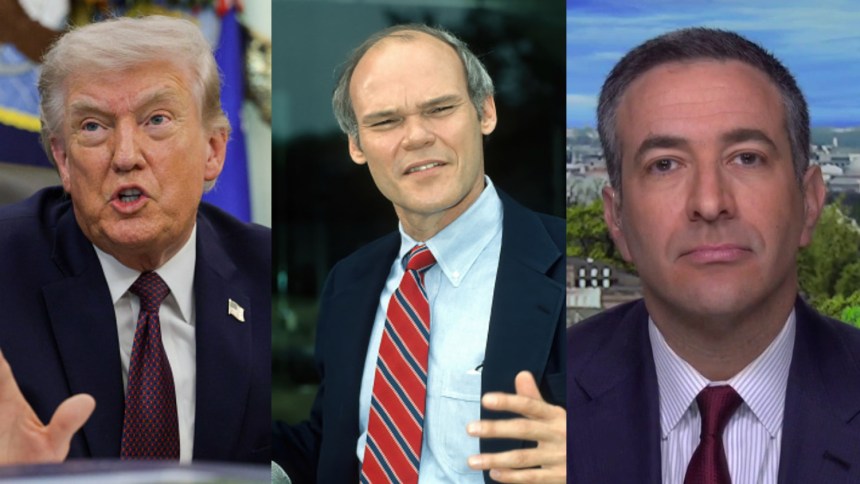
Erika Guevara Rosas, Amnesty International’s senior director of research, advocacy, policy and campaigns, told The Guardian that it would be difficult for U.S. strikes to meet that principle of “proportionality” in attacking power plants that are used for dual purposes.
“Even in the limited cases that [power plants] qualify as military targets, a party still cannot attack power plants if this may cause disproportionate harm to civilians,” she told The Guardian. “Given that such power plants are essential for meeting the basic needs and livelihoods of tens of millions of civilians, attacking them would be disproportionate and thus unlawful under international humanitarian law, and could amount to a war crime.”
Even if Trump does order a massive attack on civilian infrastructure, the odds that it will make Tehran budge on opening up the Strait of Hormuz are slim. Historically, the use of air power in this fashion causes the civilian population to side with a government, even one it dislikes, against a dangerous foreign intruder. Iran’s government would be a political beneficiary of such a dynamic. And Trump’s mix of bluffing, extending and disappearing deadlines and sudden attacks means Tehran now refuses to trust the U.S. will keep a temporary ceasefire.
The strait is undoubtedly the greatest strategic leverage Iran has over the U.S. and its allies, including Israel, because it allows the country to influence global oil prices and inflict pain on the international community. In the short term, this leverage allows a country such as Iran, which is far weaker than the U.S. and Israel, to reject temporary ceasefire proposals. In the longer term, tightened control of the strait would allow Iran to evolve into a significantly more powerful geopolitical player in the global arena than before the war.
Meanwhile, U.S. strikes hurting civilians en masse would further alienate it from the international community. It would reduce the U.S.’s already vastly diminished credibility in the West, and could shrink the already low odds that it can cobble together an international naval coalition to seize the Strait of Hormuz. It would also infuriate regional partners and allies who are petrified of a mass refugee crisis out of Iran and want a swift end to the war.
Should the U.S. conduct an enormous bombing campaign against Iran’s civilian infrastructure, it could achieve the worst of all worlds: further brutalization of Iran and violations of international law, yet no discernible strategic gain. Such an outcome would be a tragedy — and apropos for a perverse war.

Zeeshan Aleem is a writer and editor for MS NOW. He primarily writes about politics and foreign policy.

© 2026 Versant Media, LLC
