
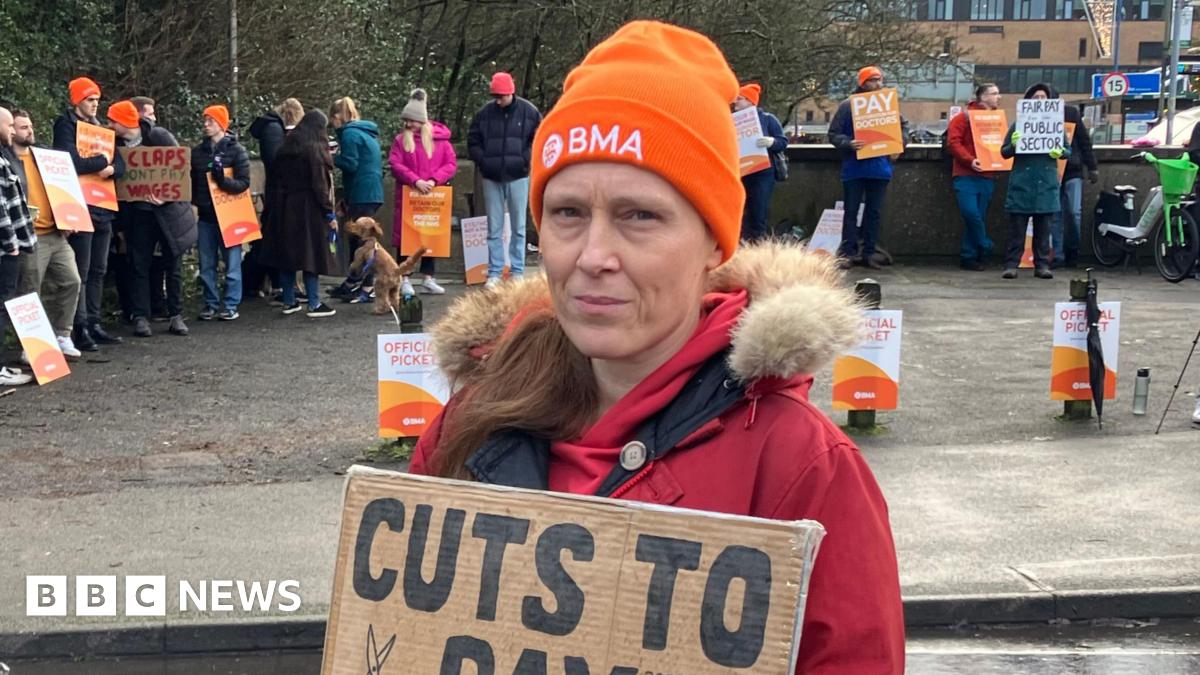
NHS officials have said the strike, which started at 07:00 BST on Tuesday, would be “difficult” but urgent and emergency care would run as usual.
Senior medics have been drafted in to provide cover in emergency settings, but some pre-planned treatments and appointments have been cancelled.
Despite receiving pay rises worth 33% over the past four years, the BMA argues that doctors are still being paid a fifth less than they were in 2008 once inflation is taken into account.
Standing on the picket line outside Hull Royal Infirmary, Dr Becky Lavelle told the BBC that doctors had “the worst pay erosion of any profession, public or private sector, for the last 17 years”.
“We’re waiting for the government to wake up and realise that they actually need to restore our pay back to where it was,” she said.
“Three billion pounds would have been enough to give us exactly what we wanted right at the start of this dispute.”
The government offered a package of measures last month in a bid to end the dispute, including 1,000 additional training places, but the package was withdrawn after the union announced industrial action.
Ryan said: “I work with children and I see families who are waiting months, sometimes years, for appointments, to get assessments for kids. ADHD is a prime example. That’s not because doctors don’t care, it’s because there’s not enough of us.
“It’s frustrating that the government seems to want to solve the staffing crisis by cutting further training places. Doctors shouldn’t be a cost, they should be seen as means to reducing the waiting lists.”