
U.S. President Donald Trump pulled back on his threats to launch devastating strikes on Iran late Tuesday, swerving to deescalate the war less than two hours before the deadline he set for Tehran to capitulate or face a major escalation.Trump said he was holding off on his threatened attacks on Iranian bridges, power plants and other civilian targets, subject to Tehran agreeing to a two-week ceasefire and reopening of the Strait of Hormuz, the waterway through which a fifth of the world’s oil is shipped during peacetime. He also said Iran has proposed a “workable” 10-point peace plan that could help end the war launched by the U.S. and Israel in February.Iran’s Supreme National Security Council said it has accepted a two-week ceasefire and that it would negotiate with the United States in Islamabad beginning Friday.Iranian Foreign Minister Abbas Araghchi said passage through the strait would be allowed for the next two weeks under Iranian military management. It wasn’t immediately clear whether that meant Iran would loosen its chokehold on the waterway.In a post on his social media site, Trump said that he would suspend attacks on Iran for two weeks provided Tehran agreed “to the COMPLETE, IMMEDIATE, and SAFE OPENING” of the strait.Iran’s demands for ending the war include control of the strait, the withdrawal of U.S. combat forces from the region, the lifting of sanctions and the release of its frozen assets. The demands indicate an effort to remake both the geopolitical order in the Middle East and the global oil trade.Even as the ceasefire was announced, missile alerts continued in the United Arab Emirates, Israel, Saudi Arabia, Bahrain and Kuwait early Wednesday, hinting at the chaos surrounding the diplomatic moves. The U.S. military has halted all offensive operations against Iran but continues defensive actions, said an official, who spoke on condition of anonymity to describe sensitive military operations.Since the war began, Trump has repeatedly backed off deadlines just before they expire.In doing so again Tuesday, Trump said he had come to the decision “based on conversations” with Pakistan Prime Minister Shehbaz Sharif and Gen. Asim Munir, Pakistan’s powerful army chief. Sharif, in a post on X hours earlier, urged Trump to extend his deadline by two weeks to allow diplomacy to advance. He used the same post to ask Iran to open the strait for two weeks.The president said in his social media post that Iran has presented “a workable basis on which to negotiate.”“Almost all of the various points of past contention have been agreed to between the United States and Iran, but a two week period will allow the Agreement to be finalized and consummated,” Trump said.Israel has also agreed to the terms of the two-week ceasefire agreement, according to a White House official who was not authorized to comment publicly and spoke on condition of anonymity. And Sharif said the ceasefire extends to Israel and Hezbollah halting fighting in Lebanon.But there are concerns in Israel about the agreement, according to a person familiar with the situation who spoke on condition of anonymity because they were not allowed to speak to the media. The person said Israel would like to achieve more.Iran’s stockpile of highly enriched uranium is still buried at enrichment sites. The program had been one of the main issues cited by both Israel and the U.S. in launching the war.
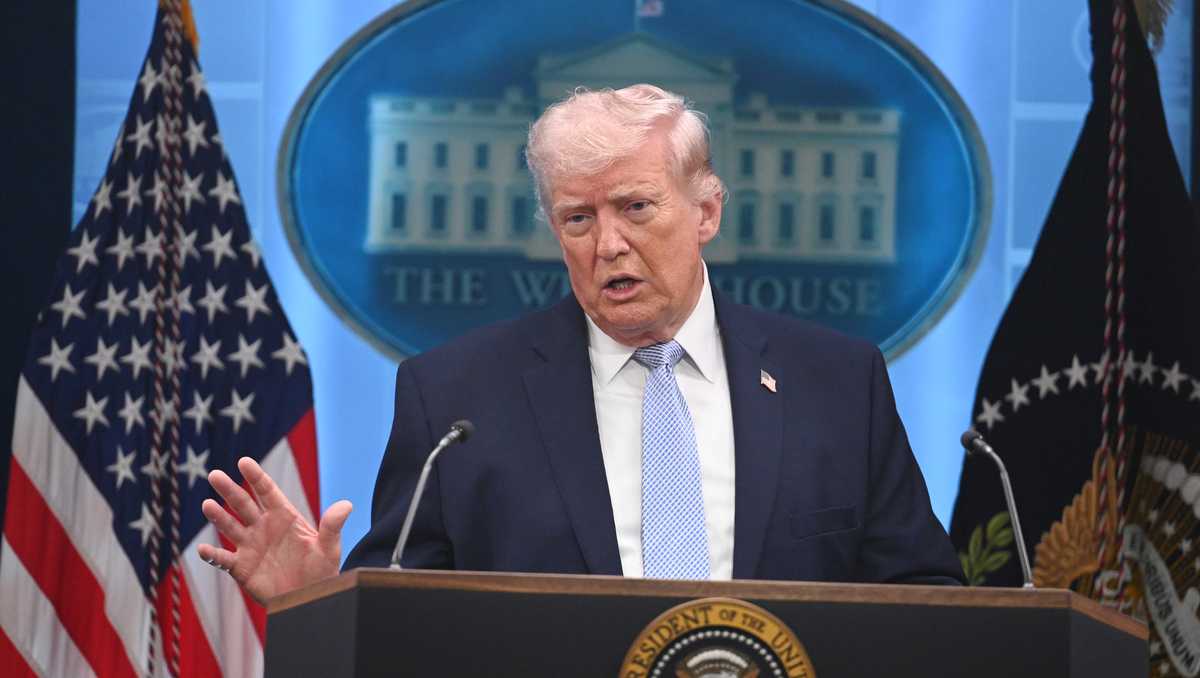
U.S. President Donald Trump pulled back on his threats to launch devastating strikes on Iran late Tuesday, swerving to deescalate the war less than two hours before the deadline he set for Tehran to capitulate or face a major escalation.
Trump said he was holding off on his threatened attacks on Iranian bridges, power plants and other civilian targets, subject to Tehran agreeing to a two-week ceasefire and reopening of the Strait of Hormuz, the waterway through which a fifth of the world’s oil is shipped during peacetime. He also said Iran has proposed a “workable” 10-point peace plan that could help end the war launched by the U.S. and Israel in February.
Iran’s Supreme National Security Council said it has accepted a two-week ceasefire and that it would negotiate with the United States in Islamabad beginning Friday.
Iranian Foreign Minister Abbas Araghchi said passage through the strait would be allowed for the next two weeks under Iranian military management. It wasn’t immediately clear whether that meant Iran would loosen its chokehold on the waterway.
In a post on his social media site, Trump said that he would suspend attacks on Iran for two weeks provided Tehran agreed “to the COMPLETE, IMMEDIATE, and SAFE OPENING” of the strait.
Iran’s demands for ending the war include control of the strait, the withdrawal of U.S. combat forces from the region, the lifting of sanctions and the release of its frozen assets. The demands indicate an effort to remake both the geopolitical order in the Middle East and the global oil trade.
Even as the ceasefire was announced, missile alerts continued in the United Arab Emirates, Israel, Saudi Arabia, Bahrain and Kuwait early Wednesday, hinting at the chaos surrounding the diplomatic moves. The U.S. military has halted all offensive operations against Iran but continues defensive actions, said an official, who spoke on condition of anonymity to describe sensitive military operations.
Since the war began, Trump has repeatedly backed off deadlines just before they expire.
In doing so again Tuesday, Trump said he had come to the decision “based on conversations” with Pakistan Prime Minister Shehbaz Sharif and Gen. Asim Munir, Pakistan’s powerful army chief. Sharif, in a post on X hours earlier, urged Trump to extend his deadline by two weeks to allow diplomacy to advance. He used the same post to ask Iran to open the strait for two weeks.
The president said in his social media post that Iran has presented “a workable basis on which to negotiate.”
“Almost all of the various points of past contention have been agreed to between the United States and Iran, but a two week period will allow the Agreement to be finalized and consummated,” Trump said.
Israel has also agreed to the terms of the two-week ceasefire agreement, according to a White House official who was not authorized to comment publicly and spoke on condition of anonymity. And Sharif said the ceasefire extends to Israel and Hezbollah halting fighting in Lebanon.
But there are concerns in Israel about the agreement, according to a person familiar with the situation who spoke on condition of anonymity because they were not allowed to speak to the media. The person said Israel would like to achieve more.
Iran’s stockpile of highly enriched uranium is still buried at enrichment sites. The program had been one of the main issues cited by both Israel and the U.S. in launching the war.