
By Sharon Zhang
This article was originally published by Truthout
Israeli forces announced on Wednesday that it struck 100 sites in Lebanon over just the course of 10 minutes.
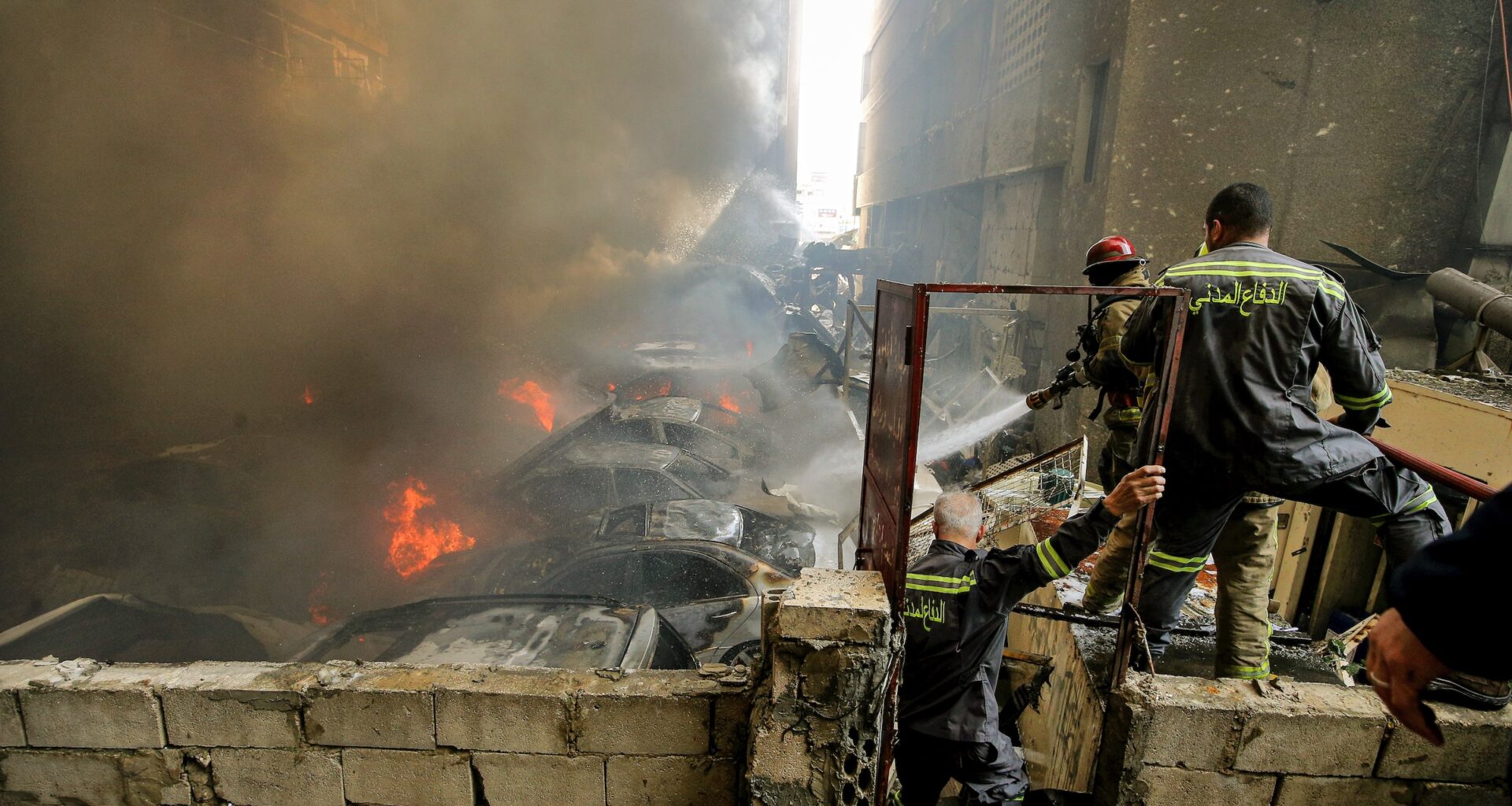
Israeli forces launched some of the most intense bombardments of Lebanon in recent years on Wednesday, striking Beirut and towns and cities across the country just hours after a ceasefire deal that reportedly includes Lebanon was announced.
The Israeli military announced on Wednesday that it targeted over 100 sites with strikes over just the course of 10 minutes in Lebanon. The UN also reported that it has recorded over 60 locations struck. The intensity of the strikes was unprecedented in recent times, one Al Jazeera reporter said, reminiscent of the scale of Israel’s invasion of Beirut in 1982 or Israel’s beeper attack in 2024.
Video of the strikes circulated online. One showed a massive fire in the wreckage of destroyed buildings in Beirut, sending plumes of dark smoke into the air. Another video purportedly taken in Beirut showed the top floors of a building completely destroyed and smoking, while the streets below were covered in flaming debris.
Another video from Tyre, in southern Lebanon, showed an Israeli strike hitting a building in the city center, with the explosion spreading horizontally across what appeared to be several city blocks and sending a plume into the air that shot higher than the hills in the background.
The death toll is unclear, but early reports have said that hundreds have been killed by the strikes.
The Guardian’s Will Christou reported that Lebanese people are circulating pictures of children found in the rubble of buildings destroyed by Israel in hopes of identifying them and finding their families. Hospitals are asking for urgent blood donations in response to the strikes.
Israeli outlets reported that the Israeli military says the latest strikes are part of a new operation dubbed “Eternal Darkness.”
The strikes come after Israel escalated its strikes and invasion in southern Lebanon over the weekend, destroying entire towns and targeting bridges that connect the region to the rest of the country.
Israeli Prime Minister Benjamin Netanyahu said that he supports the 10-point ceasefire deal for the U.S.-Israeli war on Iran, but claimed that the deal did not include Lebanon. Trump also claimed to CBS that the deal did not include Lebanon on Wednesday after the strikes.
However, this directly contradicts a statement from the prime minister of Pakistan, which served as a mediator between Iran and the U.S. in brokering the ceasefire deal. According to Pakistani Prime Minister Shehbaz Sharif, the ceasefire includes Lebanon and other battle fronts.
“With the greatest humility, I am pleased to announce that the Islamic Republic of Iran and the United States of America, along with their allies, have agreed to an immediate ceasefire everywhere including Lebanon and elsewhere, EFFECTIVE IMMEDIATELY,” Sharif said on Tuesday.
Sharif also said in a statement after Israel’s strikes: “Violations of ceasefire have been reported at few places across the conflict zone which undermine the spirit of peace process.”
Reports on Wednesday also said that Iranian officials are incensed over the bombardments and say that Lebanon was included in the deal. One source reportedly told Iran’s Tasnim News Agency that Iran would not reopen the strait if Israel continues bombarding Lebanon.
The details of the deal, announced just ahead of U.S. President Donald Trump’s deadline for his genocidal threats on Tuesday evening Eastern Time, have not been made public. The deal entails a two-week ceasefire, during which Iran will allow free flow of traffic through the Strait of Hormuz.
Israeli forces have also said that they are continuing to strike Iran, according to Times of Israel, despite the temporary ceasefire.
Israeli forces have a long history of violating ceasefire deals. According to the UN Interim Force in Lebanon (UNIFIL), Israel violated its ceasefire agreement with Hezbollah nearly 10,000 times in the first year.
Since the latest escalation in Lebanon on March 2, Israeli strikes have killed over 1,450 people, including 126 children, Lebanese officials have said. Israel’s bombardments and expanded ground invasion have displaced 1.2 million people, or over a fifth of the population, in just weeks.
This article was originally published by Truthout and is licensed under Creative Commons (CC BY-NC-ND 4.0). Please maintain all links and credits in accordance with our republishing guidelines.