
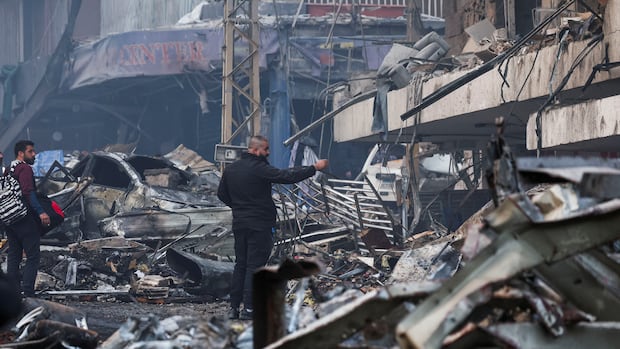
In Washington Wednesday morning, the talk was of peace. But in Beirut, it was the sound of Israeli missiles hitting more than 100 targets in under ten minutes.
For Lebanon, the first day of the presumed ceasefire between Iran, Israel and the United States turned out to be the bloodiest yet of the war.
While the final casualty count remains unclear, Lebanon’s health ministry said over 100 people were killed and 800 wounded in dozens of near simultaneous attacks from the air that stretched from the capital Beirut to multiple locations across the country’s south.
“People are comparing it to the pager attack because it happened in sync,” said Makram Rabah, a history professor at the American University of Beirut.
The September 2024 pager attacks by Israel’s secret service triggered widespread fear across Lebanon after thousands of compromised personal communication devices used by Hezbollah members suddenly exploded, killing 14 militants but also leaving thousands of innocent civilians injured.
For Rabah, Israel’s latest missile barrage wasn’t a distant military operation, it was personal.
“They hit right around where I reside, so these are areas I’m familiar with. I’m not looking at a TV screen and seeing places I don’t know,” he told CBC News.
WATCH | Israeli strikes pound Beirut Wednesday: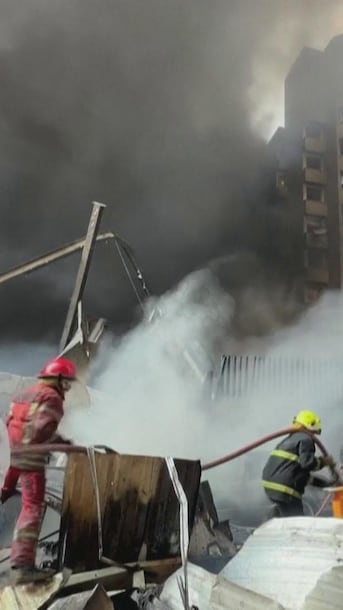
Smoke billows in central Beirut after Israeli strike
Emergency crews were on the scene on Wednesday after an Israeli strike on Beirut’s Corniche al-Mazraa neighbourhood. Israel has said a recently announced ceasefire in the U.S.-Israeli war with Iran does not apply to its fight against Hezbollah in Lebanon, despite mediator Pakistan’s assertion that the deal included Lebanon.Operation ‘Eternal Darkness’
Israeli media have dubbed the latest mission Operation “Eternal Darkness.”
While the IDF claims it was targeting Hezbollah militants and their infrastructure, the reality on the ground was one of civilian chaos.
Ahmed Al Zoghbi, a 46-year-old taxi driver in Beirut’s Khandaq al-Ghamiq district, described the moment a strike hit nearby: “I saw a motorcycle next to me … the driver was covered in dust and blood…. This is the most dangerous day since this war began.”
The timing of the Israeli strikes appears designed to send messages to both Iran and the United States, said Andreas Krieg of the School of Security Studies at King’s College London.
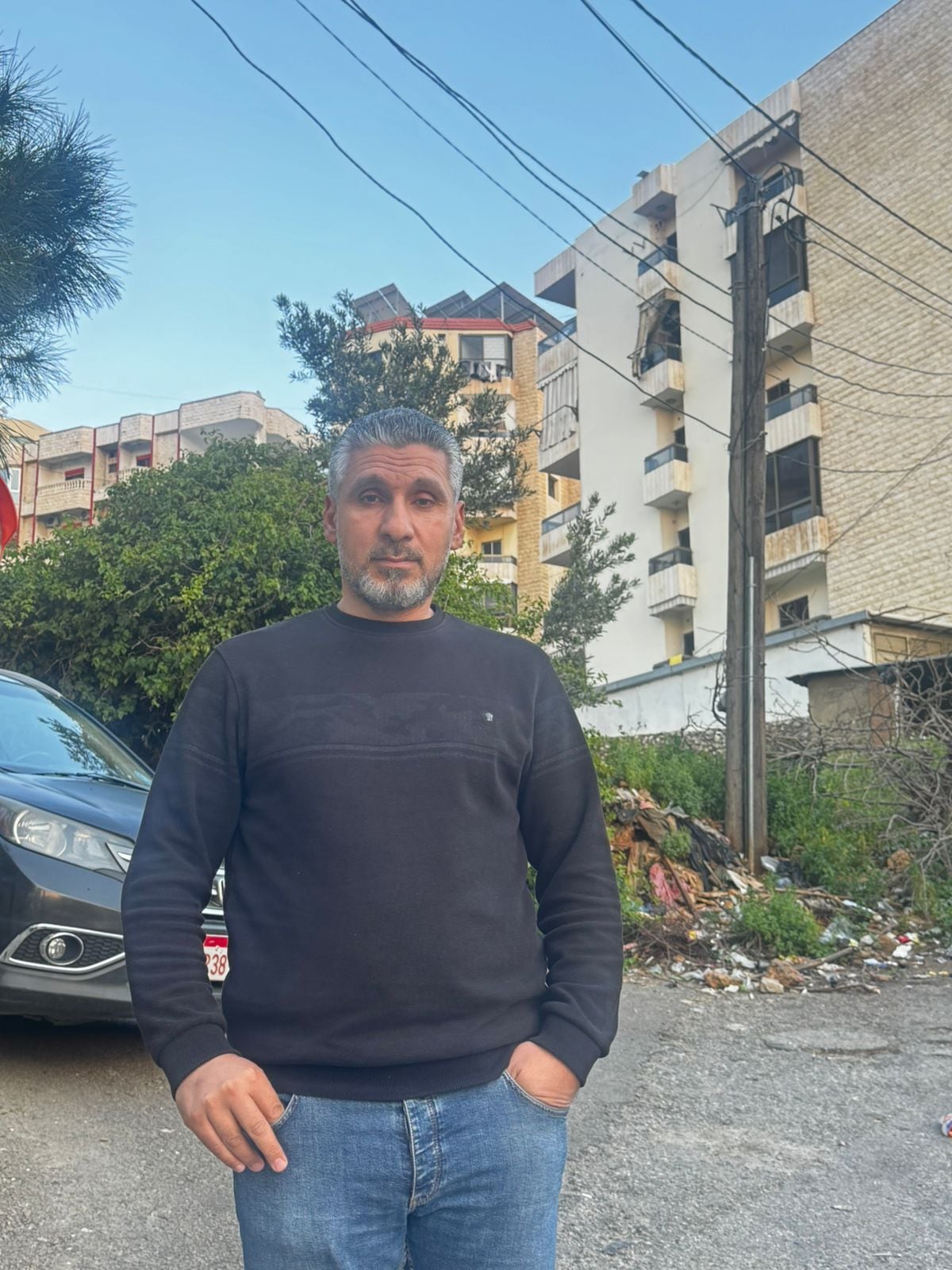 Ahmad Al Zoghbi, 46, was driving a taxi near where an Israeli missile struck in Beirut. (Submitted by Ahmad Al Zoghbi)
“In effect, [Israeli Prime Minister Benjamin Netanyahu] is saying that Israel, and not [mediator] Pakistan, or Washington or Tehran will decide the tempo in Lebanon,” said Krieg.
There’s been a great deal of confusion about who the ceasefire applies to.
U.S. President Donald Trump was quoted by a reporter for U.S. public broadcaster PBS as saying Lebanon amounted to a “separate skirmish.”
Later, White House press secretary Karoline Leavitt also said Lebanon was not included. And Israeli Prime Minister Benjamin Netanyahu said as far as he concerned, Hezbollah is outside of the ceasefire agreement.
However, the Pakistani mediators who brokered the agreement said Lebanon was very much included in the ceasefire deal.
Krieg said the current situation is “brittle” and Israel’s actions could bring the whole agreement crashing down.
Already, Iran has indicated its agreement to allow “safe passage” to shipping on the Strait of Hormuz is on hold, given the Israeli actions.
“There is a real risk this could damage or even collapse the broader ceasefire — but I would not say the collapse is automatic,” said Krieg.
He said both the U.S. and Iran want to avoid a return to direct confrontation, so it’s likely the U.S. will put private pressure on Israel to limit the intensity of future military strikes so as to keep the fighting in Lebanon “compartmentalized.”
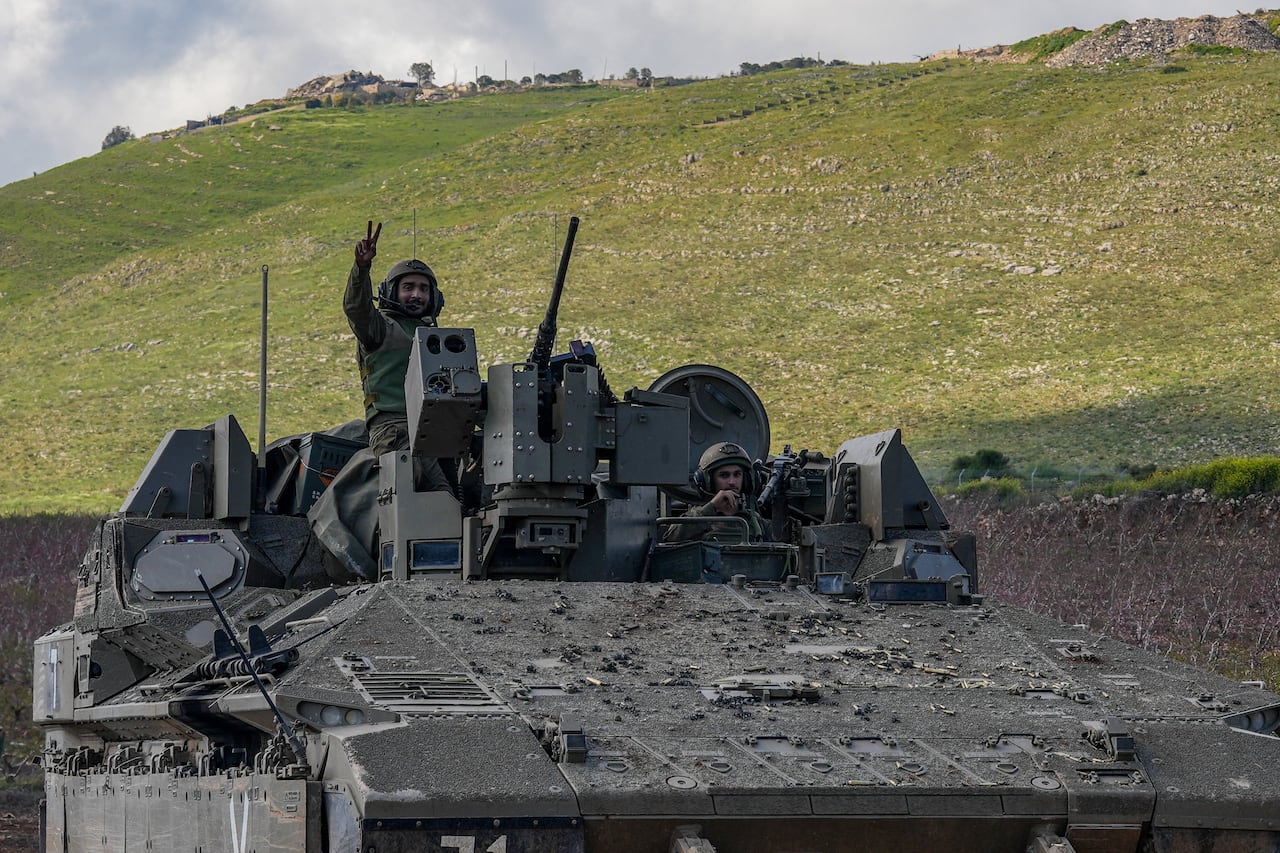 An Israeli soldier gestures from an Israeli armoured personnel carrier (APC), as they leave southern Lebanon and enter Israel, as seen from the Israeli side of the border on Wednesday. (Ayal Margolin/Reuters)Cycle of war
Hezbollah and Israel have endured a decades-long cycle of repeated invasions followed by guerrilla warfare.
Israel invaded southern Lebanon in 1982, leading to an 18-year occupation. The two sides again fought a month-long war in 2006, and following Hamas’s attacks on Israel on October 7, 2023, the two sides fought yet again.
A frequently violated ceasefire in November 2024 lessened the intensity of the fighting — briefly — but the two sides resumed all-out-war in March 2026 when the U.S. and Israel attacked Iran and Hezbollah resumed firing at Israel.
Successive Israeli governments have demanded Hezbollah be disarmed and a wide swath of Lebanon south of the Litani River be demilitarized. Lebanon’s coalition government claims it had finally started to make progress just before the Iran-U.S.-Israel war broke out
A country held hostage
Israeli ground forces currently occupy about 10 per cent of Lebanon’s territory and have evoked widespread international condemnation by rampant and ongoing destruction of Shia Muslim villages.
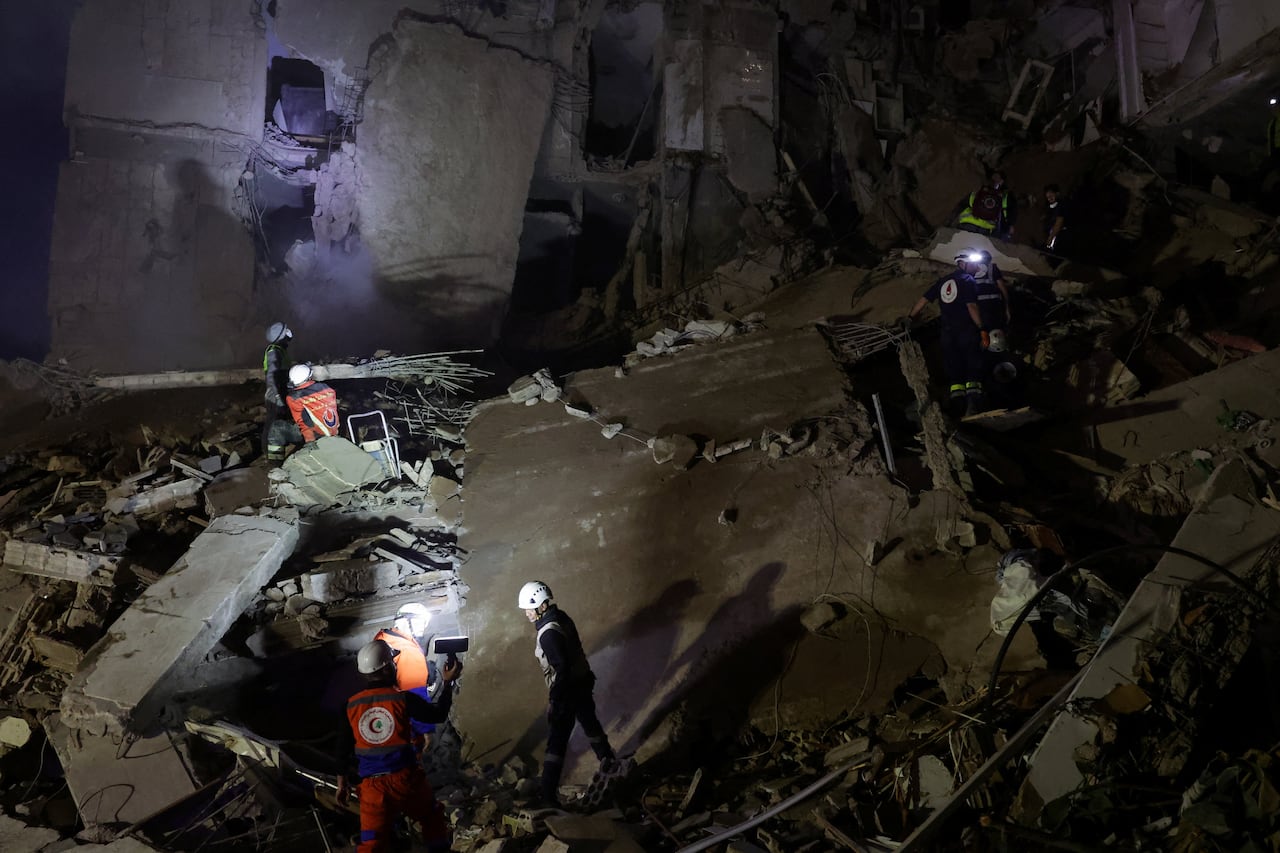 Rescuers work at the site of an Israeli strike in Beirut on Wednesday. (Emilie Madi/Reuters)
The IDF has also bombed key Lebanese infrastructure, such as bridges. More than one million Lebanese civilians have been turned into refugees in their own country after Israel announced they will never be allowed to return to their homes in the south.
Within Israel, however, support for continuing the war against Hezbollah is strong.
“We are doing that to protect ourselves,” said Sarit Zehavi, president of Alma Research and Education Center, who lives in northern Israel within reach of the Hezbollah rockets.
“There is a consensus in Israel among those who are against Netanyahu and those who are for Netanyahu that the issue of Hezbollah should be dealt with.”
Human rights groups, however, have repeatedly condemned Israel’s actions in Lebanon.
They point to the widespread destruction of buildings without any apparent military significance, the repeated killing of Lebanese journalists and health-care workers, as well as the mass expulsions of civilians.
In the aftermath of the mass casualties Wednesday, Médecins Sans Frontières issued another scathing statement saying that such “indiscriminate strikes on highly densely populated areas are completely unacceptable.”
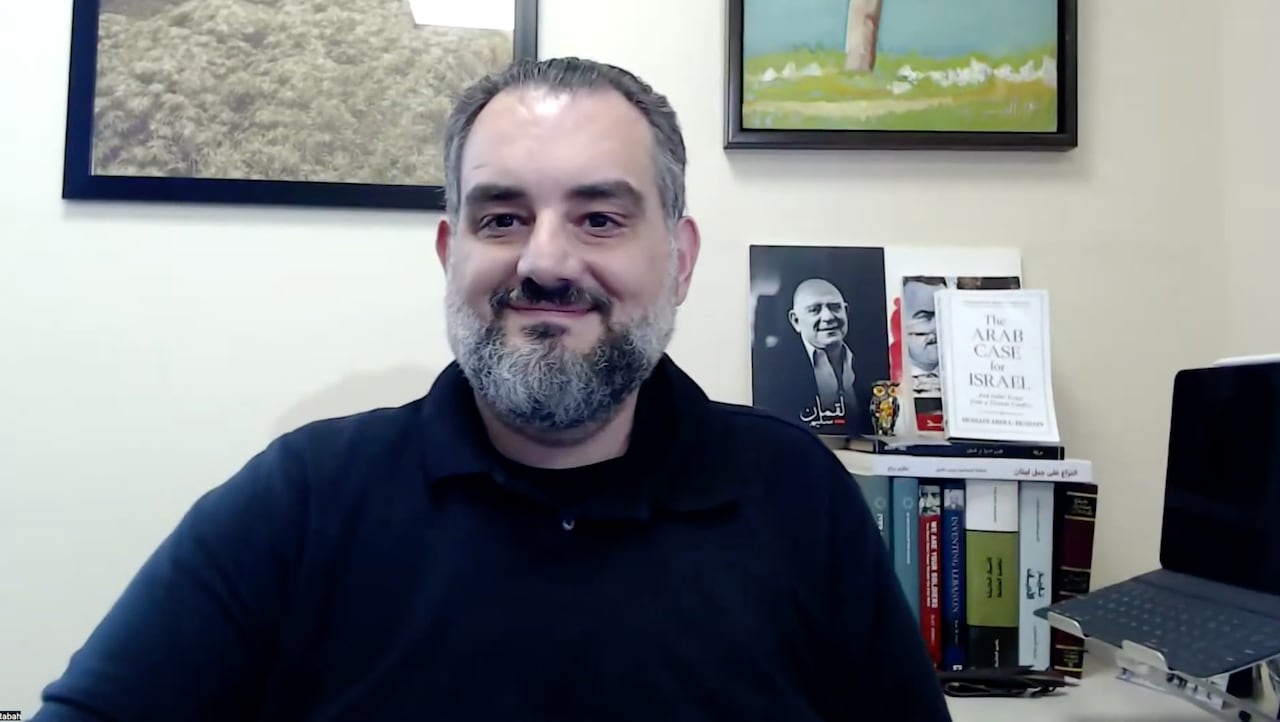 Makram Rabah, assistant professor of History at the American University of Beirut. (CBC News)
Makram Rabah, the Beirut-based history professor, characterized Lebanon as a country held hostage by both Israel and Hezbollah.
“I believe that if the war with Iran did not happen, Netanyahu was going to start the war anyway, because many of the warnings to disarm Hezbollah and to stop their guards from controlling Lebanon fell on deaf ears,” said Rabah.
He’s also scathing in his criticism of Hezbollah, saying the fact that its militants are hiding out in civilian areas is “solidifying sectarian tensions” as these communities feel endangered by their presence.
He says it is unlikely any of the major powers in the conflict — neither Iran nor the United States — have any interest in helping his country.
“The Iranians simply checked out. They don’t care … these proxies [Hezbollah] were created to cater and to protect Iran, not the other way around.”