The scheme will be part of the gallery’s £750 million future development programme.
Working with BDP and MICA, the practice behind the V&A Dundee won the high-profile job ahead of Italy’s Renzo Piano, Foster + Partners, a joint bid by Farshid Moussavi Architecture and Piercy & Company, and London-based Studio Seilern Architects.
The team also beat New York-based Selldorf Architects, which recently reworked the gallery’s Venturi, Scott Brown-designed Sainsbury Wing.
The competition, known as Project Domani (‘tomorrow’ in Italian) and organised by Colander Associates, attracted 65 submissions. The standstill period allowing challenges to the proposed appointment runs until Thursday 16 April.
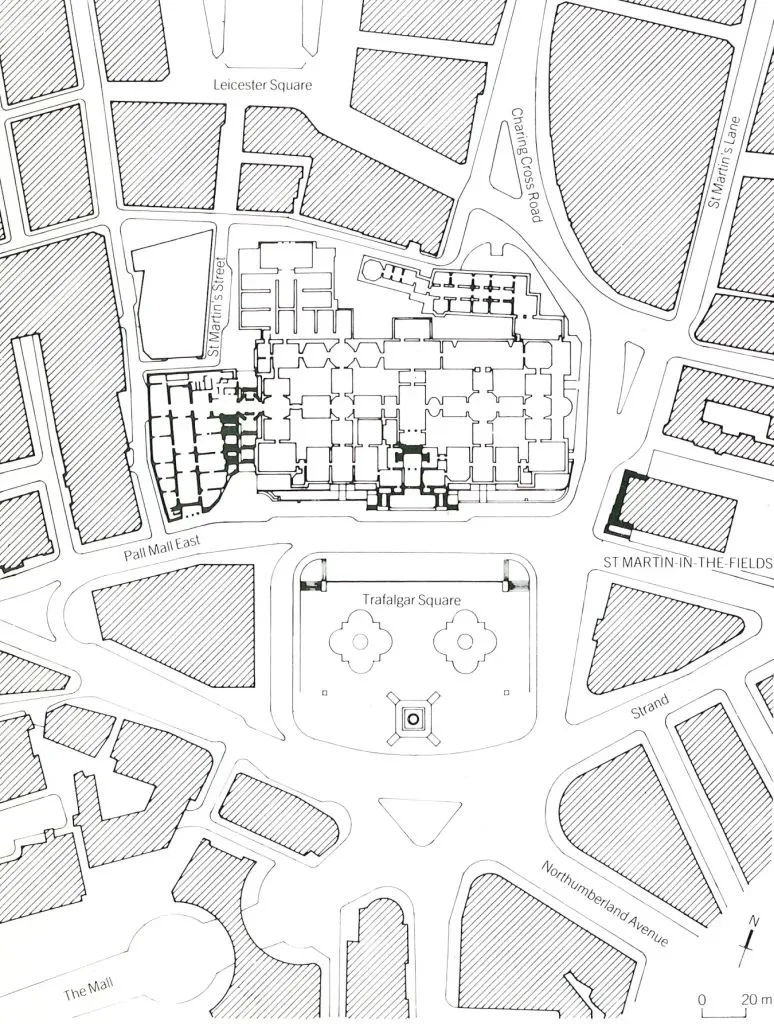
Kengo Kuma’s scheme will create an entirely new wing for the gallery of between 5,500m² and 7,000m², while providing ‘a vibrant, fresh experience’ for visitors with new public spaces between Leicester Square and Trafalgar Square.
The wing will sit on the site of St Vincent House, a late-1960s block designed by Charles Pike & Partners, north of the main building. The gallery bought the property nearly 30 years ago for the purpose of expanding gallery space. It currently houses a hotel and office complex.
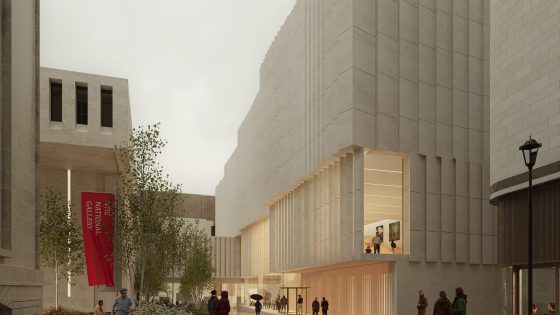
The winning scheme, which features Portland stone and ‘stepped massing’, will be Kengo Kuma’s first project in England.
The shortlist in full
[WINNER] Kengo Kuma and Associates (Japan) + BDP (UK) + MICA (UK)
Farshid Moussavi Architecture + Piercy & Company (both UK)
Foster + Partners (UK) + Studio Adrien Gardère (France)
Renzo Piano Building Workshop (Italy) + William Matthews Associates (UK) + Adamson Associates (UK)
Selldorf Architects (USA) + Purcell (UK)
Studio Seilern Architects (UK) + Donald Insall Associates (UK) + and Ralph Appelbaum Associates (UK)
It will be the third and final stage of a redevelopment masterplan launched by the gallery in 2018 and the gallery’s largest project in its 200-year history.
The National Gallery was designed by William Wilkins and occupies the northern end of Trafalgar Square. The latest project comes two more than decades after Dixon Jones delivered a series of entrance upgrades to the complex.
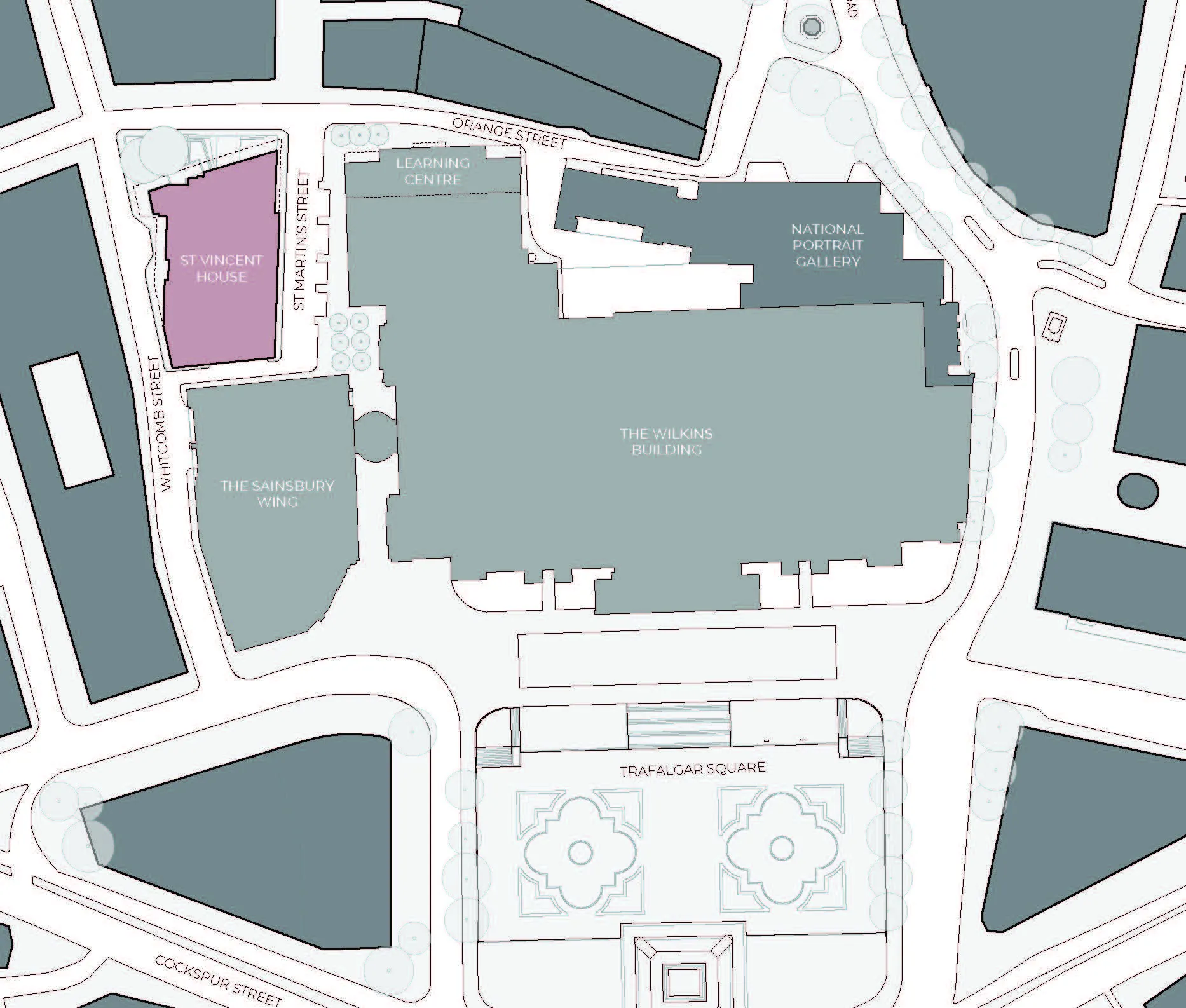
Site plan showing St Vincent House
The competition jury was led by National Gallery board of trustees chair John Booth, and included artist Céline Condorelli, former Imperial War Museum director Diana Lees, and architect Patty Hopkins, who was a National Gallery Trustee between 1998 and 2006.
Booth said: ‘[Our] exciting and challenging task was to assess design submissions from six of the world’s finest architects and their partners.
‘All six were impressive and thoughtful, but in the end, Kengo Kuma’s proposal was our unanimous choice. A beautiful design inside and out, sensitive to our existing Grade I exteriors and distinctive gallery spaces, the new building will also help to unite two of London’s most important outdoor spaces — Leicester and Trafalgar Squares — by creating enticing new public realm between them.’
The six shortlisted teams each received a £50,000 honorarium to participate in the second round: a design competition.
It is understood that the new wing is planned to complete in 2030.
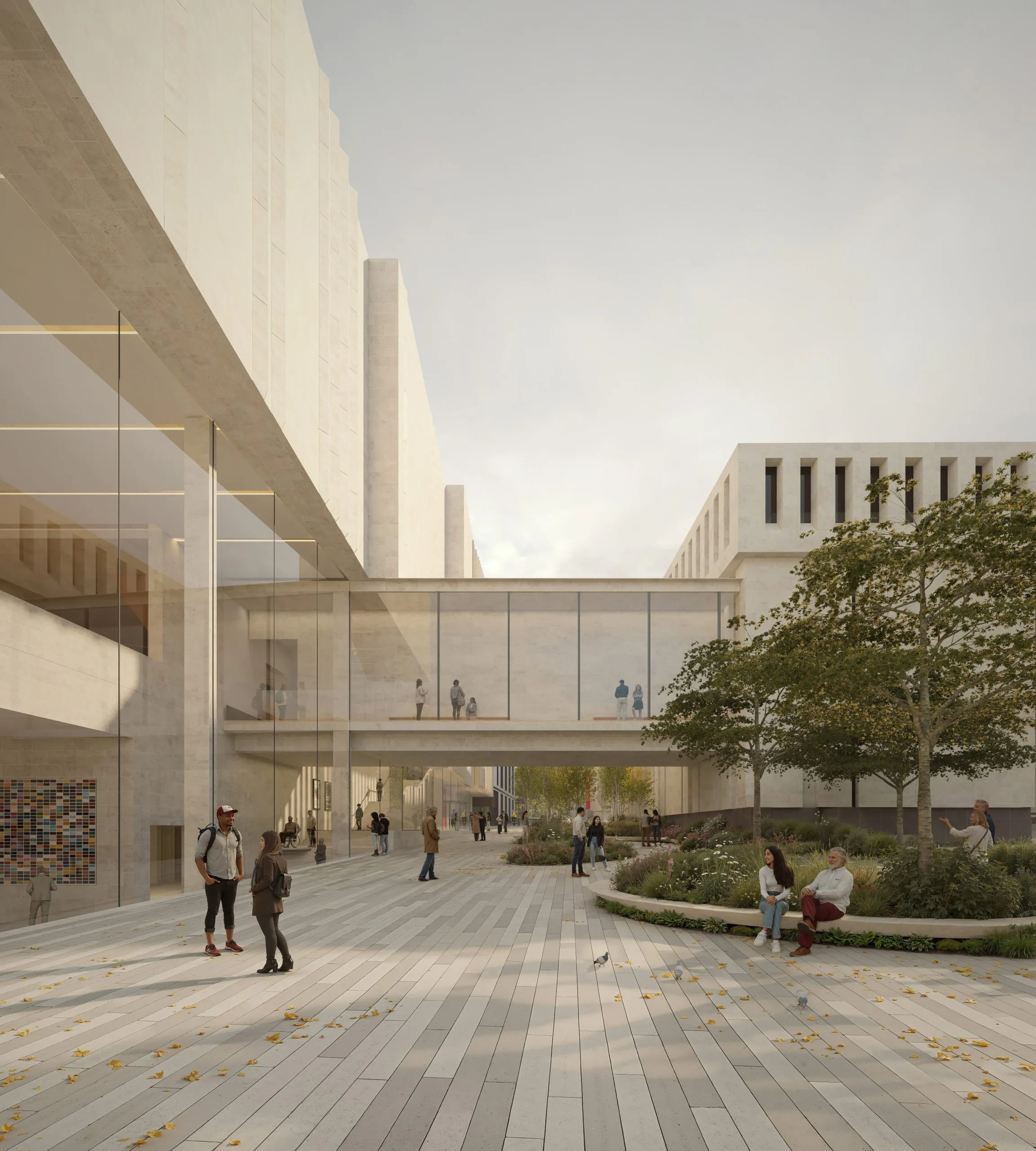
WINNER: Kengo Kuma and Associates with BDP and MICA .
The proposed new bridge will connect ‘old and new’ wing above the activated public realm of Jubilee Walk.
The jury’s citation: why we chose Kengo Kuma
The design is both innovative and beautiful, meeting the ambition and sensitivity required for an international gallery commission. It is respectful of the Sainsbury Wing galleries … and the approach to the public realm and roof garden creates a generous presence, enhanced by trees and greenery.
The thoughtful design of the external spaces, with links to Leicester Square, evokes an open visitor welcome which is further enhanced using Portland stone and stepped massing, which shows sensitivity to the surrounding streets and allows natural light to be drawn into the building.
(Internally) the style of the galleries is very simple and clean, with a contrast between the main floor that incorporates vaults and arches, while the upper floor has a more geometric design. As a result, the main floor of galleries presents a continuum with the Sainsbury Wing and North Galleries, but the upper floor has its own style, which adds variety and a change of design pace to the overall scheme.
A robust and measurable social value delivery plan is defined … strengthened through the inclusion of the bespoke climate and social action design framework. The approach to sustainability is also defined, alongside a clear strategy for considering and applying social value principles across the lifecycle of the project.
This is an exemplary submission, demonstrating both a strong grasp of the importance of social value for this project and how social value could be integrated into existing National Gallery initiatives and future National Gallery schemes.
View images, drawings and details of the National Gallery in the AJ Buildings Library