
The sad truth is that Middle East ceasefires don’t always stop the shooting.
President Donald Trump’s halt to fighting with Iran already fits the pattern. On its first day, it was hard to verify that it existed at all.
The confusion was multi-layered.
The US, Israel and Iran could not agree on the terms on which the ceasefire was forged, after a huge Israeli assault in Lebanon led Tehran to claim a violation. Washington and Tehran, meanwhile, offered conflicting accounts of whether the Strait of Hormuz was open or closed. And Gulf states reported one of the most intense Iranian attacks of the war, which set off multiple drone and missile alerts.
The tensions did not only destabilize the truce. They highlighted the vast gaps in perception and trust before talks in Pakistan this weekend meant to convert a two-week pause in the fighting to a more permanent deal.
Rhetoric and published demands from both the US and Iran indicate that the foes will enter the process demanding almost total capitulation from one another on issues such as Iran’s nuclear program and its claimed right to build missiles.
Those differences mean that it would be a major achievement if the top US representative, Vice President JD Vance, emerges with anything more than clarified ceasefire terms. There is a substantial risk the opposite will happen and that the talks will lay bare splits that could tear the process apart.
With this in mind, and against the backdrop of the ceasefire’s shaky start, the president’s claims this week that the US and Iran would work together to dig up Tehran’s enriched uranium — and might run a joint venture to profit from oil tankers heading through the Strait of Hormuz — looked like fantasy.
And Iran’s declaration by the end of the day that it had closed the strait — a major global oil exporting choke point — was a signal that it intends to fully exploit a new form of leverage that it lacked before Trump started the war.
Conflicting claims can be useful at the beginning of a peace process. They may give warring parties political space to each claim victory and to maneuver for talks and compromises ahead.
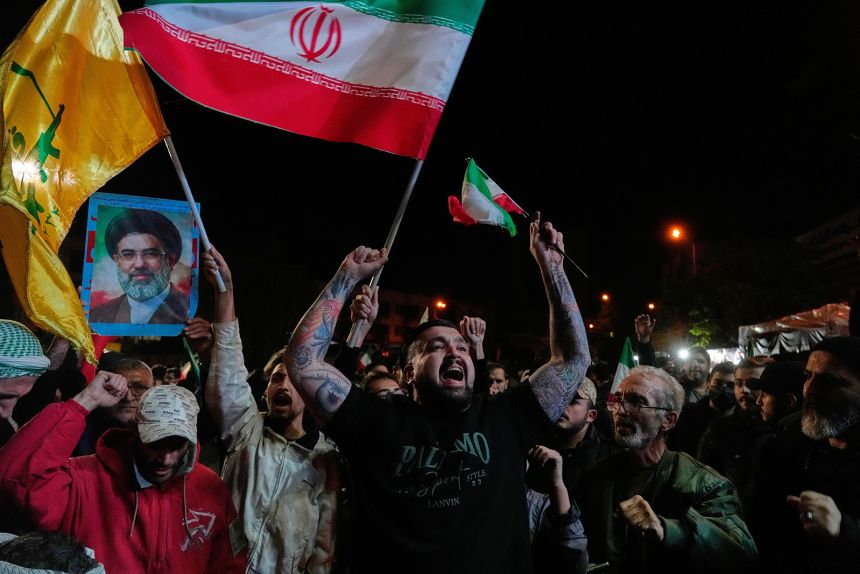
Washington and Tehran both took victory laps on Wednesday. Regime supporters took to the streets of the Iranian capital to celebrate and to burn US and Israeli flags. In Washington, White House press secretary Karoline Leavitt sought to bolster her boss’s image by saying, “Never underestimate President Trump’s ability to successfully advance America’s interests and broker peace.”
The Trump administration has a fair argument that 40 days of relentless bombing badly degraded Iran’s missile capabilities, shattered its navy and air force, and did serious damage to its military industrial complex. Yet White House claims to have pulled off “regime change” were belied by Iran’s defiance on Wednesday. And while Tehran’s enriched uranium stocks might be under rubble following US air strikes last year, their presence means they will remain a potential threat in future.
The White House insisted that media reports correctly quoting a draconian set of Iranian negotiating points were false and that Trump was operating from different material from Tehran that he found more workable. And while evidence mounted that few oil tankers had yet transited through the strait, Leavitt said that Iran had privately communicated to the White House that it was indeed open.
What might kindly be referred to as flexibility on the part of the White House may have been necessary to keep the fragile foundation of a ceasefire viable. But it was also a transparent attempt to preserve the political conceit that Trump had won a great victory in a war that polls show is deeply unpopular. “Other presidents marked time and kicked the can down the road. President Trump made history,” Defense Secretary Pete Hegseth said. It’s tough to square such an assessment with the events on the first day of the ceasefire.
Problems are piling up for the Trump team ahead of the planned talks under the auspices of Pakistan, which has been using its friendships in Tehran and Washington to chase a breakthrough.
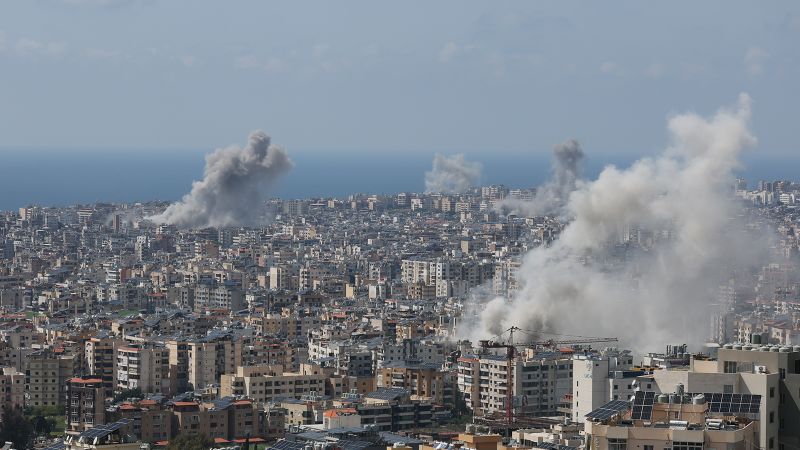
First up is the question of the Israeli offensive in Lebanon that could scupper the talks even before they begin. The intense attacks on Iran-backed Hezbollah fighters there suggested Israel was taking advantage of a lull in operations over Iran. Tehran insisted that the attacks were a breach of the ceasefire and used them to justify closing the Strait of Hormuz. Washington insisted that Lebanon was not included in the deal. Vance tried to ease the situation by insisting that Iran had fallen prey to a good-faith misunderstanding about the scope of the ceasefire.
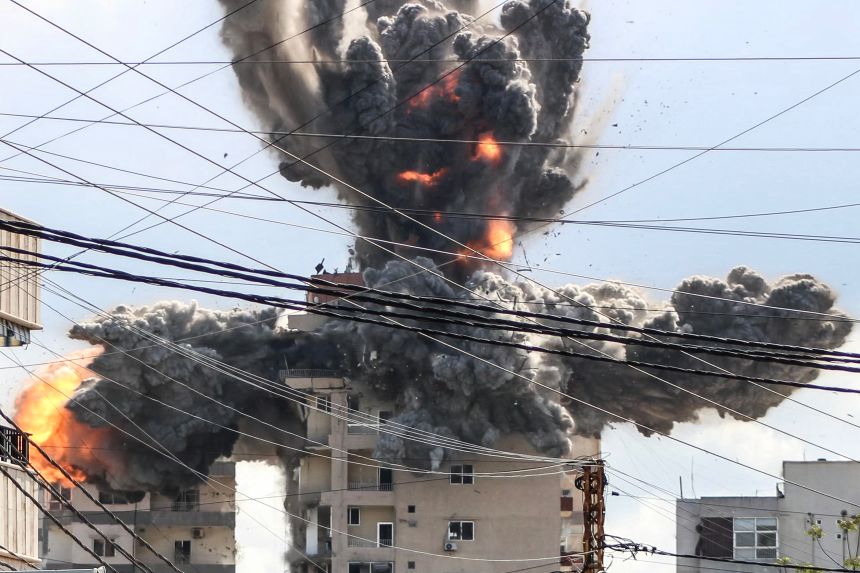
But it’s a poor reflection on the nascent diplomatic process when one side is unaware of a critical part of a ceasefire. The disconnect also reflects the lack of any formal agreement bolstering the truce. And the Israeli implication that the Lebanon war is separate from the one with Iran is a nonstarter in Tehran. More than 100 strikes on Wednesday that killed at least 182 people targeted Hezbollah — a proxy critical to Iran’s regional power base.
Such treacherous regional dynamics explain fears the ceasefire won’t endure until the weekend.
If the meeting does happen, it’s likely to be only the start of a tortuous process that will test the skill and staying power of Trump and his team.
Negotiations with Iran are typically exhausting and prolonged. The Islamic Republic, in this case, seems to have a strong hand with its control over the Strait of Hormuz — a card it can use to hold the global economy hostage. It can also use this new leverage as a cash cow to impose levies on tankers; as a cudgel to punish the US in negotiations; or as a carrot to secure the lifting of US sanctions.
This is a far more complex suite of issues than those encountered in the Obama administration’s successful push for a nuclear deal with Tehran. That process took 18 months. There’s been no sign across Trump’s two terms that he has anywhere near that kind of patience. The habitual assumptions of a real estate magnate president that Iran, like most adversaries, is just itching to make a deal may also be a misjudgment of his deeply ideological opponents.
“There is a zero likelihood that you’re going to go into Pakistan for a couple of days and come out with an agreement,” said Brett McGurk, a former senior US national security official who is now a CNN global affairs analyst.
Speaking with CNN’s Kasie Hunt, McGurk advised slowing the process because, without pre-cooked diplomatic agreements, there could be a “breakdown.”
Prospects for success are even more elusive given the altered political conditions caused by the deaths of many top Iranian leaders in the war, including Ayatollah Ali Khamenei. Surviving officials, who’ve absorbed the full might of the US and Israeli militaries for over a month, may conclude they have the upper hand.
While the war was raging, many observers struggled to see how Trump could navigate out of a geopolitical corner he’d made for himself. But there’s no sign his dilemma will eased by pursing an alternative diplomatic track.