
Israel backs President Donald Trump’s two-week ceasefire with Iran, as Lapid calls it a “political disaster” and right-wing allies warn the war ended too soon
Israel accepted President Donald Trump’s proposed two-week ceasefire with Iran, but the deal immediately triggered a fierce political backlash in Jerusalem, with criticism coming not only from the opposition but also from voices on the right who argued the war had been halted too soon.
The agreement was taking shape while alerts were still ongoing and the situation on the ground was far from settled. Lebanon, notably, was left outside the arrangement, with Israeli operations there continuing.
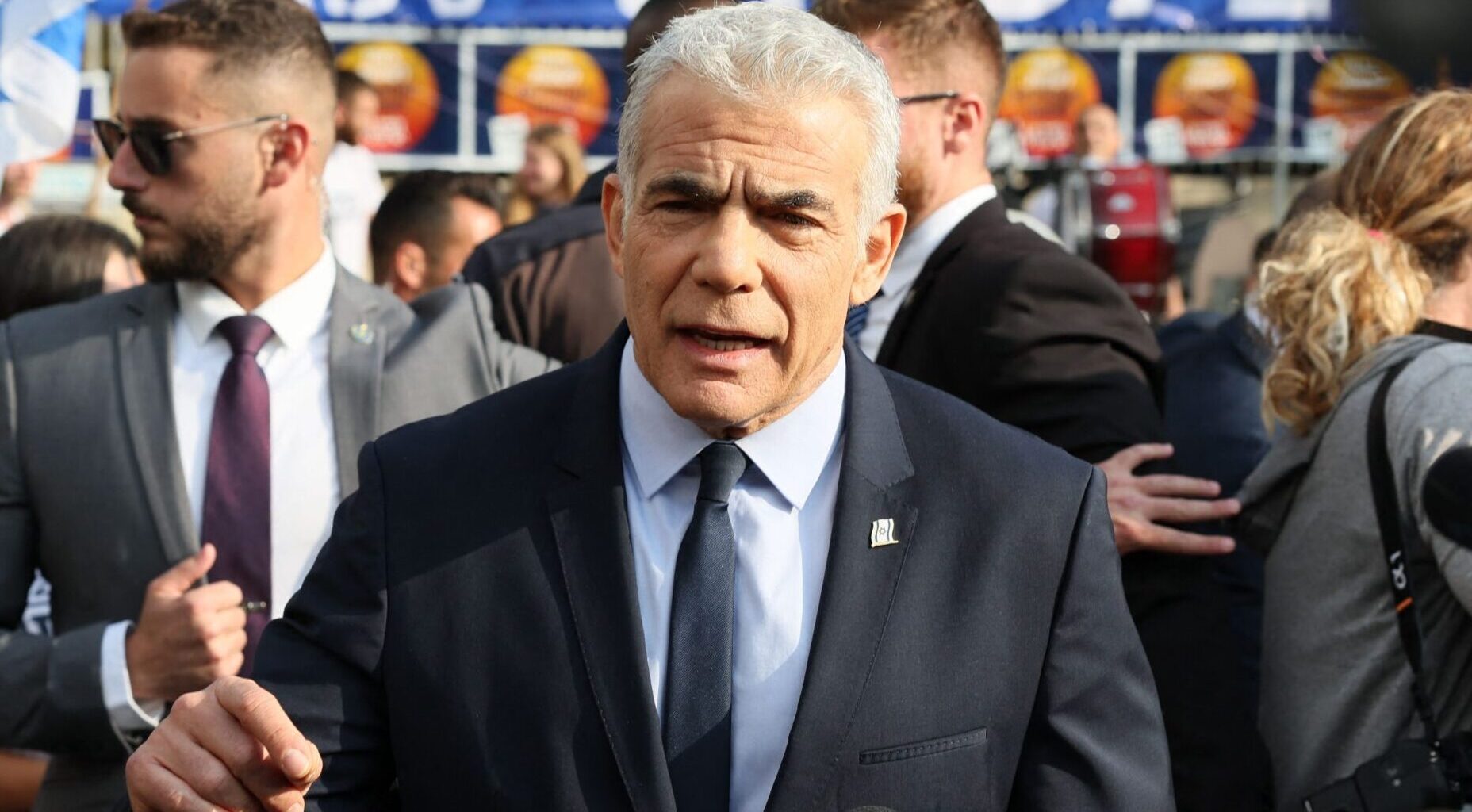
Speaking on Wednesday night in Tel Aviv, Lapid made clear he did not oppose the war itself. He said he had supported it from the beginning and still believed its objectives were justified. But, he added, the problem was what came after. He said Prime Minister Benjamin Netanyahu would soon try to present the campaign as a success, calling that narrative “a complete lie.”
You don’t go to war without a diplomatic plan for how to end it
“You don’t go to war without a diplomatic plan for how to end it,” he said, arguing that the government failed to build any real strategy beyond the military campaign.
He described the result as one of the worst diplomatic failures he could remember, saying that military force without a diplomatic plan does not lead to a decisive outcome.
That theme characterized his remarks. He accused the government of combining arrogance, irresponsibility, and lack of planning with what he called negligence toward the home front. Lapid added that the public had paid in deaths, injuries, weeks in shelters, and economic damage, only to discover that Israel had little real influence over the ceasefire that emerged. At one point, he said Israel had been reduced, in the eyes of the region, from a strategic partner to what he called a “demolitions contractor,” a country used for its firepower but not present where the political terms were ultimately shaped.
His harshest charge was that Netanyahu had led Israel into war without thinking seriously about how it would end. Asked whether he had supported the campaign at the outset, Lapid said he did, but added that he would never have allowed the situation to reach its current form. He argued that a government must build a diplomatic track from the opening hours of a war, not improvise one after weeks of fighting. Recalling his time as prime minister, Lapid said that when he launched a much smaller operation, he set up a team almost immediately to handle its conclusion. “You do not go to war without an orderly team preparing the diplomatic plan for how to end the war.”
That criticism extended to the American dimension. Lapid did not directly attack President Trump but suggested Israel had failed to preserve its freedom of action with Washington. When The Media Line asked how he viewed President Donald Trump’s statements during the war, especially his public pressure on Netanyahu and the broader sense of Israeli dependence that had emerged, Lapid replied that Israel is an independent state and must know how to preserve that independence even with its closest ally.
He said it had been the prime minister’s job to explain that Israeli independence could not become a backward dependency, “even with our greatest friends, and the Americans are our greatest friends.” In his answer to The Media Line, he stopped short of directly criticizing President Trump’s process, but he clearly suggested that Netanyahu had mishandled the relationship at a critical moment.
The Media Line also asked at what point his position shifted from supporting the war to criticizing the way it was being handled. Lapid said he had backed the campaign from the beginning, but argued that within weeks it became clear to him that the government had no plan for how to conclude it. He said that about three weeks earlier, he had published a policy paper outlining the need for an exit strategy, describing the gap between what he called an “unbelievable military success” and the absence of a political outcome to match it.
Lapid warned that Israel is paying a growing diplomatic price for the way the war was handled. He said the country had damaged key relationships and missed what he described as a real opportunity to build a regional coalition with Saudi Arabia and other states.
He pointed to erosion of support in the United States as well, saying Israel is losing ground not only among Democrats but also in parts of the Republican camp. For him, that is not separate from the war itself. It is the result of how it was managed.
That criticism was met from a very different direction on the right.
Donald, you came out a duck
Zvika Fogel, who chairs the Knesset National Security Committee, reacted with a direct attack on President Donald Trump after the ceasefire was announced, writing, “Donald, you came out a duck.” The phrase was a blunt insult suggesting weakness or foolishness, and it showed that resistance to the ceasefire was not limited to Netanyahu’s opponents.
That mattered because Fogel was not making Lapid’s argument. Lapid complained that Netanyahu had no diplomatic strategy and had allowed Israel to become dependent on decisions taken elsewhere. Fogel’s complaint was almost the opposite. From his camp, the problem was that the military campaign should not have been paused at all. The ceasefire, in that reading, risked cutting short a moment of operational advantage.
Culture and Sports Minister Miki Zohar voiced a similar sentiment, saying Israel must go “all the way” in Lebanon and that Iran’s threats should not deter it, because terror is defeated by force and military decision, not negotiation.
The result is an unusually sharp split in Israeli politics over the significance of the same event. For the opposition leader, the ceasefire revealed the absence of statecraft. For hardliners inside the nationalist camp, it suggested a loss of nerve. For Netanyahu’s government, by contrast, the public line has been that Israel entered the arrangement from a position of strength and under conditions shaped by its military pressure and close coordination with Washington, even as the fighting in Lebanon remains outside the ceasefire framework.
That political divergence may be one of the most important consequences of the announcement. Until now, criticism of the Iran war was often restrained by the scale of the threat and the rally-around-the-flag atmosphere that usually accompanies such campaigns. Lapid himself noted that the war began with a broad consensus and that he had publicly backed it from the outset. What changed, in his telling, was not the legitimacy of the objectives but the realization that no coherent Israeli political endgame was waiting on the other side.
He brought the argument back, again and again, to the public that had carried the burden. He spoke about parents, children, compensation, education, and the sense that citizens had sacrificed while the government failed to prepare for the political consequences.
Out of respect for the citizens, these things need to be said
Asked whether accusing Netanyahu of misleading the public discounted what Israelis had endured in recent weeks, Lapid rejected that, saying the opposite was true. “Out of respect for the citizens, these things need to be said,” he replied, adding that the government was misleading the public and ignoring what people had experienced during weeks of attacks, time in shelters, and disruption to daily life. He said people are asking what actually came out of all this and what comes next, and are not necessarily hearing that it was a success.
The ceasefire is in place, but it has not really gone quiet. Lebanon is not part of it, alerts are still being reported, and in Israel, the discussion has already turned political, with different sides describing the immediate outcome in their own way.