
(TNND) — A two-week ceasefire agreement between the United States and Iran appeared at risk of falling apart Thursday, as disputes emerged over Israel’s continued strikes in Lebanon, Iran’s control of the Strait of Hormuz and accusations that Washington violated key provisions of the framework deal.
Hours after the ceasefire was announced, Pakistan — which helped broker the agreement — said it included a pause in fighting between Israel and Hezbollah. However, Israeli Prime Minister Benjamin Netanyahu’s office said Wednesday the deal does not apply to Israel’s ongoing war with Hezbollah, the Iran-backed militant group based in Lebanon.
President Donald Trump, speaking to PBS NewsHour, described the continued Israeli strikes as a “separate skirmish” that was “not included” in the ceasefire, reinforcing Israel’s position.
“Yeah, they were not included in the deal,” Trump said. “Because of Hezbollah. They were not included in the deal. That’ll get taken care of too. It’s alright.”
Iranian Foreign Minister Abbas Araghchi warned the U.S. must choose between a ceasefire or continued war via Israel. “It cannot have both,” he said.
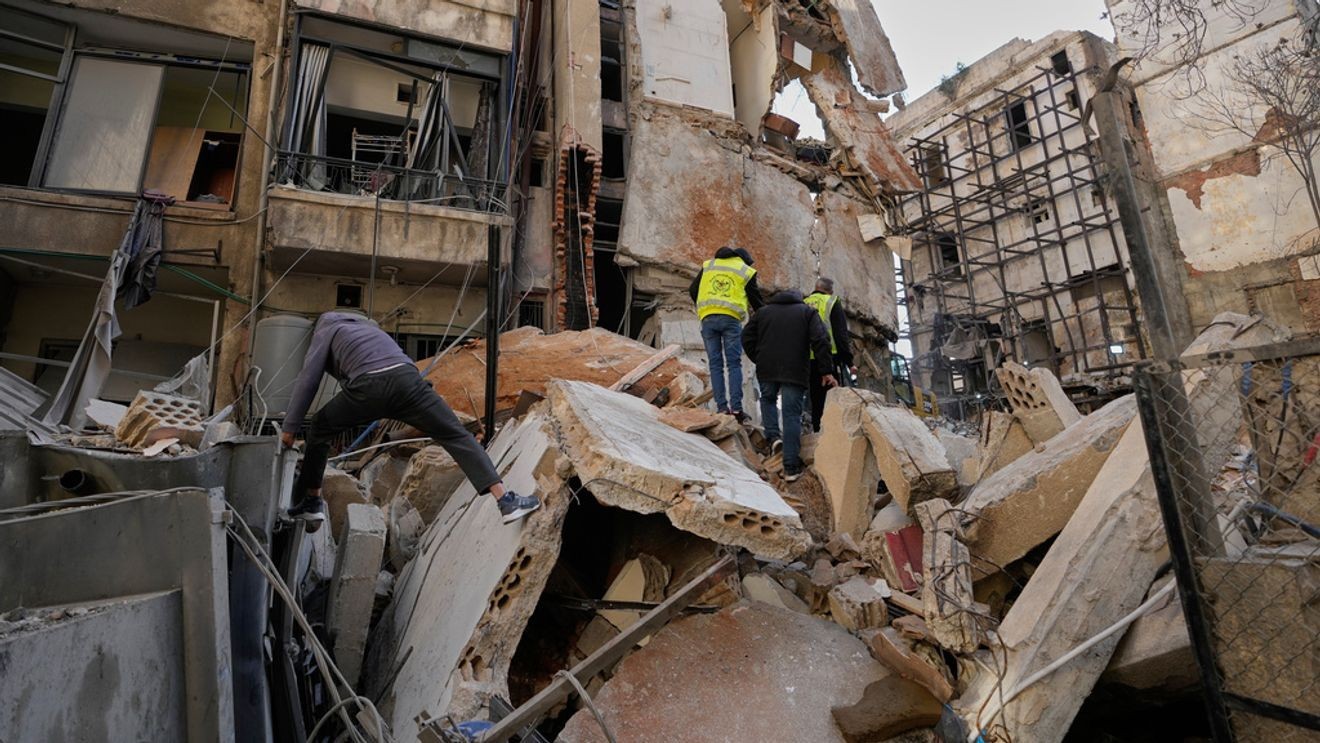
The Israel Defense Forces (IDF) said it carried out its largest coordinated strike on Lebanon since the war began in February, targeting more than 100 command centers and military sites. Israel also said Thursday it killed Ali Yusuf Harshi, an aide to Hezbollah leader Naim Kassem. Hezbollah did not immediately comment.
Meanwhile, U.S. and Iranian officials have offered conflicting accounts over the status of the Strait of Hormuz, a central point of tension in the conflict.
The White House on Wednesday pushed back on Iranian reports that the Strait had halted oil tanker traffic.
“The president was made aware of those reports before I came to the podium. That is completely unacceptable,” press secretary Karoline Leavitt said.
Leavitt added that Iran’s public statements differ from what it is telling U.S. officials privately. She said the U.S. has seen an uptick in traffic and reiterated the president’s “expectation and demand” that the Strait be reopened “immediately, quickly and safely.”
Iran’s deputy foreign minister, Saeed Khatibzadeh, told the BBC on Thursday that ships would be allowed to pass in accordance with “international norms and international law” once the United States ends its “aggression” and Israel halts strikes in Lebanon.
Trump warned overnight that U.S. forces would remain in the region “until such time as the REAL AGREEMENT reached is fully complied with.”
“If for any reason it is not, which is highly unlikely, then the ‘Shootin’ Starts,’ bigger, and better, and stronger than anyone has ever seen before,” Trump wrote on Truth Social.
Peace talks are expected in Pakistan this weekend, with Vice President JD Vance set to lead the U.S. delegation, according to the White House.
Vance called the Iran ceasefire a “fragile truce” after returning from his trip to Hungary.
“You have people who clearly want to come to the negotiating table and work with us to find a good deal, and then you have people who are lying about even the fragile truce that we’ve already struck,” he told reporters.
Several major issues remain unresolved, including whether Iran will be allowed to formalize a system for charging ships to pass through the Strait.
The fate of Iran’s missile and nuclear programs — key objectives for the U.S. and Israel in the war — also remains unclear.
Defense Secretary Pete Hegseth said Wednesday that preventing Iran from obtaining a nuclear weapon is non-negotiable, adding that Tehran must hand over its materials or face further action.
“There will be no Iranian nuclear weapons. Period, full stop,” he said.
The U.S. is also seeking the removal of Iran’s stockpile of highly enriched uranium, which could be used to build a weapon. Iran maintains its program is peaceful.
Trump said Wednesday the U.S. would work with Iran to remove buried uranium, though Tehran has not confirmed that. In a version of the deal published by Iran, it said it would be allowed to continue enrichment.
_____
Editor’s note: The Associated Press contributed to this article.