
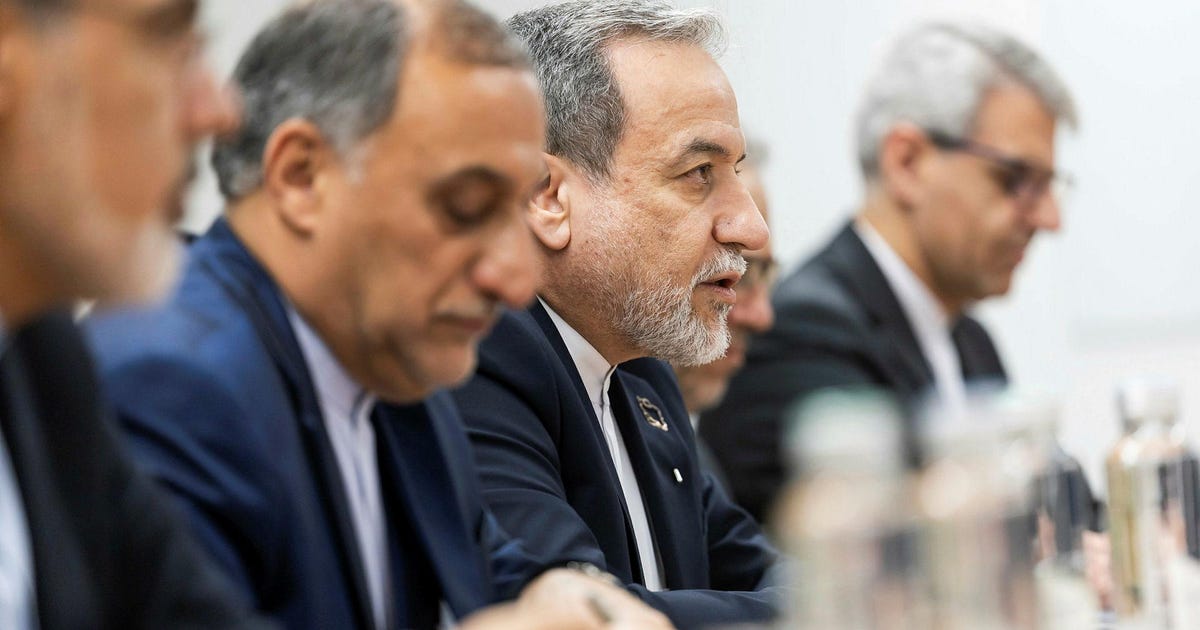
Iran’s deputy foreign minister said on Thursday that Tehran had been on the verge of responding to cease-fire violations overnight – but Pakistan ultimately intervened – and added that the coming hours are critical, according to Iran’s Fars News Agency.
The Iranian official, Majid Takht-Ravanchi, also said that any agreement in the region must include Lebanon and that the U.S. must halt Israeli strikes on the country, according to the report.
Iranian President Masoud Pezeshkian echoed his remarks, saying that Israeli attacks in Lebanon constitute a violation of the cease-fire agreement and render negotiations meaningless. He added that Iran will not abandon the Lebanese people.
Haaretz PodcastWhat Trump got wrong about Iran, what the IDF got wrong about Hezbollah: Amos Harel on wars with no exit strategy
play
Haaretz Podcast
What Trump got wrong about Iran, what the IDF got wrong about Hezbollah: Amos Harel on wars with no exit strategy
Volume: 0.5
X1
total– : –time0:00
fast forward15
play
rewind15
Israeli Defense Minister Israel Katz said the military is “prepared and ready to act with force if Iran fires toward Israel.” He claimed that Hezbollah is seeking a cease-fire and that its Iranian backers are exerting pressure out of concern that Israel could defeat the group. He also said Prime Minister Benjamin Netanyahu led efforts to reach an understanding on “separating the arenas.”
The deputy foreign minister said an Iranian delegation, including himself, will travel to Islamabad for talks expected Saturday. Lebanon’s Al-Mayadeen, which is affiliated with Hezbollah, reported citing unofficial Pakistani sources that the Iranian delegation will also include parliament speaker Mohammad Bagher Ghalibaf, Foreign Minister Abbas Araghchi, and national security official Mohammad Bagher Zolghadr.
 Close
Close
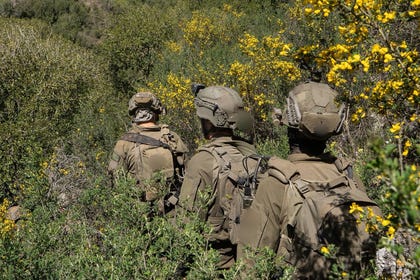
Israeli forces in southern Lebanon, this week. Credit: IDF Spokesperson’s Unit
Israeli forces in southern Lebanon, this week. Credit: IDF Spokesperson’s Unit
The Pakistani delegation is expected to be headed by Prime Minister Shehbaz Sharif, alongside Foreign Minister Ishaq Dar and army chief Asim Munir. The U.S. delegation will include Vice President JD Vance, special envoys Steve Witkoff and Jared Kushner, and U.S. Central Command chief Brad Cooper.
The Israeli military said Wednesday it struck about 100 Hezbollah command centers and infrastructure sites across Lebanon, describing it as its largest attack in the current campaign. Lebanon’s Health Ministry said Thursday the death toll from the strikes had risen to 203 and could increase further. Civil defense services reported more than 1,000 people wounded. The Israeli military said a strike in Beirut killed Ali Youssef Harshi, a nephew and aide to Hezbollah Secretary-General Naim Qassem.
 Close
Close
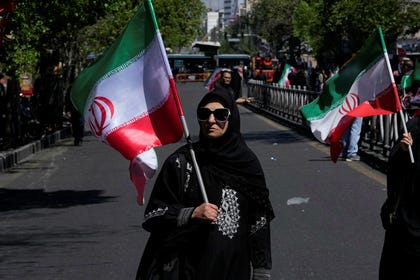
A rally honoring Iran’s slain supreme leader, Ayatollah Ali Khamenei, in Tehran, Thursday. Credit: Vahid Salemi/AP
A rally honoring Iran’s slain supreme leader, Ayatollah Ali Khamenei, in Tehran, Thursday. Credit: Vahid Salemi/AP
Air raid sirens sounded several times overnight in northern Israel due to fire from Lebanon. The military said about 30 rockets were launched from Lebanon into Israel from midnight through early afternoon Thursday. Hezbollah said it carried out the launches in response to Israeli “violations of the cease-fire,” adding that its response would continue until “Israeli-American aggression” stops.
Related Articles
U.S. President Donald Trump said Wednesday that Lebanon is not included in the two-week cease-fire agreed with Iran. Asked in an interview with PBS why Lebanon was excluded, he said: “Because of Hezbollah, they were not included in the deal. That will get taken care of too. It’s all right.” Earlier, the Israeli prime minister’s office said in an English statement that Lebanon was not part of the agreement, while Pakistan’s prime minister, acting as mediator, said it was.
Amid continued strikes in Lebanon, Iran’s Tasnim News Agency reported that Tehran is considering continuing attacks on Israel and may withdraw from the cease-fire if Israeli strikes persist. Araghchi said the U.S. must choose between the cease-fire with Iran and “continued war via Israel.” Writing on X, he said the two cannot coexist and added, “The world sees the massacres in Lebanon. The ball is in the U.S. court, and the world is watching whether it will act on its commitments.”