
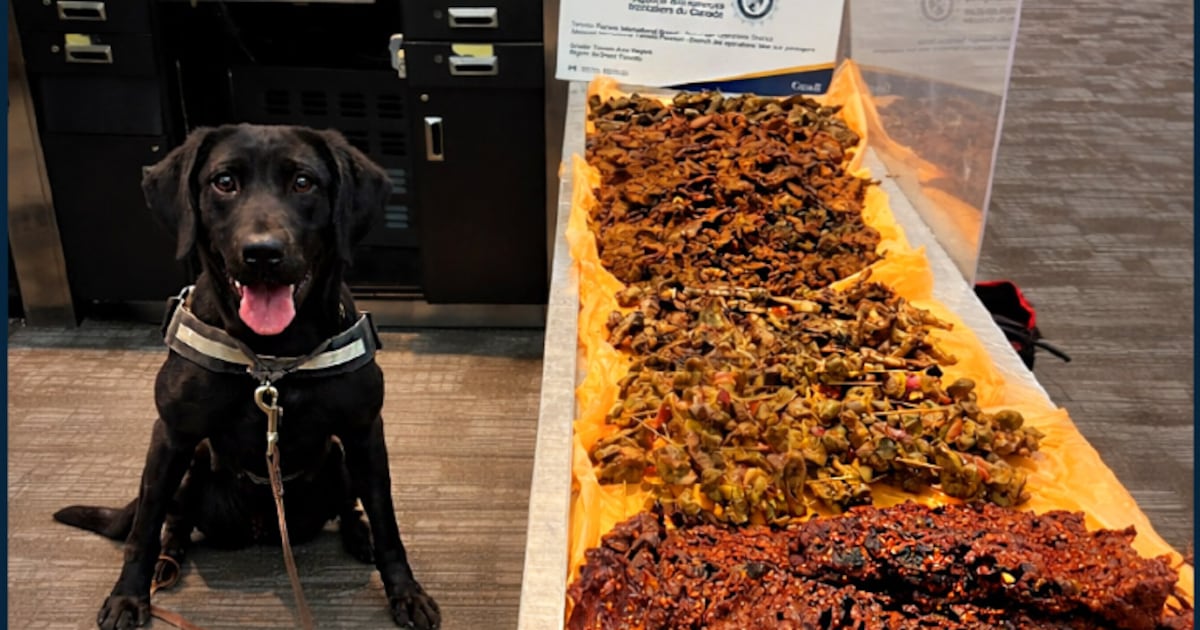
Another savvy canine working for border services at Pearson International Airport has sniffed out some important contraband.
On March 27, Moby, the detector dog, intercepted more than 40 kilograms of undeclared beef and chicken that was found in the luggage of a traveller arriving from Nigeria, Canada Border Services Agency (CBSA) said in a post on X.
The federal agency, which also shared a photo of Moby next to the contraband, said the food products were seized and the passenger was fined $1,300.
Detector dogs are trained to sit beside the source of the odour to indicate possible prohibited items to their handler, CBSA told CP24.
‘Be aware and declare’: CBSA
Border services is advising people to “be aware and declare” all food, plant, and animal products brought into the country.
They include live animals and animal products like cooked or raw meats, hides, skins, trophies, milk, fat, butter, cheese, eggs, fish, and seafood; and plant products like fruits, vegetables, seeds, nuts, trees, houseplants, wood (and wood products including furniture, carvings, and bark), firewood, roots, vines, herbs, flowers, insects, bulbs, and soil.
People who fail to declare these items or who do not provide the required permits/certificates may face a penalty of up to $1,300 and/or persecution.
Goods that are inadmissible may also be confiscated and disposed of.
“Travellers may also be held responsible for any costs related to the disposal, quarantine, treatment or removal of these items from Canada,” CBSA said on its website.
Border services says many travellers fail to declare processed or canned foods, homemade food, handmade crafts like wooden items, firewood, cooked or cured meats, soil, bait for recreational fishing, plants used for homeopathic or medicinal purposes, milk products like butter, yogurt, and kefir, and fruits and vegetables.
“(They) may not realize the hazards associated with food, plant and animal products. These products may carry invasive species and diseases and may cause risks to Canada’s food supply, economy, environment and our health,” the agency said.