

The family of a 17-year-old Texas cheerleader has filed a wrongful death lawsuit against a distributor of a popular energy drink, saying the teenager died from an enlarged heart caused by ingesting large amounts of caffeine.

Subscribe to read this story ad-free
Get unlimited access to ad-free articles and exclusive content.

Larissa Nicole Rodriguez, a college-bound high school student in Weslaco, Texas, died in October. Benny Agosto Jr., her family’s attorney, said at a news conference Wednesday that the Hidalgo County medical examiner determined that her cause of death “was an enlarged heart due to stress and large amounts of caffeine.” Hidalgo County did not immediately respond to a request for comment.
Agosto said Alani Nu energy drinks, which Rodriguez drank often, “had inadequate warnings about the serious cardiac risks that this product brings.” The suit, which was filed Wednesday in Hidalgo County District Court, includes the allegation and seeks more than $1 million in damages. The family did not respond to a request for comment.
Rodriguez had no pre-existing heart conditions or heart-related problems, Agosto said. He said that the medical examiner tested for myriad drugs and that “everything was negative, not one trace of alcohol or anything. The only thing she had in her system was caffeine.”
Agosto said that Rodriguez was “full of life, full of love, smart, academic and with a bright future” and that she was an active teenager who played tennis and was a cheerleader.
“Her life was cut short,” he said at the news conference, surrounded by her parents and other relatives.
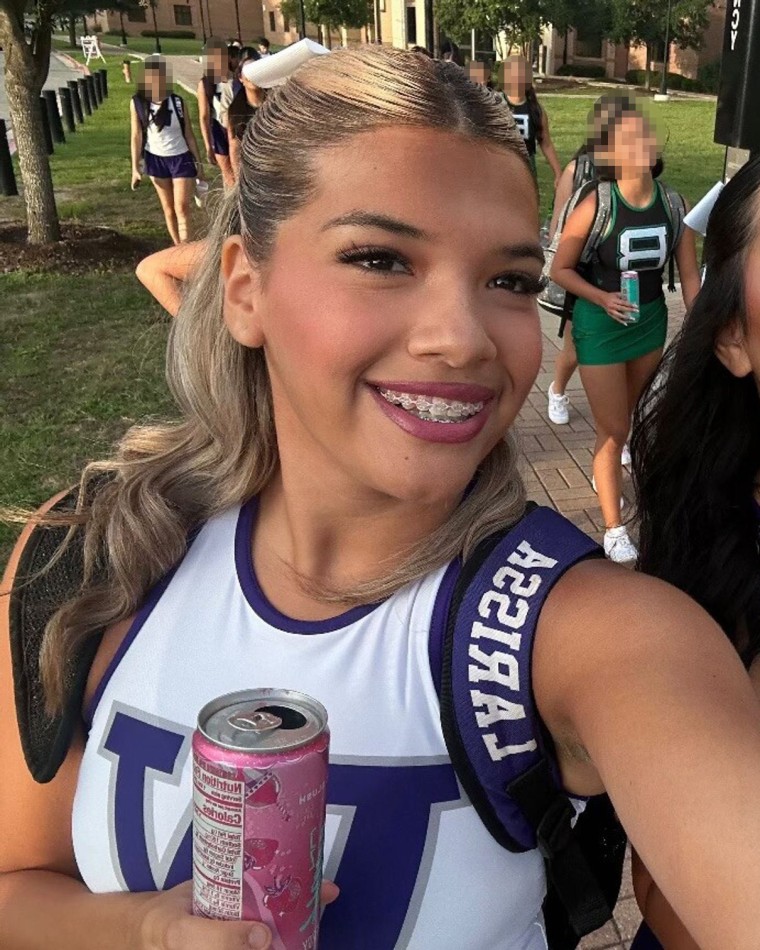 Larissa Nicole Rodriguez holds a can of Alani Nu, an energy drink with 200 mg of caffeine.Salinas Funeral Home
The family is suing distributors Glazer’s Beer and Beverage and Glazer’s Beer and Beverage of Texas. The company distributes beverages in Arkansas, Iowa, Louisiana, Nebraska, Oklahoma and Texas, according to its website.
Glazer’s Beer and Beverage did not immediately respond to a request for comment on the lawsuit.
Celsius Inc., which owns Alani Nu, said in a statement that it is “saddened by this loss, and our thoughts are with the family. We take product safety seriously and believe consumers should have clear information about what they are drinking.”
“Alani Nu energy drinks disclose 200mg of caffeine on the can, and the label states the product is not recommended for children, people sensitive to caffeine, pregnant women, or women who are nursing,” the statement said. “Our products comply with applicable federal labeling requirements, and our policy is not to market or sample to anyone under 18, consistent with those label warnings.”
Celsius, which completed its acquisition of Alani Nu in April 2025 for $1.8 billion, is not a defendant in the lawsuit.
Agosto said the lawsuit was filed against the beverage distributor because “they’re the ones that receive it, distribute it and put it all over the place, and they also fail to give any warnings.” He said in an interview Thursday that as discovery in the case continues, more defendants will be added, which could include Celsius.
The Alani Nu energy drink is 12 fluid ounces and contains 200 mg of caffeine, the same as a 12-ounce can of Celsius. The total daily maximum amount of caffeine that the Food and Drug Administration recommends for healthy adults is 400 mg, and children and teenagers ages 12 to 17 should have less than 100 mg of caffeine per day, according to the Columbia University Irving Medical Center.
Alani Nu’s drinks contain a far higher concentration of caffeine than some other popular energy drinks on the market. By comparison, labels show an 8.4-ounce can of Red Bull Energy Drink contains 80 mg of caffeine, and a 17-ounce can of Monster contains 160 mg.
Agosto said Rodriguez started to drink Alani Nu because of posts on social media that advertised it with wellness and health benefits, as well as an energy boost.
“First, she got into it because of social media and other social interaction with young people. At some point, she was enamored by it,” he said. Eventually, she went on to post about the product just as influencers do.
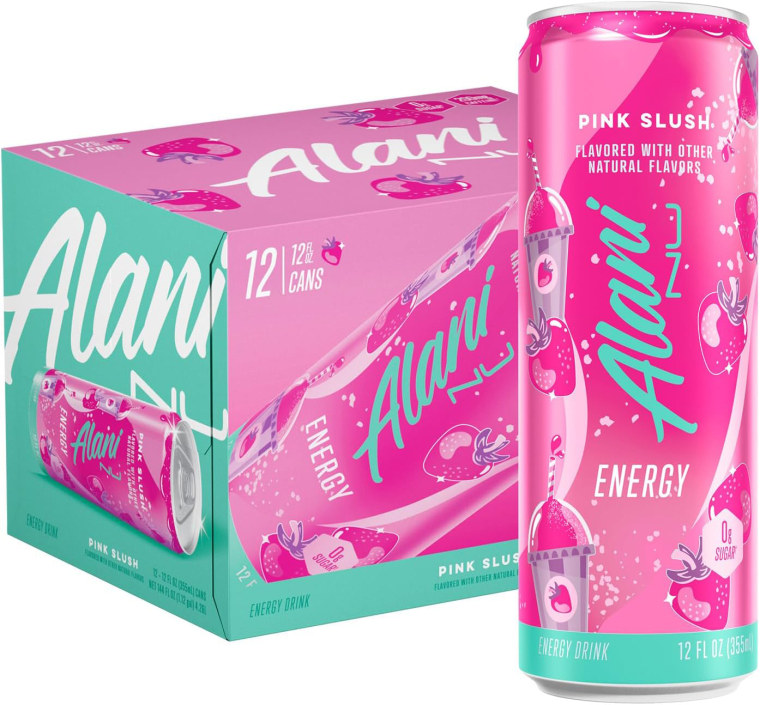 Alani Nu, an energy drink.Alani Nu / Amazon
In the last year, she started to drink at least one Alani Nu a day, sometimes more, he said.
“It was very common for her to get up in the morning, go to school and have an Alani or be in sports activities and have an Alani,” Agosto said. “We have pictures and videos of her playing sports and her and her classmates, as well as other friends, drinking Alani or other energy drinks.”
The lawsuit alleges that Alani Nu targets its marketing to young women and minors through social media and that it advertises the drink as a wellness and lifestyle beverage, but it says the drink lacks proper warnings, including consumption limits and possible dangers.
Agosto said the Alani Nu energy drink was such a part of Rodriguez’s life that an invitation for the school’s homecoming event featured an image of the product, saying, “Hope you have the energy to go to homecoming with me.”
Rodriguez was “fooled that this drink is not a wellness drink, it’s not a get-well drink. … It’s causing problems to her heart, which ultimately took her life,” Agosto said.
In 2023, the government of Canada issued a recall for Alani Nu, citing noncompliances related to caffeine content and labeling issues.
Agosto said the family’s hope with the lawsuit is to prevent the tragedy from affecting any other family.
“They lost their only daughter. She was two months from 18,” he said. “What ultimately they want is that this doesn’t happen to a single child. If they can save one life, that’s what they want. If they can change the industry so that there’s better protections and warnings for kids, that’s what they want.”