
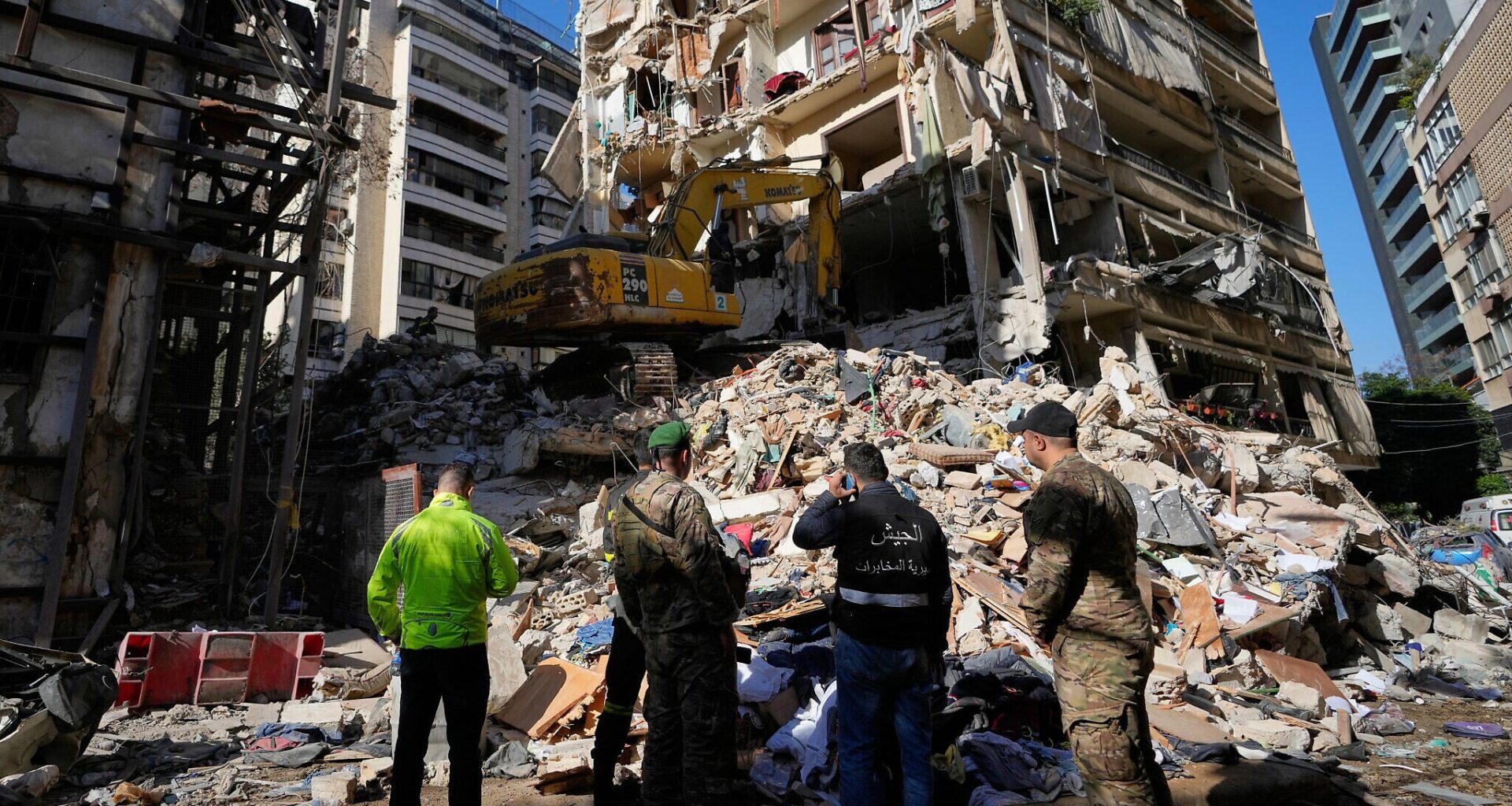
Israel’s intense barrage of airstrikes on Wednesday hit without warning deep inside the Lebanese capital of Beirut, blowing buildings open to the elements and reducing apartment blocks to rubble in parts of the city that have traditionally escaped attack.
It was not immediately clear what was targeted. The Israeli military later said Iran-backed Hezbollah had repositioned to residential and commercial areas far from its usual sphere of influence on the city’s southern outskirts, where the Shiite terror organization’s yellow flags appear on lampposts and Israeli evacuation orders have been in place for weeks.
The bombardment killed more than 300 people and wounded over 1,800 others, according to the Lebanese health ministry, which doesn’t distinguish between combatants and civilians. Defense Minister Israel Katz said Thursday that more than 200 Hezbollah operatives were killed. Most of the casualties were reported in Beirut and its southern suburbs.
Among the targets of the Wednesday strikes, the Israel Defense Forces said, were Hezbollah command centers and other military infrastructure, including intelligence headquarters and offices used by Hezbollah to plan attacks on IDF troops and Israeli civilians; infrastructure of Hezbollah’s rocket and naval units; and assets of the terror group’s elite Radwan Force and aerial unit.
The areas targeted in this wave of Israeli strikes included busy commercial strips, crowded residential neighborhoods and upscale districts along the city’s seafront — places that had felt somewhat removed from the violence of the war, save for the incessant buzz of Israeli drones and thunder of occasional explosions.
Get The Times of Israel’s Daily Edition
by email and never miss our top stories
By signing up, you agree to the terms
One deadly strike hit along Corniche al-Mazraa, a main artery of the city, razing an apartment building near a popular shop selling nuts and dried fruit and setting parked cars ablaze, some with drivers inside.
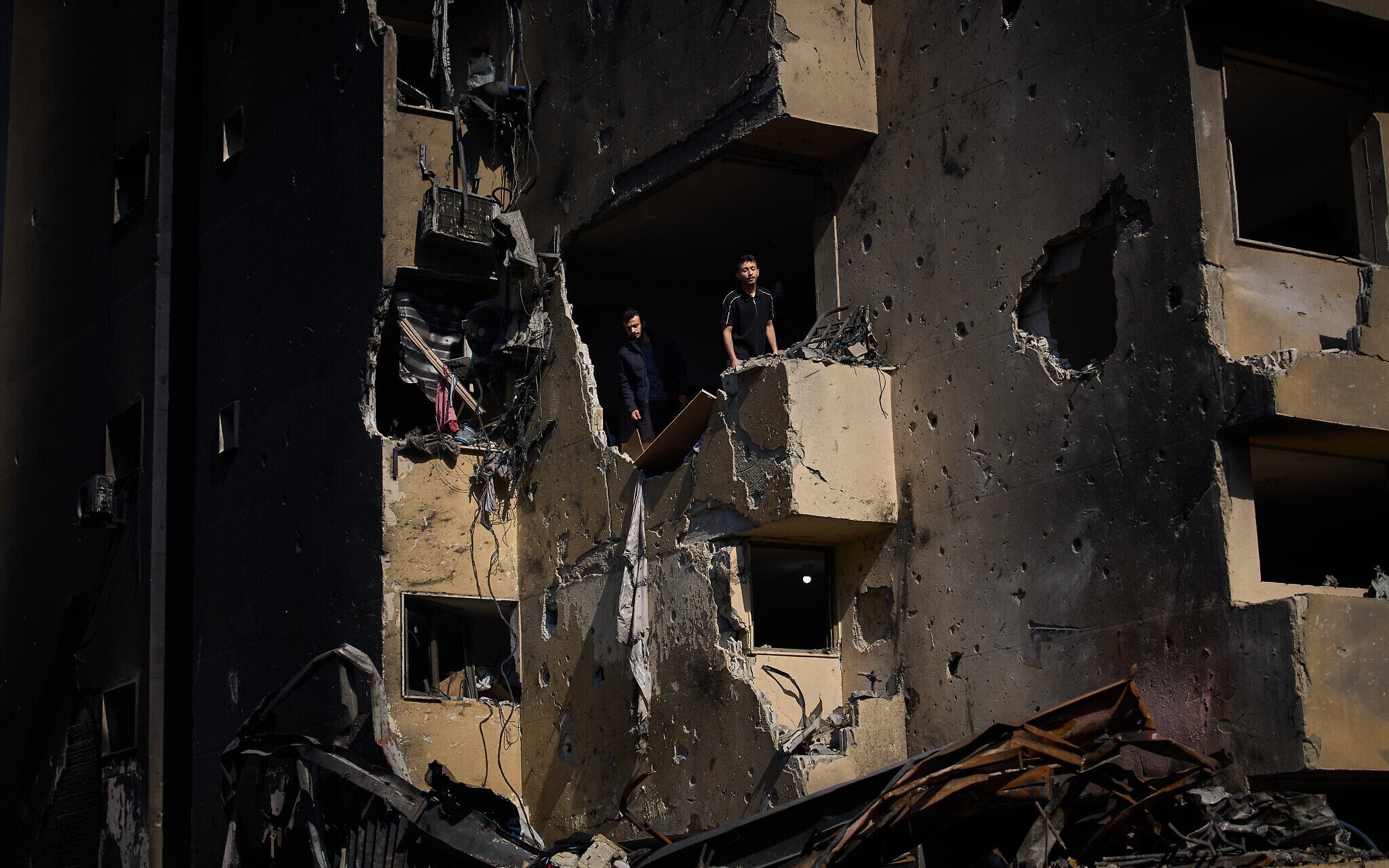
Men inspect the damage to their home destroyed in an Israeli airstrike a day earlier in Beirut, Lebanon, April 9, 2026. (AP Photo/Emilio Morenatti)
Another crashed into the hilly residential district of Tallet El Khayat, flattening a multi-story building near an upscale mall — among those killed, residents said, was an award-winning Arabic poet and her husband.
Yet another struck the seaside district of Ain el Tineh, pulverizing an apartment building also home to an exotic plant shop right near the speaker of parliament’s residence and overlooking the city’s only public beach.
Further strikes blew up apartments near a well-known chocolate shop in the mixed commercial and residential area of Mar Elias, wiped out part of a building that housed a snack shop and hair salon in the Caracas district, destroyed the lower floors of a building along Beirut’s coastal corniche and left smoldering ruins in the densely populated neighborhood of Basta near a school sheltering displaced people in an attack that killed, among others, a young mother and her two sons.
You appreciate our wartime journalism

You clearly find our careful reporting of the Iran war valuable, at a time when facts are often distorted and news coverage often lacks context.
Your support is essential to continue our work. We want to continue delivering the professional journalism you value, even as the demands on our newsroom have grown dramatically during this ongoing conflict.
So today, please consider joining our reader support group, The Times of Israel Community. For as little as $6 a month you’ll become our partners while enjoying The Times of Israel AD-FREE, as well as accessing exclusive content available only to Times of Israel Community members.
Thank you,
David Horovitz, Founding Editor of The Times of Israel