
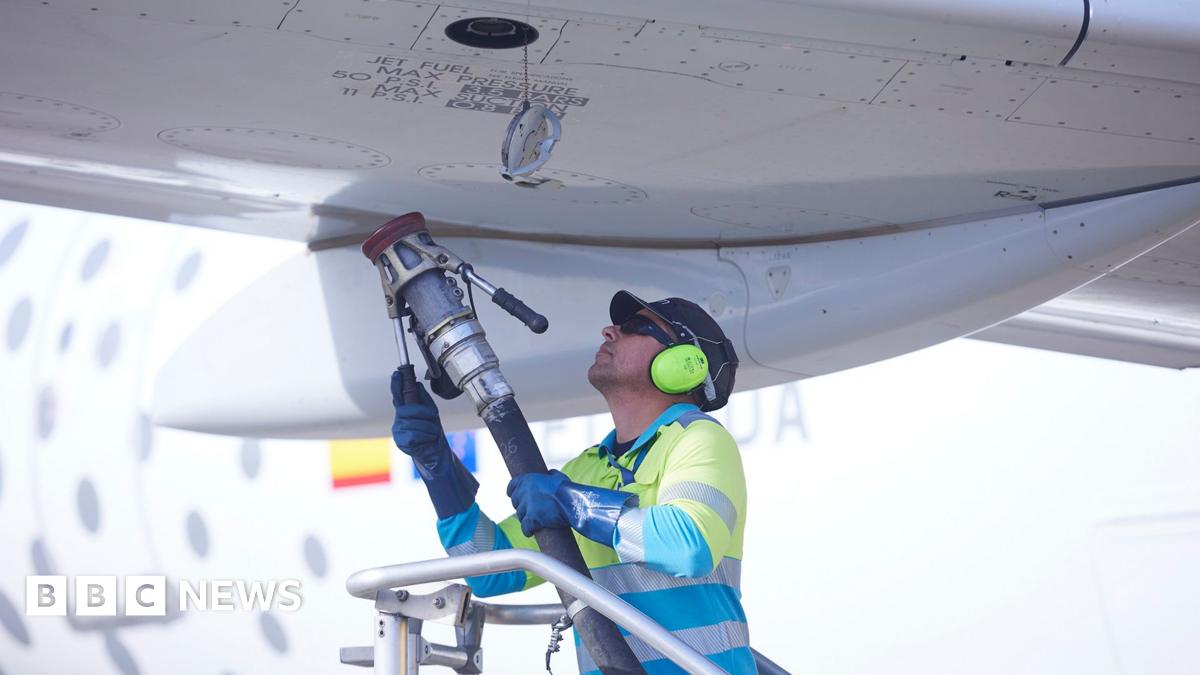
“A supply crunch would severely disrupt airport operations and air connectivity – with the risk of harsh economic impacts for the communities affected, and for Europe,” ACI Europe’s director-general Olivier Jankovec wrote in a letter to the European commissioners for energy and tourism.
“At this stage, we understand that if the passage through the Strait of Hormuz does not resume in any significant and stable way within the next three weeks, systemic jet fuel shortage is set to become a reality for the EU.”
Several airlines worldwide have already cut flights and hiked passenger charges due to concerns about fuel shortages.
Last week, the benchmark European jet fuel price hit an all-time high of $1,838 (£1,387) per tonne, compared with $831 before the war began.
Jankovec urged the EU to intervene, writing that “relying on market forces and adaptation alone is not an option”.
He criticised the lack of EU-wide assessment and monitoring of jet fuel production and availability.
ACI Europe wants the EU to engage in collective purchasing of jet fuel. The body has also called for restrictions and regulations on importing jet fuel to be temporarily lifted.
The letter, which was written on 9 April and first reported by the Financial Times, said: “This crisis should also be the opportunity to reinforce support for SAF [sustainable aviation fuel] production and affordability,
“The price of conventional jet fuel is likely to remain at higher levels in the medium to long-term.”
Jankovec added that airports with fewer than a million passengers per year were already struggling with viability “without even accounting for the impact of jet fuel shortages”.
He warned the current crisis could make airports even more fragile and threaten local communities, potentially impacting European cohesion.
Air travel contributes €851bn (£741bn) to European economies’ GDP every year and supports 14 million jobs.