
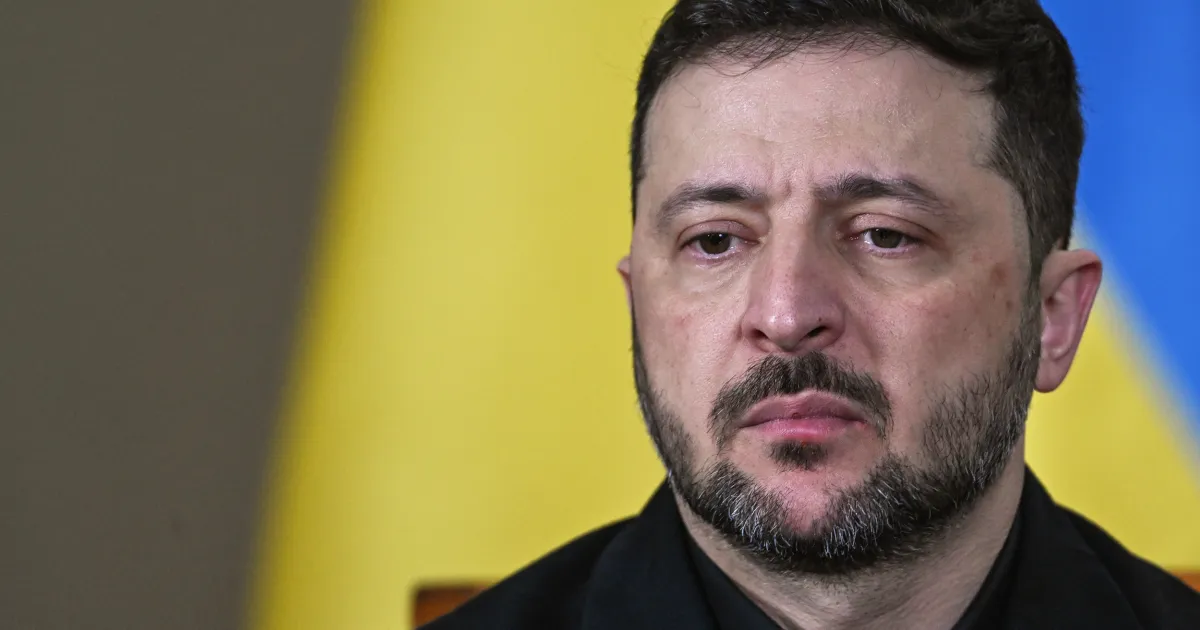
A couple of weeks ago, Ukrainian President Volodymyr Zelenskyy declared publicly that his country’s government had “irrefutable” evidence that Russia had provided intelligence to the Iranian regime.
This week, he vented his frustration over the White House’s indifference. The Guardian reported:
Speaking in an interview with Alastair Campbell on The Rest is Politics podcast, Zelenskyy said he had tried to draw the White House’s attention to the close collaboration between Moscow and Tehran.
He said Russian military satellites had photographed critical energy infrastructure objects in the Gulf states and in Israel, as well as the locations of US army bases across the region. The Kremlin passed details and images to the Iranian regime, he said, to facilitate its attacks.
“I said this publicly. Did we hear a reaction from the U.S. to Russia that they have to stop it?” Zelenskyy asked rhetorically. He added, “The problem is they trust Putin. And it’s a pity.”
His frustration was understandable. Just days into the war with Iran, multiple news organizations, including MS NOW, reported that Russia had provided Iran with information that could help it strike American targets. One U.S. official told MS NOW point-blank that Russia was “providing intelligence help to Iran.”
While some skepticism might’ve been understandable, it wasn’t long before lingering doubts about the accuracy of the reporting evaporated. Iranian officials have publicly confirmed Russia’s “military cooperation”; U.S. Ambassador to the United Nations Mike Waltz acknowledged Russia’s wartime “strategic partnership” with Iran; and Democratic Sen. Adam Schiff of California, a former chairman of the House Intelligence Committee, said matter-of-factly that Russia “is providing intelligence to Iran to better attack and kill American troops.”
The Wall Street Journal soon after advanced the broader story, reporting that Russia recently expanded its intelligence-sharing and military cooperation with Iran, “providing satellite imagery and improved drone technology to aid Tehran’s targeting of U.S. forces in the region.”
In theory, this should’ve been the sort of news that sent shockwaves through Washington. In the midst of an ongoing and deadly hot war in the Middle East, there was reason to believe that one U.S. adversary (Russia) was helping another U.S. adversary (Iran) facilitate attacks against us.
Democratic Sen. Elissa Slotkin of Michigan, a former CIA and Pentagon official, said during a recent Senate hearing, “If Russia is helping to kill U.S. forces, we have crossed a Rubicon. We are in another moment. We have to take decisive action on that.”
But in practice, there were no shockwaves. Trump and his team chose not to care.
The initial reaction from the American president and his team to the original allegations was to express total indifference. This was soon followed by news that the Republican administration agreed effectively to reward Vladimir Putin’s regime by temporarily easing oil sanctions on the country — twice.
Recommended

Steve Benen is a producer for “The Rachel Maddow Show,” the editor of MaddowBlog and an MS NOW political contributor. He’s also the bestselling author of “Ministry of Truth: Democracy, Reality, and the Republicans’ War on the Recent Past.”
Latest Post
Zelenskyy vents frustration over U.S.’ disinterest in evidence of Russia helping Iran