
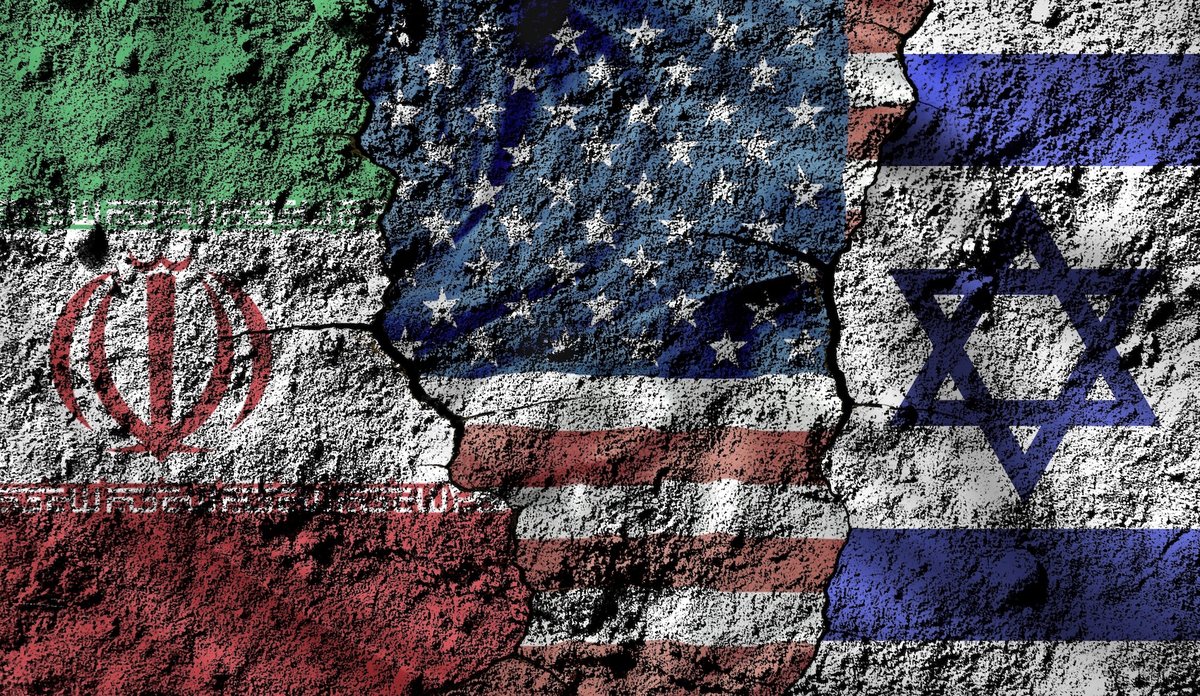
It is difficult, as of this writing, to speculate as to whether a genuine ceasefire in the war with Iran will take hold, even temporarily. Under previous U.S. presidential administrations, it was easier to make predictions, even when foreign policy decisions were based on faulty assumptions, since there was at least some sense that decision making would be based on strategic thinking.
Not so under President Donald Trump, who has consistently sidelined or overruled knowledgeable advisors, including those in top military and intelligence positions, in order to pursue policies that appear to be motivated more by emotion than rational thinking.
Indeed, even if the two-week ceasefire holds, the United States may simply use it to rearm and resupply its depleted stocks in order to resume its war on Iran.
If the ceasefire does mean the end of hostilities for the foreseeable future, it will be hard for the Trump Administration to portray it as any sort of victory. Despite killing prominent Iranian leaders and inflicting enormous damage on Iran’s military and civilian infrastructure, the U.S. and Israeli bombardment of Iran appears to have left the critical components of its nuclear facilities and its supply of partially enriched uranium intact. Iran is still able to launch drones and missiles, and the regime’s grip on power is as strong as ever, and all of Trump’s stated goals for the war remain unfulfilled.
Indeed, with the killing of Ayatollah Ali Khamenei and ascension of his son, Mojtaba Khamenei, as Iran’s new Supreme Leader, the Iranian people and the entire region are now dealing with a regime which Ravi Agrawal, editor of Foreign Policy, correctly observes is “emboldened, vengeful, more militaristic, and more hardline.”
And, if Iran allows ships to resume transiting the Strait of Hormuz, it will have unprecedented control over shipping, including the ability to charge fees to help rebuild the country’s damaged infrastructure. With the Strait acting as a chokehold for the transit of 20 percent of the world’s oil supply—as well as a great deal of the world’s fertilizer, liquid helium, and other important commodities—this control is a valuable asset for Iran, and one they did not possess before the current war began.
More critically, as Trita Parsi, executive vice president of the Quincy Institute for Responsible Statecraft notes, “The United States is no longer in a position to dictate terms; any agreement will have to rest on genuine compromise. That, in turn, demands real diplomacy—patience, discipline, and a tolerance for ambiguity—qualities not typically associated with Trump.”
At the same time, the United States may not have much of a choice. Trump’s genocidal threats about destroying Iranian civilization on April 7—an act that in itself can be considered a war crime—may have come from the knowledge that a ceasefire was imminent so he could pretend that it was he that forced the Iranians to give in, not the other way around.
In spite of the apparent willingness of the Trump Administration to accept the enormous financial costs of the war, the physical damage inflicted on U.S. assets in the region and allied Middle Eastern states, the harm done to America’s international standing, and the impact on the global economy, it became apparent that the war had simply become unwinnable. Trump has found himself under enormous pressure, not just from the American public and U.S. allies (which he appears quite willing to ignore), but international business and finance, which are reeling from the economic consequences of the war and fearful of far greater damage to come if the war resumes.
As a result, Trump’s new priority became to reopen the Strait of Hormuz, which had been operating normally until the United States and Israel launched their war on February 28.
However, as long as the Strait of Hormuz remains effectively closed, the war could resume at any moment. And it is unlikely to re-open as long as Israel continues its horrific assault on Lebanon.
Despite U.S. and Israeli claims to the contrary, Pakistani mediators and others have confirmed that the agreement for a two-week halt to the fighting and the reopening of the Strait of Hormuz was contingent on a ceasefire in Lebanon. European leaders and other U.S. allies have underscored the importance of the ceasefire applying to Lebanon as well.
In actuality, Israel’s U.S.-backed air strikes in Lebanon have gone well beyond Hezbollah military targets to include the heavy bombing of crowded urban neighborhoods. Israeli bombing on April 9, the day following the cessation of hostilities in the Gulf, killed more than 300 people, the vast majority of them civilians. This comes on top of Israel’s occupation and ethnic cleansing of a large swath of southern Lebanon and the systematic destruction of entire villages.
The United States is therefore faced with a decision to either force Israel to cease its attacks on Lebanon or to accept the continued closure of the Strait of Hormuz and the likelihood of the resumption of the war.
Meanwhile, Democratic leaders in Congress are being forced to explain how they can both oppose a resumption of the Iran war while refusing to call for an end to offensive U.S. military aid to Israeli Prime Minister Benjamin Netanyahu as Israeli leaders continue to sabotage the prospects of maintaining a ceasefire. At the Democratic National Committee’s annual meeting this past week, party leadership blocked a resolution calling for conditioning future military aid to Israel on that government’s compliance with international law in relation to the U.S.-Israel war on Iran.
Even in a best-case scenario in which the worst of the killing and destruction is over, some semblance of normal commerce can resume, and the reconstruction of war-damaged homes and infrastructure can begin, the main challenge for those of us in the United States is to create measures to ensure that never again can a single man unleash such chaos and destruction.
To do so will require a long-overdue assertion of Congressional authority, including a willingness by Congressional Democrats to block funding for Netanyahu’s war machine and Trump’s Pentagon until they come into compliance with international law and categorically renounce wars of aggression.