
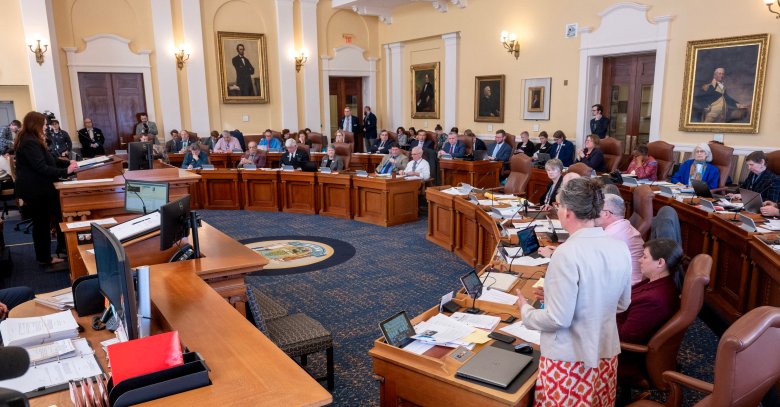
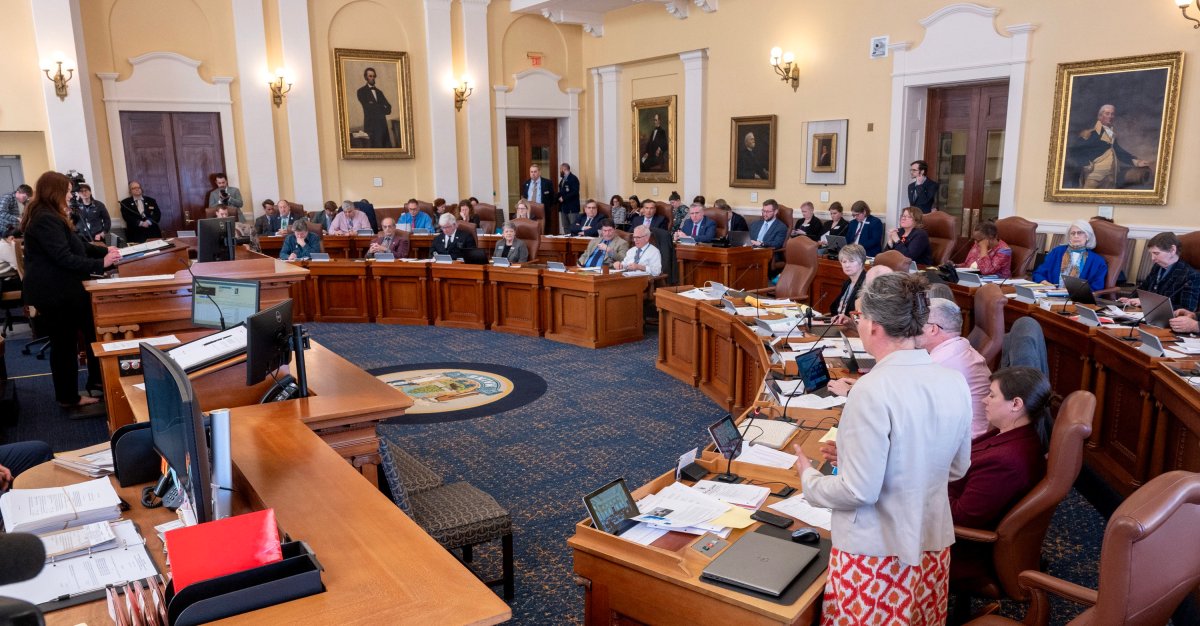
 Sen. Nicole Grohoski, D-Ellsworth, bottom right, speaks during Senate debate on the supplemental budget bill on Thursday April 9, 2026 in the Senate chamber of the Maine State House in Augusta. (Joe Phelan/Staff Photographer)
Gov. Janet Mills on Friday signed a new budget that contains a host of spending initiatives, including $300 “affordability checks” aimed at providing economic relief for Mainers.
The checks were a signature proposal from Mills in the budget plans she unveiled in January, and were approved by lawmakers this week.
About 514,000 people are expected to receive the checks.
Here are a few things to know about whether you’re eligible to get one.
1. Who is eligible for a check?
The checks will be distributed to Maine residents who filed their 2025 tax returns and are based on income. Individuals earning under $50,000, heads of household earning under $75,000, and married couples filing taxes jointly and earning under $100,000 qualify.
2. Do I need to do anything to claim my check?
No. If you filed your tax return, the check will be automatically mailed to you.
3. When will my check arrive?
The new state budget is expected to take effect in mid-July, and the checks will be mailed “shortly after that,” a state official said Friday.
4. Why is the state doing this?
Mills pitched the checks as a way of providing economic relief for Maine people amid rising costs. They are part of an “affordability agenda” she unveiled heading into her last year in office that also included investments in housing and making Maine’s free community college program permanent — things that were also approved in the budget Mills signed Friday.
The checks are being funded with $155 million from the state’s Budget Stabilization Fund, commonly known as the “rainy day fund,” which is at its statutory maximum of $1 billion.
Republicans have called the move a campaign stunt since Mills is currently running in a competitive Democratic primary to challenge U.S. Sen. Susan Collins for her seat.
Lawmakers, including some Democrats, have also criticized Mills for drawing down the rainy day fund, which is typically used for emergencies and budget shortfalls, to pay for the checks.
While the governor originally proposed sending checks to 725,000 people − including individual earners making up to $75,000 − the version of her proposal passed by lawmakers reduced the number of taxpayers who would be eligible.