
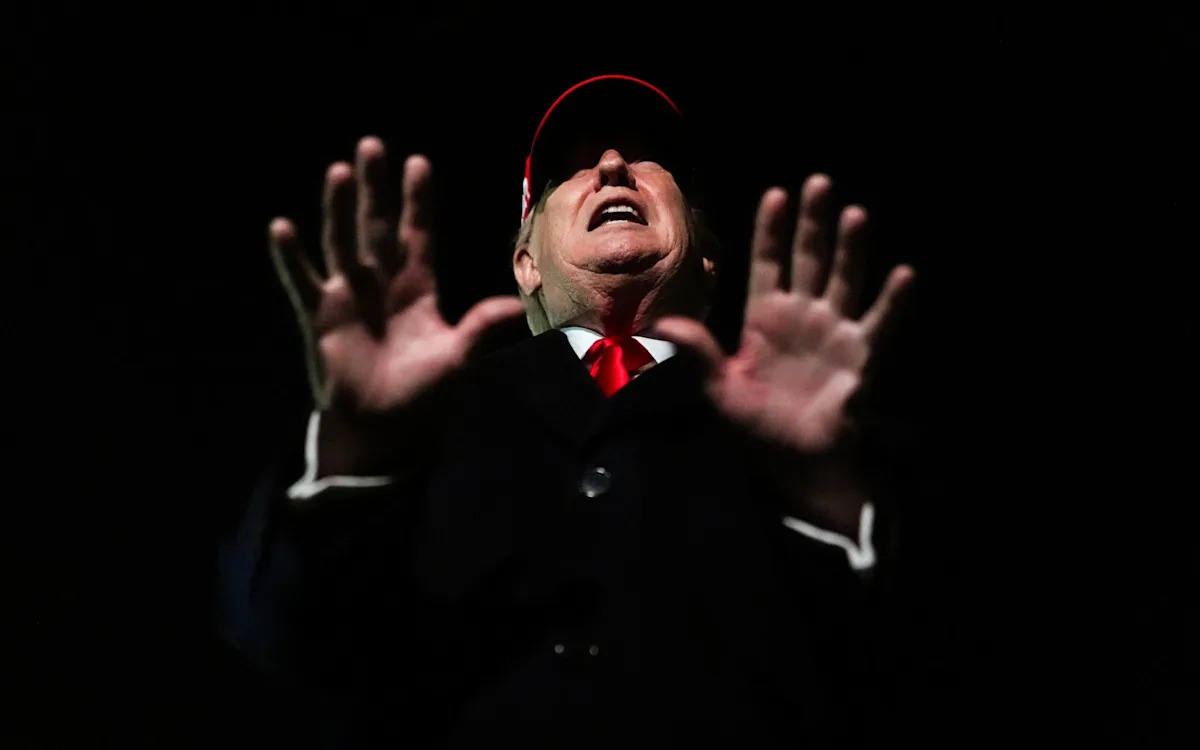
Sir Keir Starmer has refused to join Donald Trump’s blockade of the Strait of Hormuz.
The Telegraph understands Britain will not send warships to enforce the blockade of oil tankers after Mr Trump said the US Navy would be helped by other countries.
Instead, the UK will deploy minesweepers to clear the waterway, which has been seized by Iran since the war began.
On Sunday evening, Mr Trump announced that the US Navy would begin stopping “any and all ships trying to enter or leave the Strait of Hormuz” after negotiations to end the war collapsed. The naval blockade will come into effect at 10am on 13 April US eastern standard time (3pm BST), the president confirmed on Monday morning.
JD Vance, the vice-president who led the US delegation in Islamabad, said the two sides failed to reach an agreement after 21 hours because Tehran refused to give up its nuclear programme.
Seyed Abbas Araghchi, Iran’s foreign minister, said Iran had negotiated with the US in “good faith to end the war”.
“But when just inches away from ‘Islamabad Mo’, we encountered maximalism, shifting goalposts, and blockade,” he added on X. “Zero lessons earned. Good will begets good will. Enmity begets enmity.”
Mohammad Bagher Ghalibaf, Iran’s lead negotiator, said Washington had failed to earn his trust.
Reacting angrily to the breakdown in negotiations, Mr Trump said America would stop ships from entering or leaving the key oil and gas shipping lane. Without naming them, he said other countries would help.
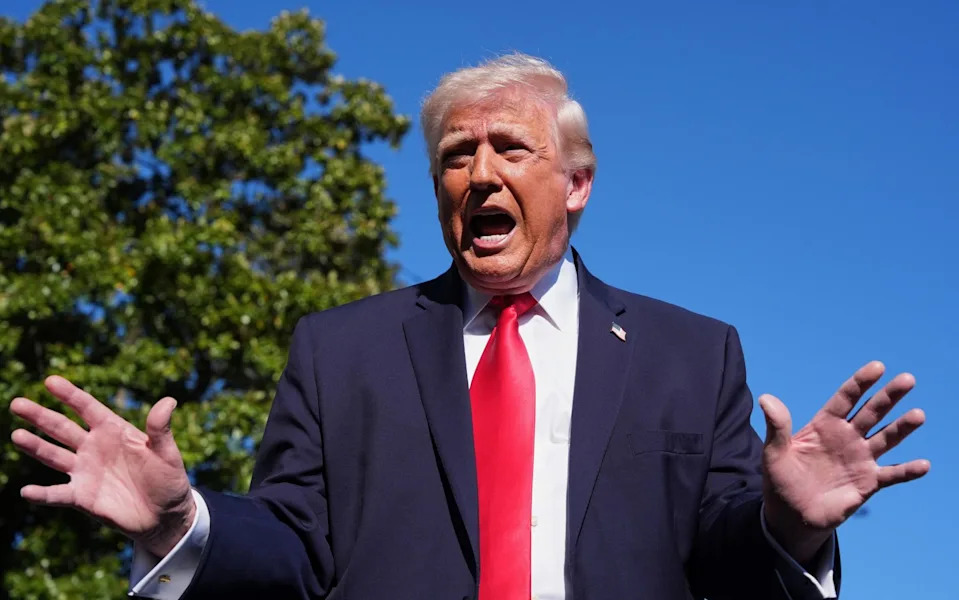
Donald Trump said the US Navy would begin stopping ‘any and all ships trying to enter or leave the Strait of Hormuz’ – Alex Brandon
The move – designed to stop Iran profiteering off its chokehold of the strait by charging ships a fee to pass – is expected to send oil prices rising sharply when markets open on Monday morning.
Speaking to journalists as he disembarked Air Force One on Sunday night, Mr Trump said Iran was in a “very bad shape” and that “other nations” were working together to ensure Tehran would “not be able to sell oil”.
The president then took aim at Nato saying: “I’m very disappointed in Nato. They weren’t there for us. We pay trillions of dollars for NATO and they weren’t there for us… Now they want to come up, but there’s no real threat anymore… I think that’s going to be under very serious examination.”
Earlier in the day, in his first public remarks since the peace talks failed, he hit out at Nato members, including the UK, over their refusal to support offensive operations against Iran, calling the defensive alliance “shameful”.
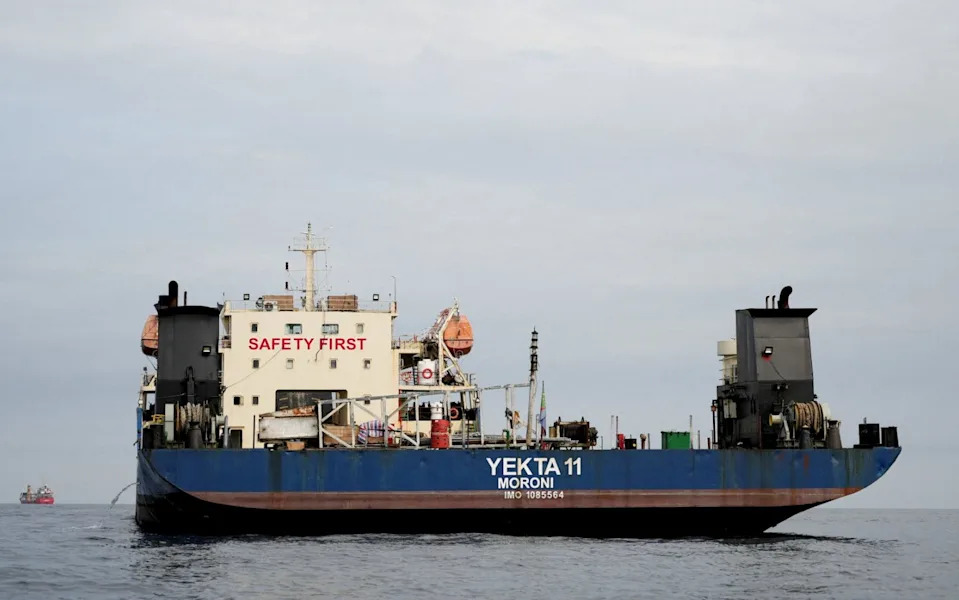
A vessel waits in the Strait of Hormuz on Sunday – Reuters
The US president posted on Truth Social: “So, there you have it, the meeting went well, most points were agreed to, but the only point that really mattered, NUCLEAR, was not.
“Effective immediately, the United States Navy, the Finest in the World, will begin the process of BLOCKADING any and all Ships trying to enter, or leave, the Strait of Hormuz.”
Mr Trump again compared Sir Keir to Neville Chamberlain, whose premiership was defined by his 1930s appeasement of Nazi Germany.
On Sunday night, Downing Street said the UK was “urgently working with France and other partners to put together a wide coalition to protect freedom of navigation” after a phone call between Sir Keir and Emmanuel Macron.
Britain has mine-hunting systems in the region that could be used to help clear the strait of naval mines laid by Iran, but this is likely to take place once fighting has stopped.
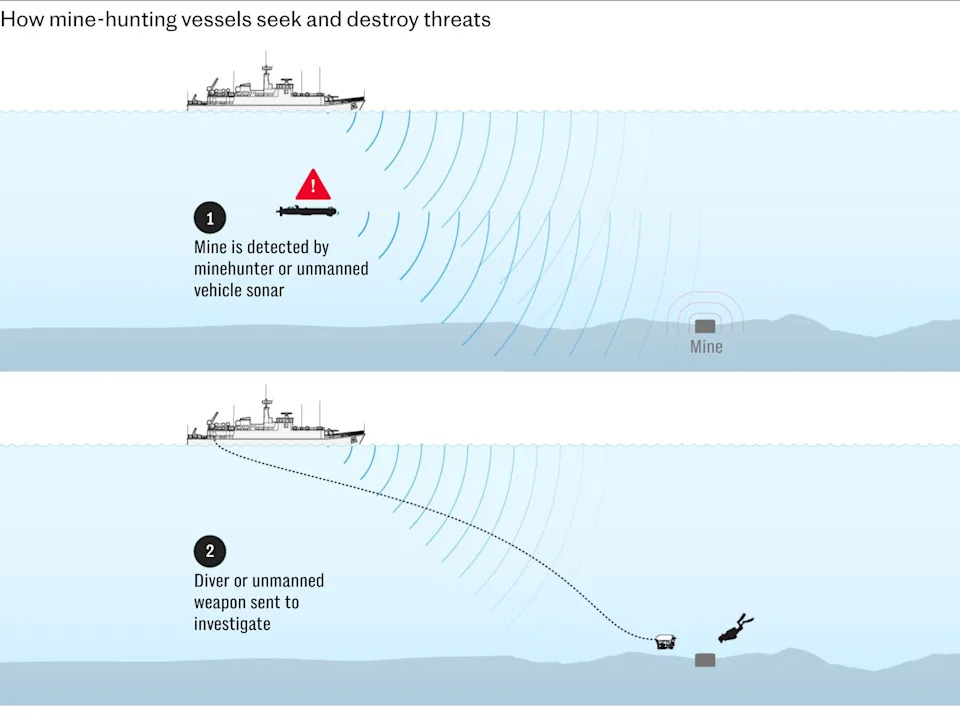
0603 Minehunter
“Look at the United Kingdom,” Mr Trump told Fox News. “PM Starmer said ‘we’ll send the equipment after the war is over’.
“I said, ‘you don’t need equipment when the war is over. You need the equipment before the war starts, or during the war’. He made a public statement that ‘we will send equipment after the war is over’ – that’s a Neville Chamberlain statement.”
The US military said two destroyers had already transited the strait ahead of mine-clearing operations.
Sir Keir has repeatedly ruled out direct British involvement in the war, saying: “This is not our war. We will not be drawn into this conflict. That is not in our national interest.”
Boris Johnson, the former prime minister, branded Sir Keir “pathetic” for insisting the conflict in the Middle East was not Britain’s concern, suggesting the UK should offer its support to the US as a quid pro quo for securing greater American backing for Ukraine.
“I think Donald Trump has a very, very good point about Nato, and we should be there to help,” Mr Johnson said. “Just to say ‘this is not our war’ is absolutely pathetic. The main reason it’s pathetic is because the Iranians can see that the West is just divided, and that’s a massive blessing for Vladimir Putin and everybody else in Ukraine.”
Nato partners, including Britain, have been reluctant to help reopen the Strait of Hormuz, through which 20 per cent of the world’s oil and liquefied natural gas usually travels.
Tehran has throttled the strait in retaliation for the month-long US-Israeli campaign against it, causing global oil prices to soar.
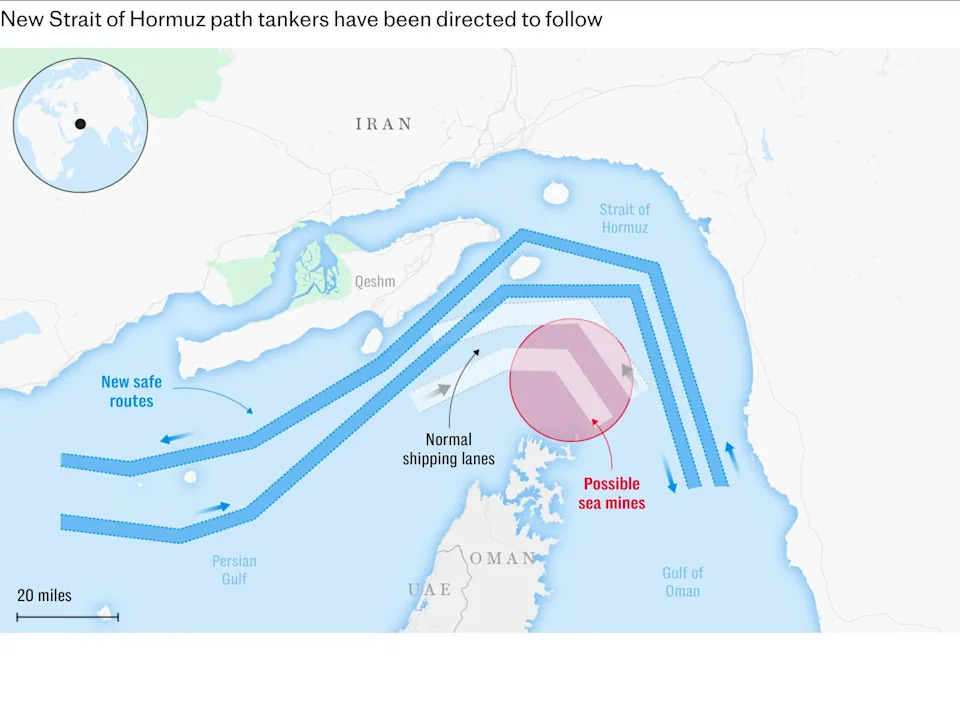
1004 Hormuz tankers redirected
By enforcing a blockade on the blockade, Washington is trying to reduce Iran’s leverage over the strait, but it will also have ramifications for countries that trade with Iran, including India and China.
Half of China’s seaborne oil imports pass through the strait. Mr Trump is aiming to pressure Beijing into pushing Iran to give up its nuclear programme and accept a deal.
Controlling the shipping lane will also severely reduce the amount of money Iran makes by charging commercial ships to pass through. Since the war began, Tehran has charged ships roughly $1 per barrel, payable in cryptocurrencies like Bitcoin, for safe passage.
In response to Mr Trump’s naval threat, Iranian state media reported that it had deployed navy special forces along its southern coastline in preparation for an American land invasion.
The blockade is expected to send oil prices skyward as Mr Trump vowed to block all ships from traversing the waterway.
Janiv Shah, the vice president of oil markets at Rystad Energy, said the blockade “could put some upside on prices as we see conflict increasing once more, combined with the peace talks not resulting in any deal”.
Kirill Dmitriev, Putin’s economic envoy, suggested on X that oil could soon reach $150 a barrel.
However, Neil Wilson, an investment strategist at Saxo UK, said markets were fatigued by Mr Trump’s declarations and suggested the impact may be more limited. He said: “We and markets know Trump threatens to escalate in order to negotiate.”
Mr Wilson said many investors were still committed to the “Taco” trade – Trump Always Chickens Out. In other words, investors will bet on limited oil price rises on the belief that the US president will ultimately back away from his threat to blockade the strait.
In Israel, a different view took hold, as the IDF was ordered to move to a heightened state of readiness and prepare for a return to war.