
Mayor Ken Sim is igniting a push to bring Major League Baseball to Vancouver, introducing a member motion that would kickstart the city’s bid for a future expansion franchise.
The proposal comes as MLB signals interest in expanding in the coming years, prompting Vancouver to position itself as a potential home for a new team.
It is also not coming out of nowhere locally, with Sim indicating this is a direct response to expressed interest from “prospective groups” looking to pursue an expansion franchise.
If approved by Vancouver City Council next week, the motion would launch an open and competitive process to identify an ownership group capable of leading a franchise bid.
“Our city has a strong sports culture and a proven track record of supporting professional teams. With the MLB publicly expressing interest in league expansion in the near future, we see an opportunity to position Vancouver as the next home for a franchise,” said Sim in a statement today.
“An open, transparent, and competitive process ensures we identify a capable partner with the ability to deliver a team that works for our city. This process allows us to explore a potential new franchise in a thoughtful and responsible way.”
If the motion is approved, City of Vancouver staff will launch a bidding process, beginning with an expression of interest, to identify a qualified ownership group capable of advancing a franchise bid. Such a process would require interested groups to “demonstrate financial capacity, experience, and a clear plan to support a successful team.”
It is well known that MLB leadership would like to have two new expansion cities selected later this decade, and over the years, they have repeatedly mentioned their interest in Vancouver. Other cities mentioned to date include Salt Lake City and Nashville, and to a lesser extent, Portland, San Jose, Austin, Orlando, Raleigh, Charlotte, and even a return to Montreal.
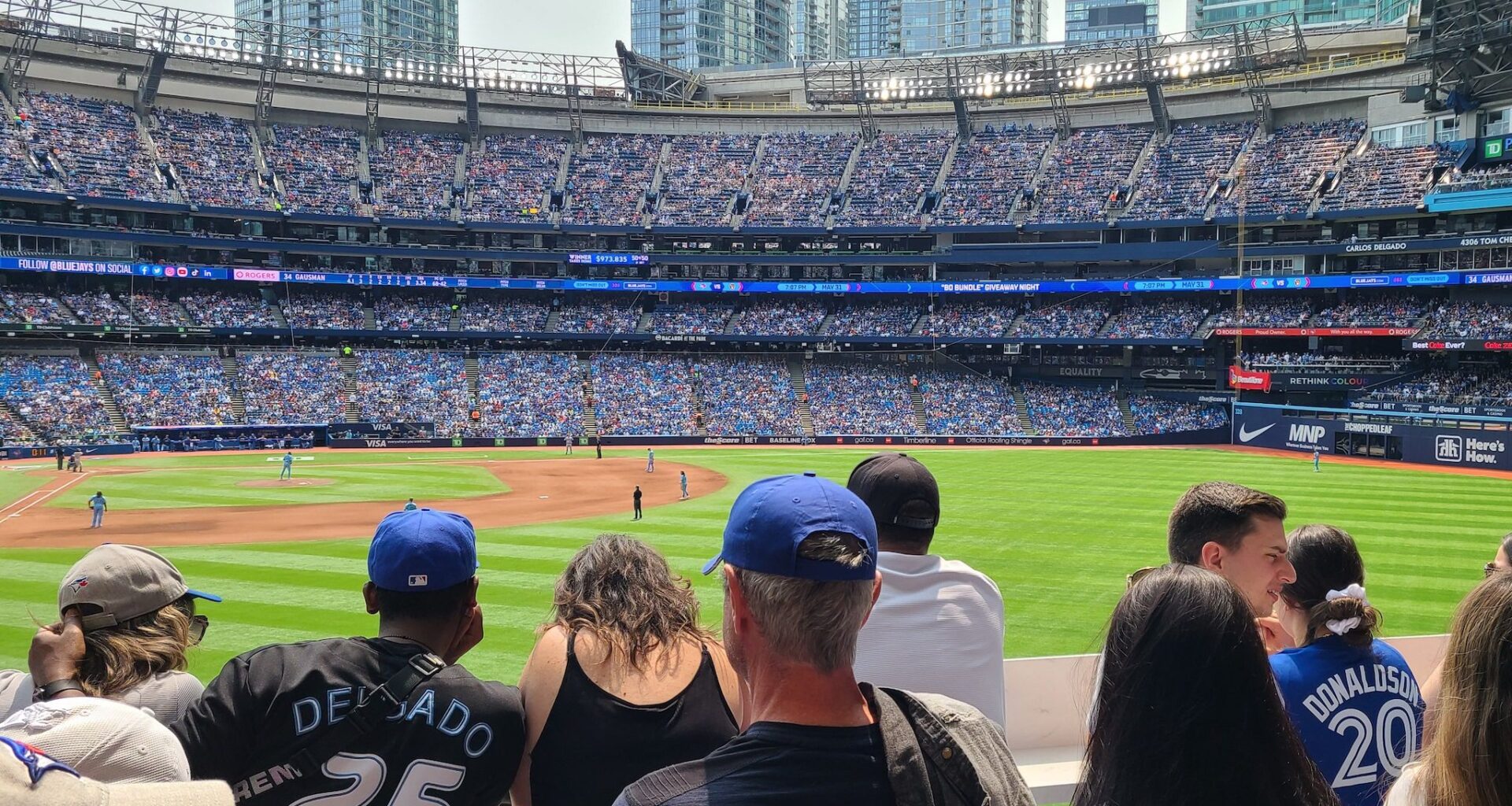
Local fan interest with the Toronto Blue Jays has been highly apparent, which has also been seen with the attendance at Seattle Mariners games.
One big question, of course, is where an MLB team would play in Vancouver. This obstacle was not addressed in Sim’s announcement today.
When BC Place Stadium was built in 1983, the configuration of its retractable seating in the lower bowl was designed to accommodate an MLB franchise, although perhaps not in the most optimal way. Now, more than four decades later, it is almost certainly obsolete by current MLB venue standards. A few MLB exhibition games were played at the stadium in the 1980s and 1990s.
Other issues with BC Place Stadium relate not only to the relatively low height of the centre-suspended video board, but also to the overall height of the retractable roof structure, which has a lower clearance than the previous air-supported roof. Both design aspects present challenges for professional baseball.
Currently, BC Place Stadium is the home field of the MLS’ Vancouver Whitecaps FC and CFL’s BC Lions, and it hosts concerts, trade shows, and other major events. Ahead of the 2026 FIFA World Cup, roughly $200 million is being spent by the provincial government to upgrade the stadium, including new and improved elevators, modernized and expanded fan zones and suites, improved media facilities, improved food and beverage areas, and the replacement of the aging centre-suspended videoboard.
Sim’s call for an MLB expansion franchise also comes against the backdrop of the Whitecaps’ highly publicized financial struggles at BC Place Stadium, where the team faces an uncertain future in the city as a tenant of PavCo, the provincial Crown corporation that owns and operates the venue on behalf of the Government of British Columbia.
In December 2025, Mayor Sim and Whitecaps CEO and sporting director Axel Schuster signed a memorandum of understanding (MOU) for the team to formally enter into a negotiation period with the municipal government to explore building a new purpose-built soccer stadium at Hastings Racecourse, which saw its horse racing tradition come to an end in 2025. The proposal also includes a major entertainment district at the PNE, with hotels, restaurants, bars, and retail as a part of the overall stadium project. The deadline for reaching a contractual agreement under the MOU, outlining a redevelopment concept, is the end of 2026.
One way or another, over the long term, the Whitecaps appear likely to be on their way out of BC Place Stadium.
Conceivably, an MLB expansion franchise in Vancouver could pursue a dramatic renovation or even a full redevelopment of BC Place Stadium. But short of acquiring the stadium from the provincial government, it would fall into the same operational and financial issues the Whitecaps have greatly lamented.
More likely, this pursuit would necessitate building a brand-new, purpose-built MLB stadium at another location in the city. And any MLB venue would also need a retractable roof, given the city’s wet climate over extensive periods of the baseball season.
Either way, this is a multibillion-dollar proposition in terms of the MLB expansion fee, the significant capital costs of securing a stadium, and other related capital and operating costs of starting a franchise.
City Council will deliberate on Sim’s motion on April 22, 2026. This also comes just months ahead of the October 2026 civic election.
Currently, the Vancouver Canadians of the Northwest League, under the High-A classification, are the only professional baseball team in the city. Playing at the 1951-built, 6,500-seat Nat Bailey Stadium, which is currently undergoing a major renovation and expansion, they are an affiliate of the Toronto Blue Jays.
With files from Rob Williams