
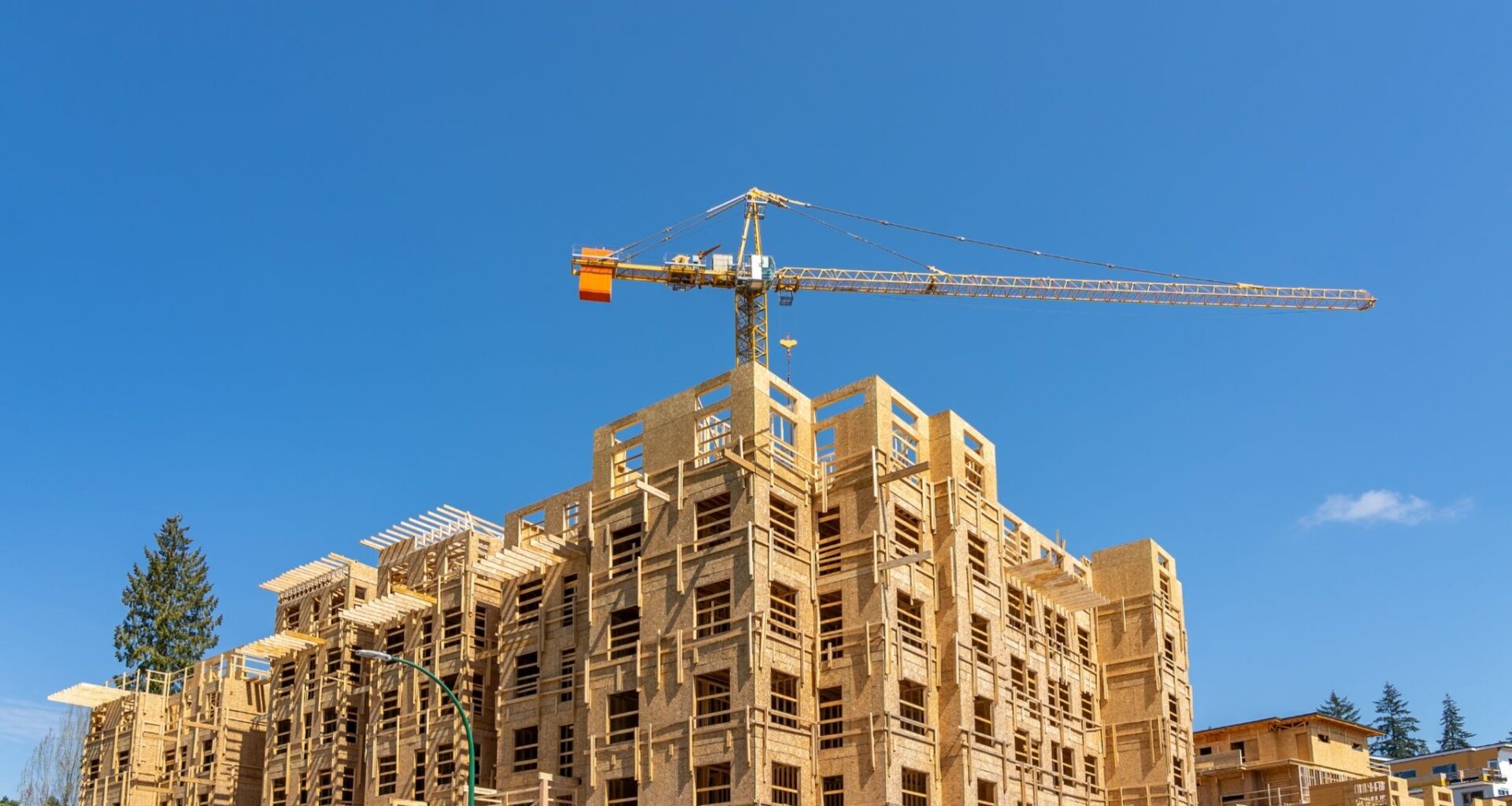
A Vancouver-based real-estate developer recently cancelled a condominium development in Richmond due to “market conditions.”
ASPAC was in the process of preselling the condos in the River Green complex — it had not yet broken ground — when it decided to return 100 per cent of deposits back to all purchasers (plus accrued interest) and redesign the project.
“The presale environment has shifted significantly and we determined that a redesign is needed to deliver a project that reflects what today’s market is looking for,” Gary Wong, ASPAC’s vice president, told Daily Hive Urbanized in an email.
Housing cancellations like this are a trend that many real estate and housing experts are concerned about. Banks typically require developers to presell about 60 per cent of their housing projects before they’ll finance them. With presales falling off, developers aren’t able to get financing from banks, and thus aren’t able to build their projects.
Steve Saretsky, a real-estate agent, predicts that the number of housing starts over the next 12 to 18 months will start to look “really, really ugly.” By the end of the decade, this could mean a dip in housing completions.
Ultimately, homes won’t be built, and if real-estate demand returns, a report from the BC Real Estate Association (BCREA) warned that this could eventually lead home prices to jump by 27 per cent by 2032.
Saretsky thinks this is inevitable.
Project cancellations are becoming a daily event in Greater Vancouver. https://t.co/UlUXyGv34A
— Steve Saretsky (@SteveSaretsky) March 12, 2026
“There’s a lot of time and energy and effort that it takes to become a housing start,” he said.
“From land acquisition to rezoning to permitting and then to construction. You can’t just turn the dial and say, ‘Oh, I want housing to complete,’ or ‘I want a housing start.’ It’s a very long, drawn-out process, because what we build predominantly today is usually low-rise, mid-rise, high-rise condos, and even townhouses. And those take anywhere from two years to seven years to build. It’s not as simple as just turning on the taps.”
What’s going on in the market?
Saretsky said low presales are a result of an “incredibly weak” real estate market that hit a 25-year low last year, with struggles continuing into 2026.
He said that federal cuts to immigration have pushed B.C. rents down, deterring investors from entering the market.
Tighter federal policies have affected international students, post-grad work permits, family open work permits, and temporary foreign workers — all people who tend to rent.
According to a report from liv.rent, a rental platform, Metro Vancouver started “experiencing steeper downward pressure on rents in August [2025], coinciding with a 50 per cent increase in emigration from B.C. in Q3 compared to Q2.”
Further, Saretsky added that new homes compete with the resale market, and “there’s just too much inventory.”
“The reality is new home prices just aren’t that competitive, because it’s very expensive to build new. And you have resale prices that are dropping, you know, call it five to 10 per cent a year right now. How do you compete with that?”
This large amount of inventory has resulted in a buyer’s market, when the number of people looking to purchase is greater than the homes for sale, meaning buyers have more time to shop around and negotiate prices. But an uncertain economy has made people hesitant to buy in recent years.
Brendon Ogmundson, the chief economist of the BCREA, said they had initially expected 2025 to be a “much different year.”
“And then the uncertainty hit,” he said.
U.S. President Donald Trump’s tariffs and threat of tariffs made potential buyers hesitant, and Canada experienced record-high levels of economic uncertainty — exponentially higher than the 2008/2009 financial crisis and the 2020 pandemic.
Koshiro K/Shutterstock
In 2025, Ogmundson said many developers thought they’d be able to get their projects financed through presales, but that “just hasn’t happened because the investors just aren’t there.”
“And the investors aren’t there because the returns aren’t there. Rents are falling. Price appreciation is zero, if not slightly negative, when prices come down a bit in some markets. So just a really, really difficult market to find investors,” he said.
While the economic impact from tariffs hasn’t been as bad as feared, Ogmundson said it left a mark. A Bank of Canada survey on consumer expectations from the fourth quarter of 2025 found that people still had concerns “over high prices and economic uncertainty related to the trade conflict.”
Meanwhile, the war in the Middle East and the resulting oil crisis “doesn’t help the certainty.”
“There’s still a ton of anxiety in the economy about job loss. And if you’re worried about losing your job, that you’re certainly not going to buy a presale condo or even look to get into the housing market at all,” said Ogmundson.
Are government policies at fault?
Jonathan Meads, the vice president of StreetSide Developments, said developers are hit by unhelpful government policy and fees.
He said the federal government’s foreign buyer ban, which prohibits foreign commercial enterprises and people from purchasing properties in Canada, is responsible for some of the slide in sales.
The foreign buyer ban came into effect at the beginning of 2023, with the goal of ensuring homes are owned by Canadians, not foreign investors.
“It comes off wrong,” Meads admitted. But he said there are not enough local buyers in the market to hit the banks’ 60 per cent presale requirement to finance a housing project.
“And the foreign buyers — that capital is certainly one of the elements that allows us to get there.”
He isn’t alone in thinking this. Last year, a coalition of B.C. real estate developers, industry representatives, and construction leaders sent an open letter to both the provincial and federal governments, asking the government to reform this ban, as well as B.C.’s tax on non-resident buyers. They said that the policies had the unintended consequences of slowing housing starts.
Meads is also frustrated by the hefty fees that developers have to pay municipal and regional governments in order to build in the first place.
For example, municipalities charge what’s called development cost charges (DCCs), a one-time fee that they then use to fund the infrastructure needed to accommodate the population that their new building will bring.
But Meads thinks that this system “forces” first-time homebuyers to “pay for everybody else’s improvements in those fees that are applied to the door.”
In the late 2010s, he said he saw a “rapid acceleration in those charges,” when municipalities started viewing DCCs as a way to raise revenue.
“If you’re buying a million-dollar home today, 300,000 of that is going back to different levels of government, in fees, levies, taxes, costs, charges, etc. And I don’t think people understand that if we could find a way to reduce that, developers would reduce that price as well.”
When the market is good, developers “get on and just accept it, because we want to get the homes built,” he said. “Obviously, in today’s market, there’s a much greater sensitivity to that.”
Last month, the federal and Ontario governments announced an $8.8 billion fund to support lowering DCCs by up to 50 per cent in Ontario.
“Development charges are a major upfront cost that can delay or prevent new housing projects. Lowering these upfront costs will help accelerate construction and build more homes,” reads a press release on the announcement.
Housing starts are still high, for now
Even though project cancellations are happening, housing starts are “still at a pretty high level,” according to Ogmundson with the BCREA.
In February of this year, there were nearly 45,000 six-month moving average starts in B.C. In February of last year, that number was about 43,500.
This is because a housing start today is based on a project that was approved and financed a couple of years ago.
But in the coming months, Ogmundson agrees with other experts: we can expect these numbers to fall.
“Presales were really weak over the past couple of years. So, that will lead to much, much lower condo starts. It just maybe isn’t quite the data yet,” he said.
Much of the construction today is also purpose-built rental, he added. Rental remains economical to build, Ogmundson explained, in large part because of federal government incentives, like favourable interest rates and up to 50-year amortizations.
Because of this, some projects that started as condos but couldn’t hit their presale target have pivoted to rental. Ogmundson said he’s seeing more purpose-built rental construction than there’s been in decades.
“The good news is it is helping affordability for renters,” he said. “We’re going to have a lot of rental supply on the market, but at the cost of not as many ownership starts.”
“It’s going to shape the housing stock over the next decade… What does that mean 10 years from now? Does it mean that ownership units are more scarce and therefore more expensive? Does it mean we’re going to have a wave of conversions from purposeful rental back into strata, to condo? There [are] still these outstanding questions.”
What’s next?

EB Adventure Photography/Shutterstock
While Meads has seen many developers cancel projects, StreetSide hasn’t had to do so.
But they have had to postpone some project launches by a year or two, with Meads saying that they wouldn’t be profitable if they started building today. They are waiting for revenues to go up or costs to go down.
“We can’t start a project if it isn’t profitable, because the banks won’t lend,” he said.
For example, StreetSide is postponing a nearly thousand-unit condo project in Surrey. Meads said that since they purchased the land, costs have increased by $22 million — all from government fees, levees, taxes, and charges.
He added that they will have additional land carrying (the cost of holding land), which they will have to pass on to buyers.
“And it’s not just me. Multiple other developers are in that boat where we’re sitting on that land, where we’re waiting for something to change. Either the government costs are removed, construction costs go down, or revenue goes up. Revenue going up is not a good [option], because that means the price of the homes [is] higher,” he added.
“It’s a thousand condos. That’s a thousand homes that we’re not starting today, that we’re sitting on the land, waiting for something to change.”