
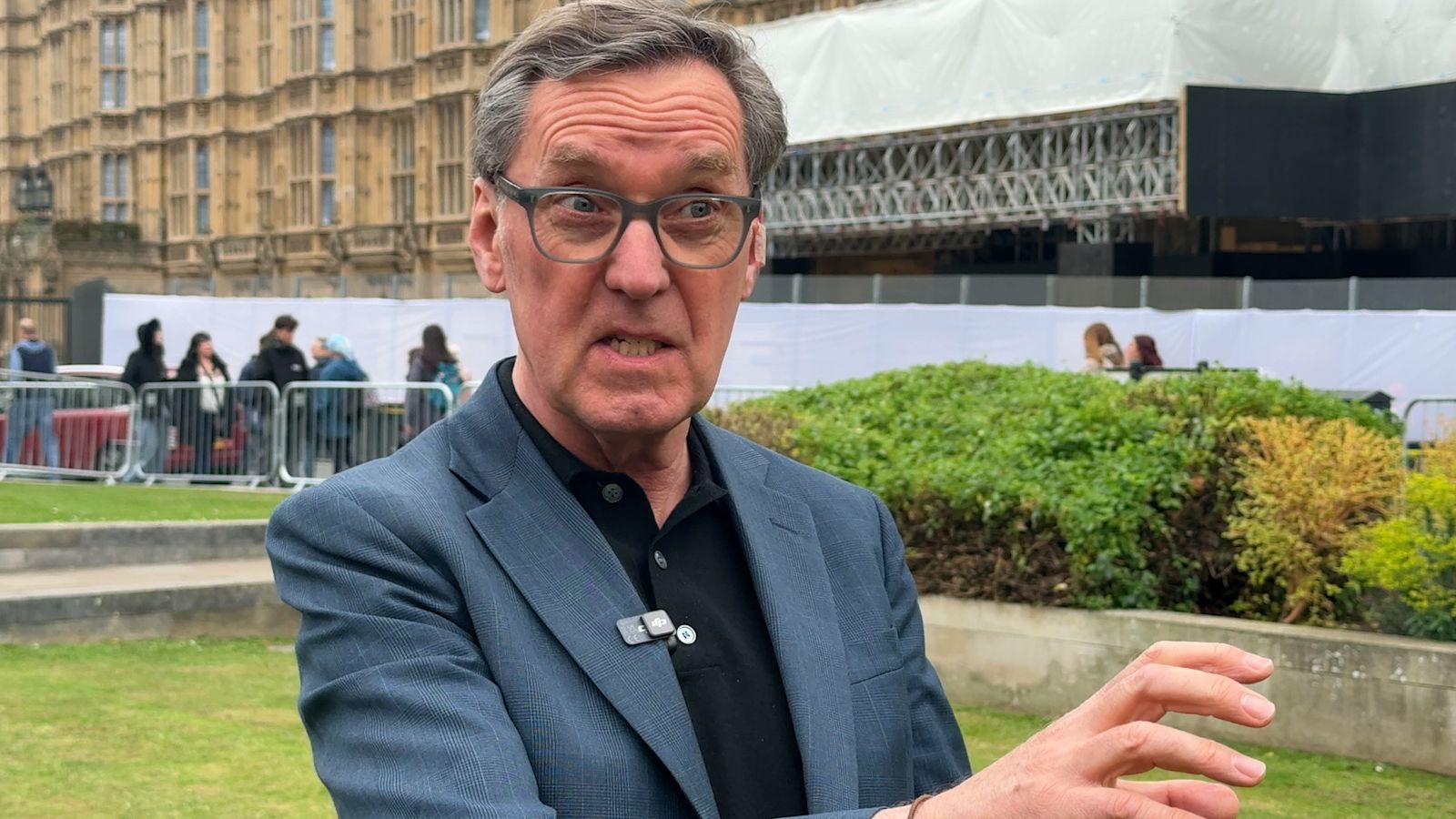
The UK’s youth unemployment crisis is a “social disaster”, says the ex-minister appointed by Sir Keir Starmer to try to fix the problem.
Alan Milburn, a former MP who was a minister in Tony Blair’s government, was recruited by the current Labour government to assess why almost one million young people are not in employment, education, or training (Neets).
“This is a big problem. It’s a national crisis,” he told ITV News, “And the real problem is this; 60% of them, six and ten of them, are economically inactive. That means they’re not even looking for work.”
The number of 16 to 24-year-olds Neets is at its highest level for over 10years, “and it’s getting worse, not getting better,” Milburn said.
How is the government addressing the problem?
Several schemes to address the problem have already been announced by the government, ahead of Milburn’s review being published in the summer, but he says they are “subscale at the moment”.
The Youth Jobs Grant and Jobs Guarantee, beginning in spring, will see the government fund work placements or pay firms to hire young people who have been unemployed and on benefits for either more than six months or 18 months.
Along with a plan for additional apprenticeships, the government says its youth unemployment schemes will create 200,000 jobs and placements.
“It’s a really good start, but it’s only a start,” Milburn said. “We’ve got to make sure that it is more widely available.”
High youth unemployment is “not a new phenomenon” and has “been going on for a very long time”, Milburn told ITV News – but critics of the government, including Reform UK and the Conservatives, say Labour has made the problem worse.
They claim Labour is discouraging businesses from hiring young people by increasing minimum wage and business rates.
When asked about those claims, Milburn appeared to accept that the policies do increase the risk for companies hiring young people, but said youth unemployment has been an issue long before Labour came to power.
Why is youth unemployment so high?
He said the root cause is a much more complex mix, pointing to the link with social disadvantage, mental health, physical health, and a lack of hope among young people.
“The parts of the country that have got the highest levels of being native places like Middlesbrough, Hartlepool, Knowsley – some of the most disadvantaged places in the country. But the new kid on the block, so to speak, is what is going on with people’s health.
“So 50% of young people who are not in education, employment and training are reporting a health condition, very often a mental health condition on neurodiversity, ADHD and autism”.
He does not accept the claim that mental health conditions are over-diagnosed in the UK, but said that work is good for mental health.
He said: “What’s happening is the diagnosis levels are rising and all too often what happens is then the state comes along and says, ‘you’ve got a problem. You can’t work’. Rather than helping people to be able to work.”
“Work is good for your mental health, not bad,” he added. “Being out of work is disastrous for your mental health.”
‘The UK doesn’t have a jobs shortage, it has a hope shortage’ – is Artificial Intelligence to blame?
When ITV News has spoken to young people looking for work, most of them talk about applying for dozens of jobs and never hearing anything back.
Many of them say it leaves them feeling hopeless about the future.
Milburn has found the same while conducting his review.
“The biggest thing that’s in short supply in the country is not jobs. The biggest thing is hope,” he said, adding that “it must be the most demoralising thing to apply sometimes for dozens, sometimes, frankly, for hundreds of jobs but not hear back.”
And he thinks AI could be at least partly to blame – but not for taking human jobs, which is another concern. He believes employers are relying too much on AI to sift through applications.
“A lot of the problem now is that a lot of the responses that the employers are generating, if they’re generating any, when it comes to young people applying, it’s all done by algorithms.
“It’s not done by a human being. The applications come in. It’s all AI sorted, etc. so human beings never see the application from another human being.”
He said the government should encourage employers to respond to failed applicants, but “it’s really difficult to mandate that businesses do it”.
On the risk of AI taking human jobs, he said: “There’s no doubt that it will impact some forms of employment, but equally it will create new forms of employment as well.
“That’s what’s happened with every technical digital revolution that the world has ever seen. There’s some losers, some winners. What we’ve got to do is maximise the winners.”
He said it is a “social disaster” to have so many young people out of work, adding: “We all pay the price if you have a million young people who are not in education, employment and training.”
“We pay the price socially with a more fractured society, and we pay the price economically because we’re not getting the talent and potential that those young people have.”
Have you heard our podcast Talking Politics? Tom and Robert dig into the biggest issues dominating the political agenda in every episode…