
From his small shop in Beirut, facing a building destroyed by an Israeli airstrike, Qassem Saad said he was exhausted by repeated Israeli wars on Lebanon, and hoped negotiations could end decades of suffering.
“We know that Israel will remain an enemy to us, but we are tired,” 49-year-old Saad, who suffered a minor injury in the strike, told AFP this week.
Lebanon and Israel met Tuesday for direct talks for the first time in 43 years. The goal of the negotiations led by the countries’ ambassadors, as announced by Prime Minister Benjamin Netanyahu on April 9, is to dismantle the Hezbollah terror group’s weapons and regulate peaceful relations between Israel and Lebanon. Lebanese authorities, for their part, stressed that Beirut’s priority is first to secure a ceasefire between Israel and Hezbollah.
The US, Israel and Lebanon issued a joint statement following the meeting, saying that they had held “productive discussions toward launching direct negotiations” between Beirut and Jerusalem.
“What matters to us is to reach a stage where we can raise our children and live in peace,” Saad said. “If there is a comprehensive solution for peace, we are for it, on the condition that no one encroaches on the other.”
Get The Times of Israel’s Daily Edition
by email and never miss our top stories
By signing up, you agree to the terms
“If Israel withdraws from all of the south… hands over our prisoners, gives us our rights and guarantees no more attacks… I am certainly in favor of the negotiations.”
Israeli forces are currently deployed in southern Lebanon, having entered there after Hezbollah began launching attacks on Israel at the start of March in support of its patron Iran.
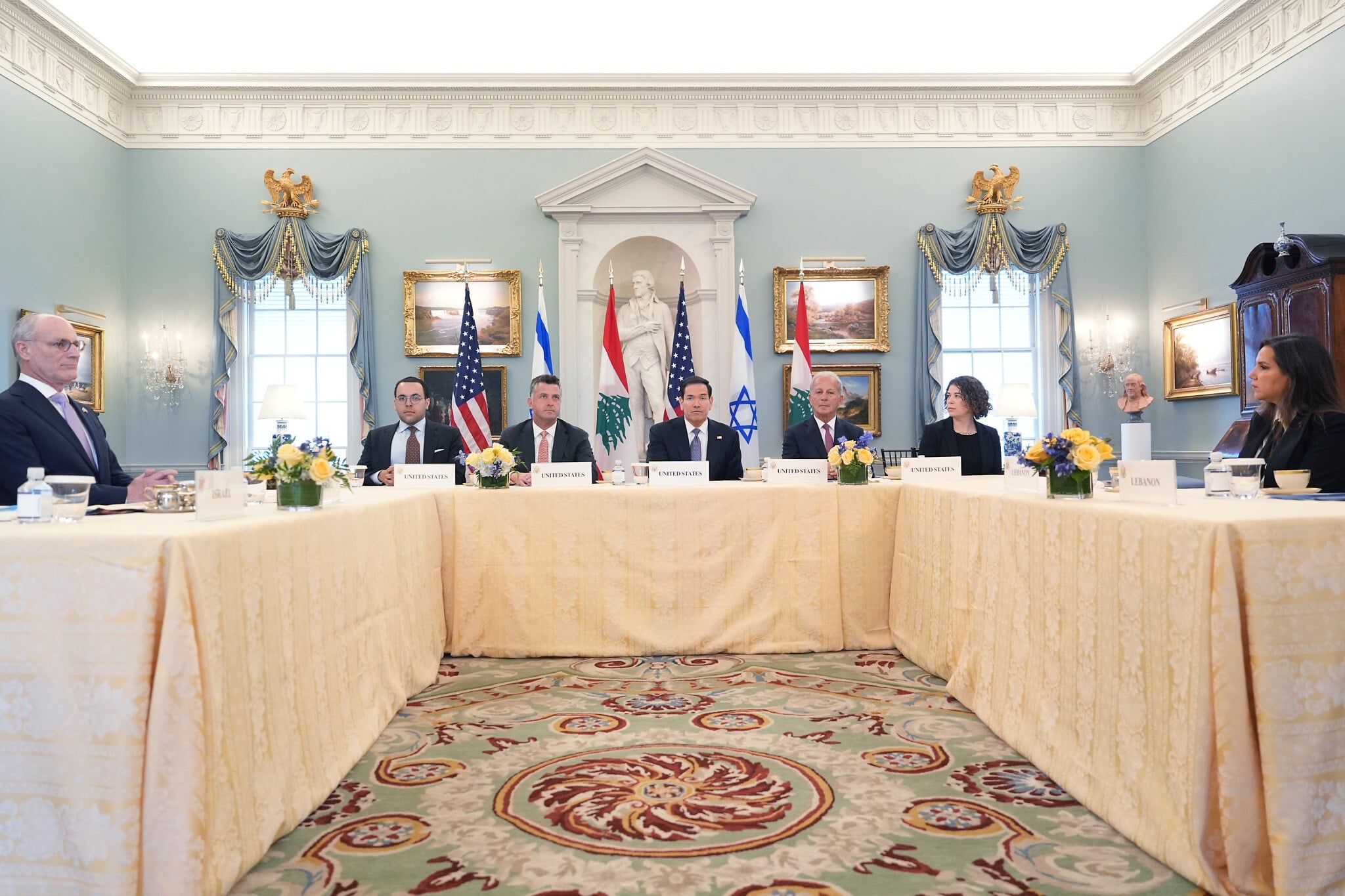
Secretary of State Marco Rubio, center, meets with Israeli Ambassador to the U.S. Yechiel Leiter, far left, and Lebanese Ambassador to the U.S. Nada Hamadeh Moawad, far right, at the State Department in Washington, April 14, 2026. (AP Photo/Jacquelyn Martin)
Contrasting headlines
A day before the talks began, Hezbollah leader Naim Qassem made his position clear, calling on Lebanon’s leaders to cancel what he described as a “surrender” by the Lebanese government to the United States.
Addressing President Joseph Aoun, Qassem said: “They are pressuring you to fight against your own people; they will not be satisfied until everything in Lebanon is destroyed in favor of Israel’s interests.”
He also vowed that Hezbollah would continue fighting, despite the talks, “until the last breath.”
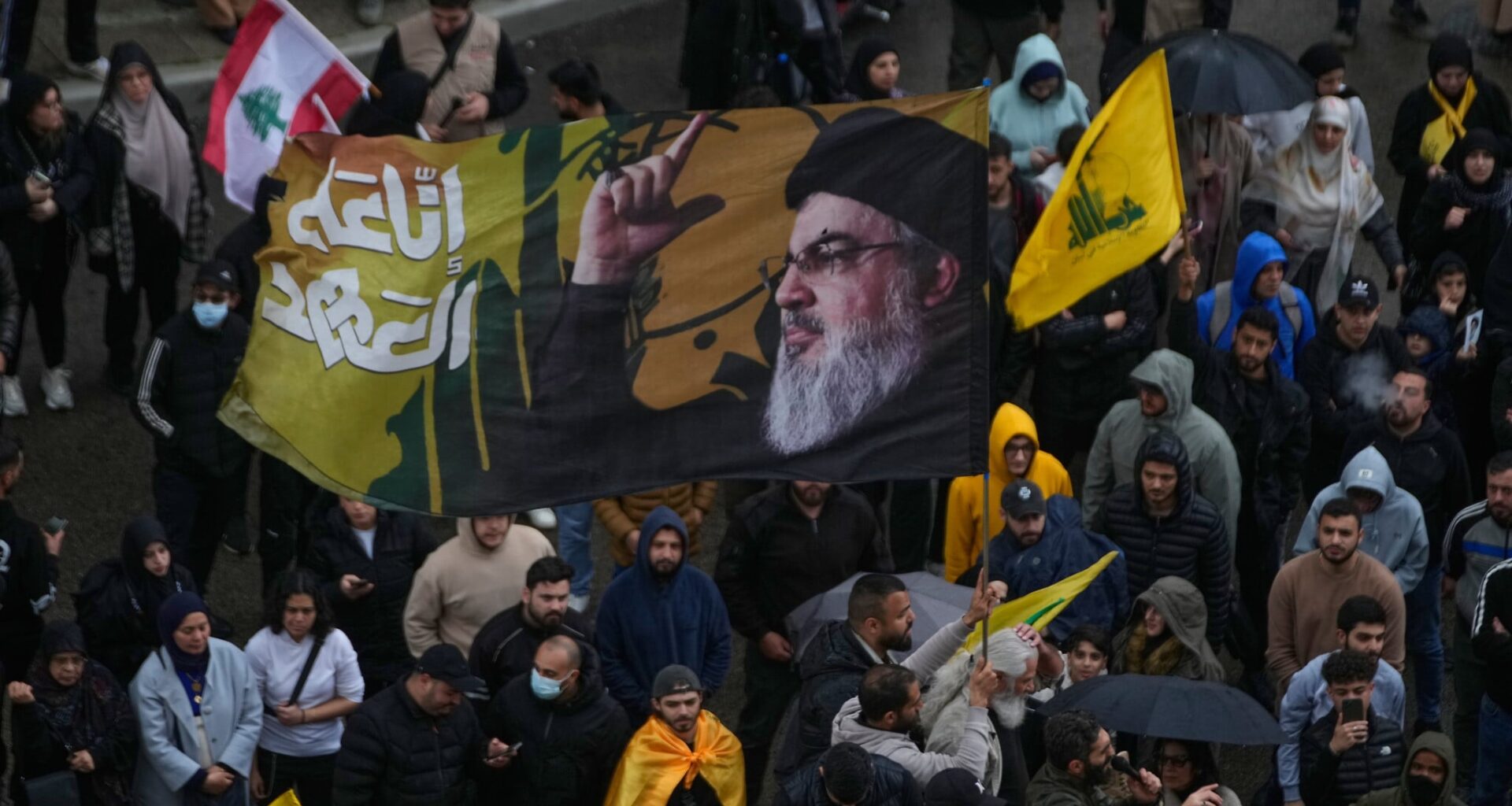
Hezbollah supporters marched in Beirut on Saturday to voice their disapproval of the negotiations.
The morning after the historic talks, the front pages of Lebanese newspapers reflected the country’s sharp divide, ranging from outright rejection to support.
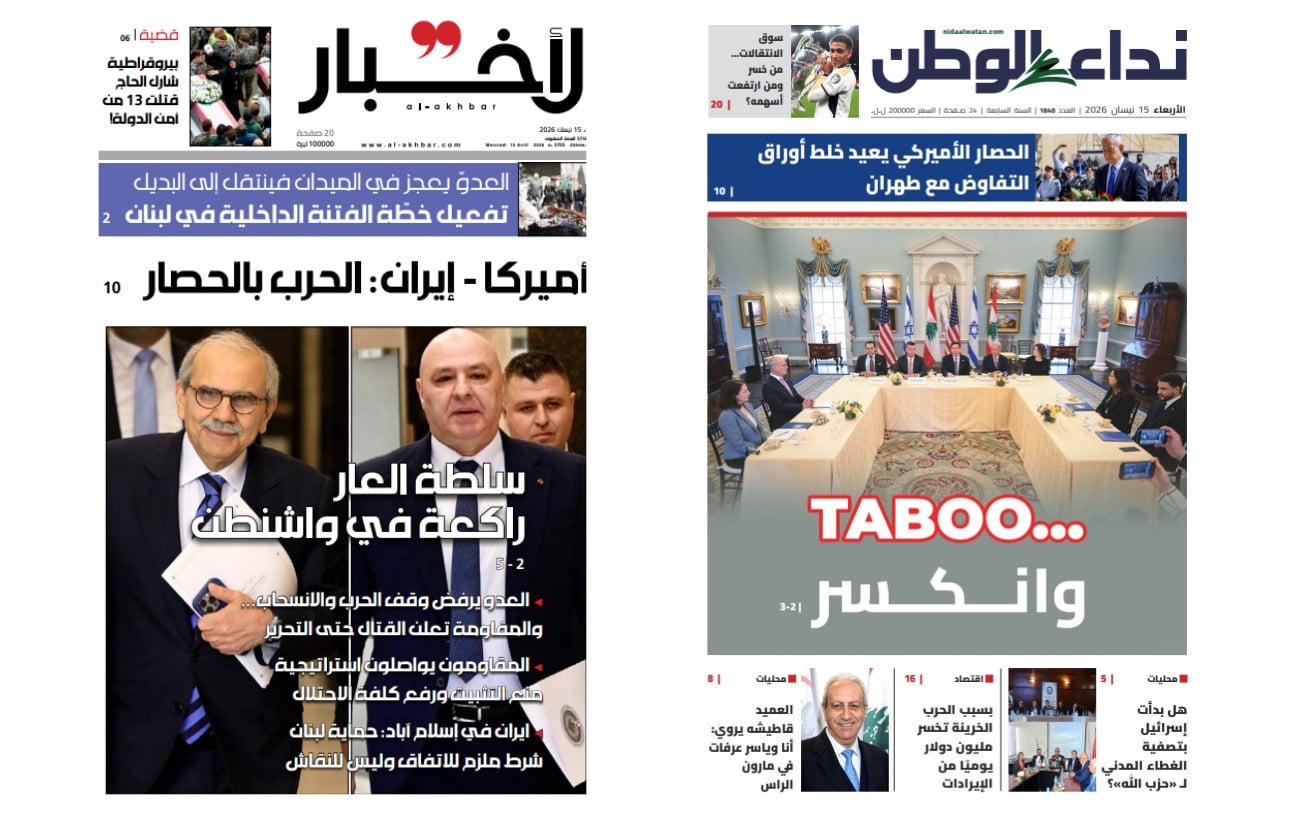
Headlines from two different Lebanese newspapers on the day after the direct talks between Israel and Lebanon, April 15, 2026. (Screenshot)
Al-Akhbar, a newspaper affiliated with Hezbollah, published a photo of Lebanese President Joseph Aoun and Prime Minister Nawaf Salam alongside the headline, “The regime of shame — boasting in Washington,” echoing Hezbollah’s narrative.
By contrast, Nidaa al-Watan, aligned with political factions opposed to Hezbollah, featured an image of the meeting showing Lebanese and Israeli flags side by side, under the headline: “A broken taboo.”
The Lebanese newspaper Al-Joumhouria, also considered to be closer to the camp opposed to Hezbollah, ran a photo of the ambassadors and described it as a “historic meeting.”
A rare political reaction during the talks came from Hezbollah’s opponents. Nadim Gemayel, a Lebanese lawmaker from the Kataeb Party, a Christian party that opposes Hezbollah, posted a photo of the meeting on X, writing, “After 43 years of lost time and absurd wars” — referring to the last time Israel and Lebanon held direct and public negotiations.
In 1983, Israel and Lebanon held talks aimed at coordinating the IDF’s withdrawal following the First Lebanon War and setting security arrangements along the border. The agreement signed on May 17 of that year ultimately collapsed due to internal opposition in Lebanon and Syrian pressure on Beirut not to implement it.
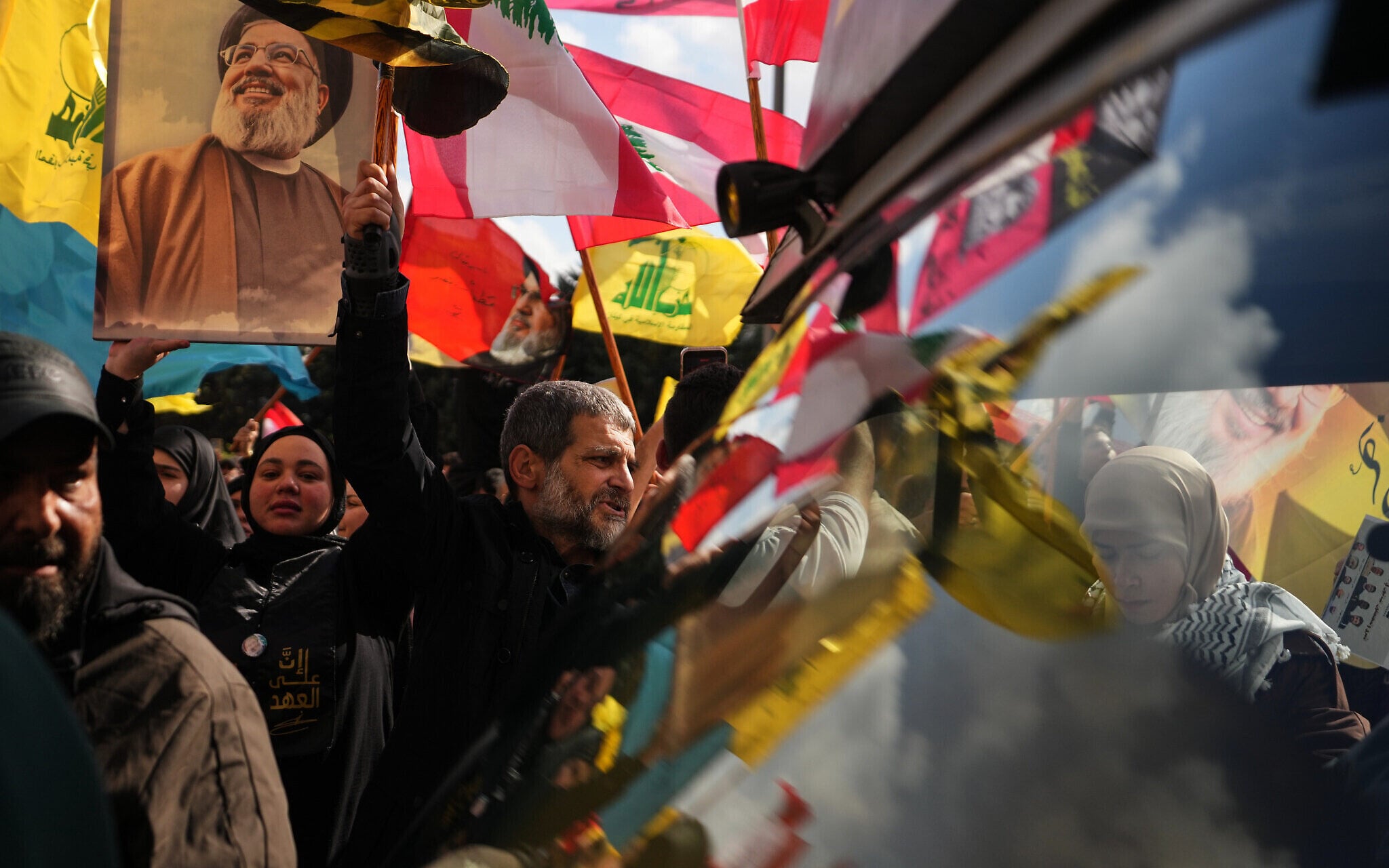
A woman holds a poster of late Hezbollah leader Hassan Nasrallah as others wave Lebanese and Hezbollah flags, during a protest against Lebanese Prime Minister Nawaf Salam outside the government palace in Beirut, Lebanon, April 11, 2026. (AP Photo/Hassan Ammar)
‘We want rest’
Mohammad Al-Khatib, 57, owns an electronics company next to the site of an airstrike in Corniche al-Mazraa in Beirut, where the smell of smoke still dominated, and buildings were blackened with soot. He said he did not believe Israel would honor any agreement.
“You don’t hold negotiations under bombardment, shelling and humiliation. Where is the justice?” he told AFP.
The Israelis “have never stuck to peace in their lives. Their ambition is expansion and control over Lebanon… throughout its history, Israel hasn’t been credible.”
In the neighborhood, one of several Beirut districts Israel bombed last week in a nationwide wave of strikes that killed more than 350 people, residents like Saad were trying to gather what they could from the rubble of their homes and businesses.
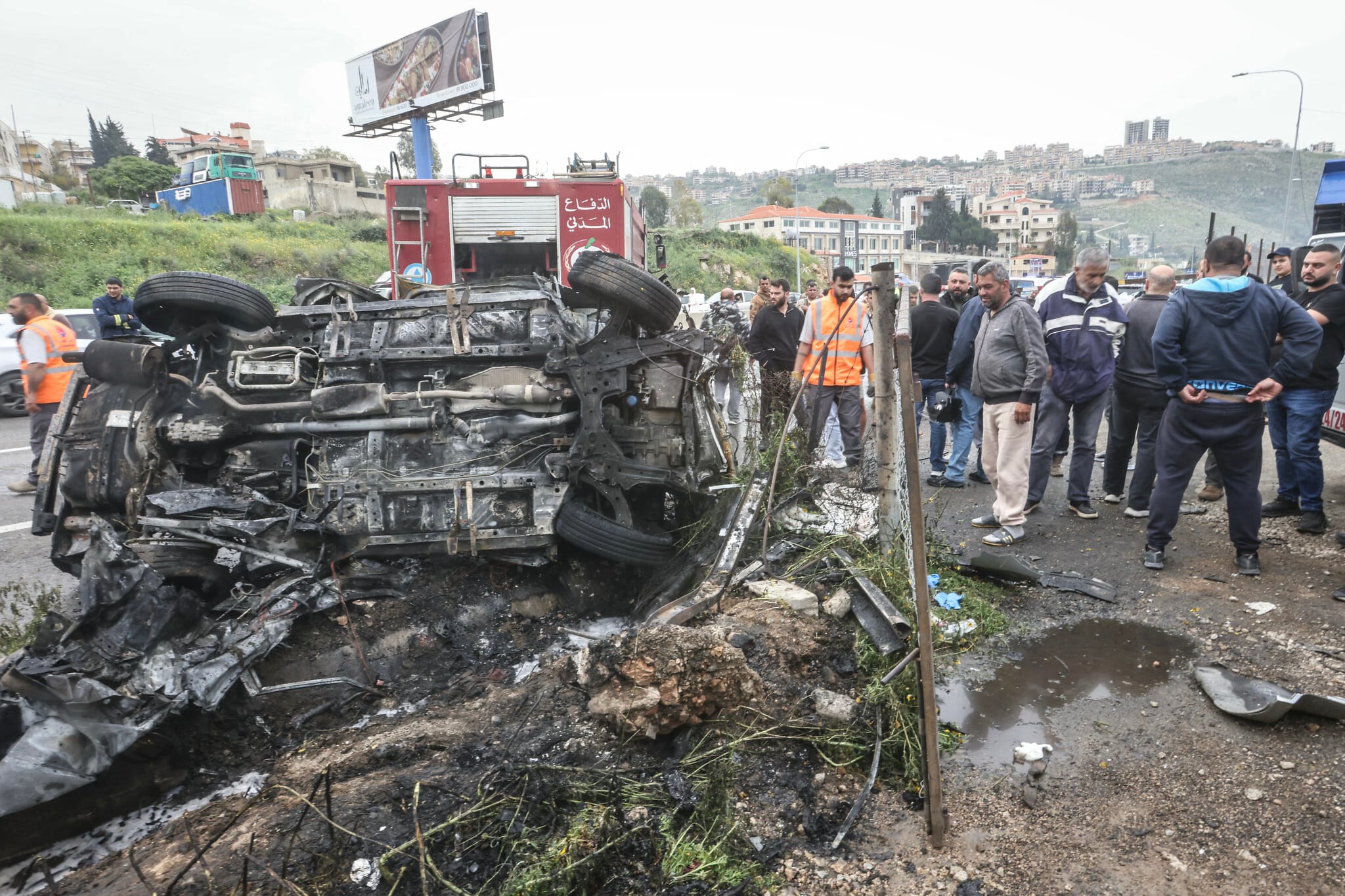
First responders and security forces work at the site of an Israeli airstrike that targeted a vehicle the Lebanese town of Jiyeh, south of Beirut, on April 15, 2026. (Photo by MAHMOUD ZAYYAT / AFP)
Kamal Ayad, 49, paused to rest under a building where he was working to repair the damage as people cleared away debris.
“We are in favor of [negotiations] if they serve Lebanon’s interest, if they will resolve matters, end the war, and let us live in peace,” he said. “We want peace… and we hope Iran won’t obstruct it,” he added. “We are extremely tired… We have lived through many wars, and we want rest.”
Fears of internal conflict
Lebanon launched talks with Israel days after the United States and Iran failed to reach an agreement to end the broader Middle East war. The two sides have declared a two-week truce that Iran and mediator Pakistan insist includes Lebanon, but which Israel and Washington have said does not.
“There has to be a solution between the US and Iran, otherwise negotiations are useless,” said Joe Ghafari, 61, in Beirut’s Ashrafiyeh district.
“The decision isn’t in our hands. If it were, I would support negotiations.”
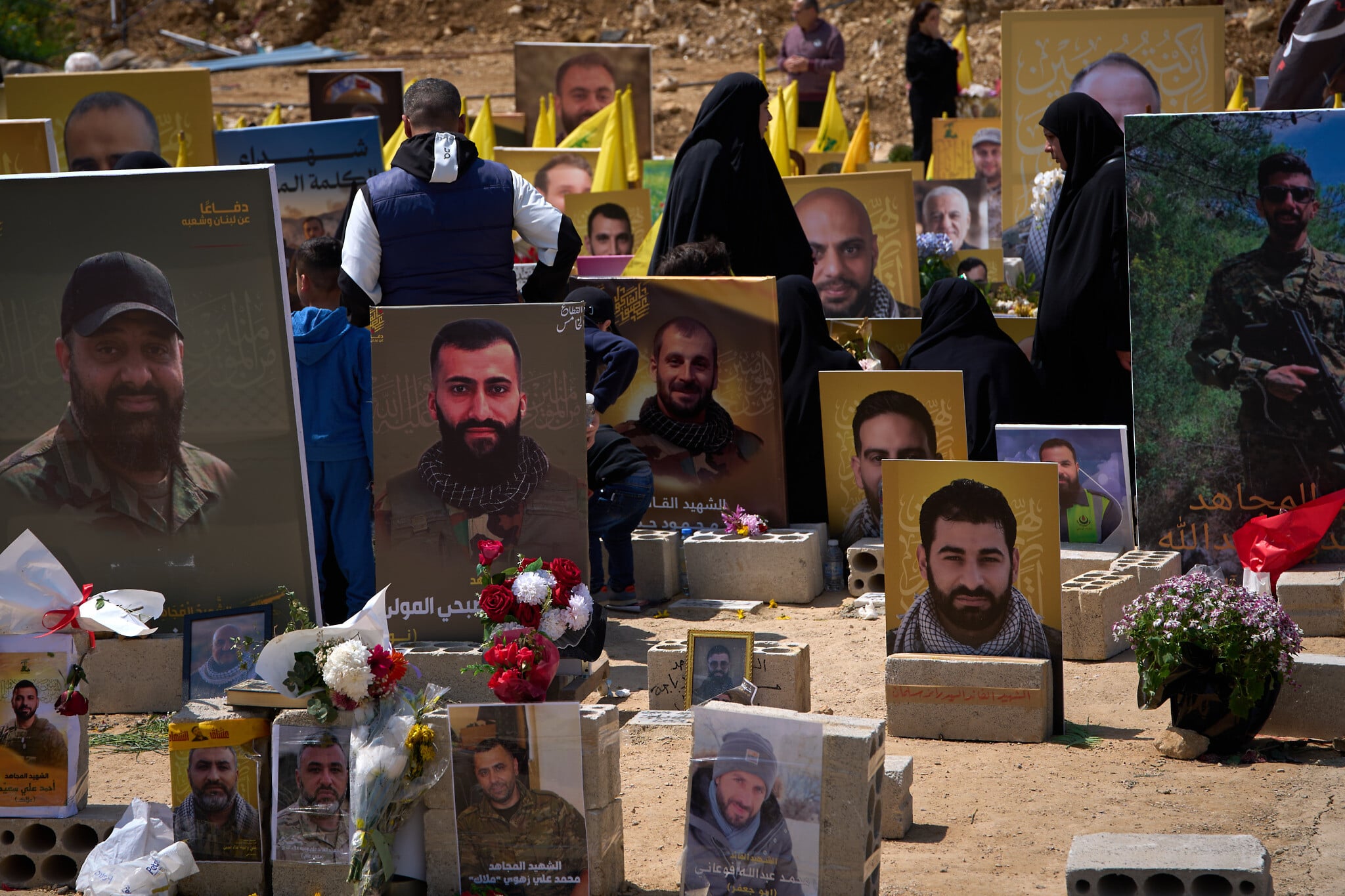
Graves bearing photos of Hezbollah fighters killed in Israeli strikes are seen in a cemetery in Choueifat, Lebanon, April 13, 2026. (AP/Emilio Morenatti)
Ghafari said he feared renewed internal conflict in a country that endured a bloody civil war between 1975 and 1990.
“How can we make peace with Israel if part [of the population] doesn’t want it?” Ghafari asked. “If these negotiations advance while the other side [in Lebanon] does not want them, there will of course be internal conflict. And Lebanon cannot bear internal wars.”
You appreciate our wartime journalism

You clearly find our careful reporting of the Iran war valuable, at a time when facts are often distorted and news coverage often lacks context.
Your support is essential to continue our work. We want to continue delivering the professional journalism you value, even as the demands on our newsroom have grown dramatically during this ongoing conflict.
So today, please consider joining our reader support group, The Times of Israel Community. For as little as $6 a month you’ll become our partners while enjoying The Times of Israel AD-FREE, as well as accessing exclusive content available only to Times of Israel Community members.
Thank you,
David Horovitz, Founding Editor of The Times of Israel