

But Valencia says customers are coming in worn-down, without a vision for future immigration relief. They tell her their faith in the system is dropping.
In the Southern California city of Pomona, tax preparer Hayde Vigil says her business is also seeing about half its usual filings this year.
Yet the steep drop looks different in Southern California, she explains. Most of her clients are documented, Vigil says in Spanish, but status doesn’t seem to be the issue.
“They’re afraid to leave their homes because there are so many raids, and they’re scared they’ll be detained and deported,” she says.
Immigration enforcement agents have been active in that region, and her customers are afraid they’ll be picked up because they’re Latino, even if they are here legally.
“They weren’t going out at all before, and now they only go out for the bare minimum,” says Vigil, which doesn’t seem to include leaving the house to file taxes this year.
‘There’s nothing for you’
Claudia, an undocumented immigrant from Mexico, sits wringing her hands in her lap. As names are called out in the Northern California day labor hall where she sits in, she waits for the sound of her own, hoping to pick up some work for the day.
Claudia, who did not want her full name to be used because her immigration status puts her at risk of deportation, has been living in California for over 20 years. In these decades, her work has ebbed and flowed, sometimes working multiple jobs at once. These days, Claudia is lucky to have her name called a few times a week. Regardless of workflow, she files her taxes every year.
Yet it’s not just around tax season that she pays, Claudia explains in Spanish. “You pay taxes on what you earn, on what you buy, on everything you consume in this country,” Claudia says. “But you can’t get anything back from it.”
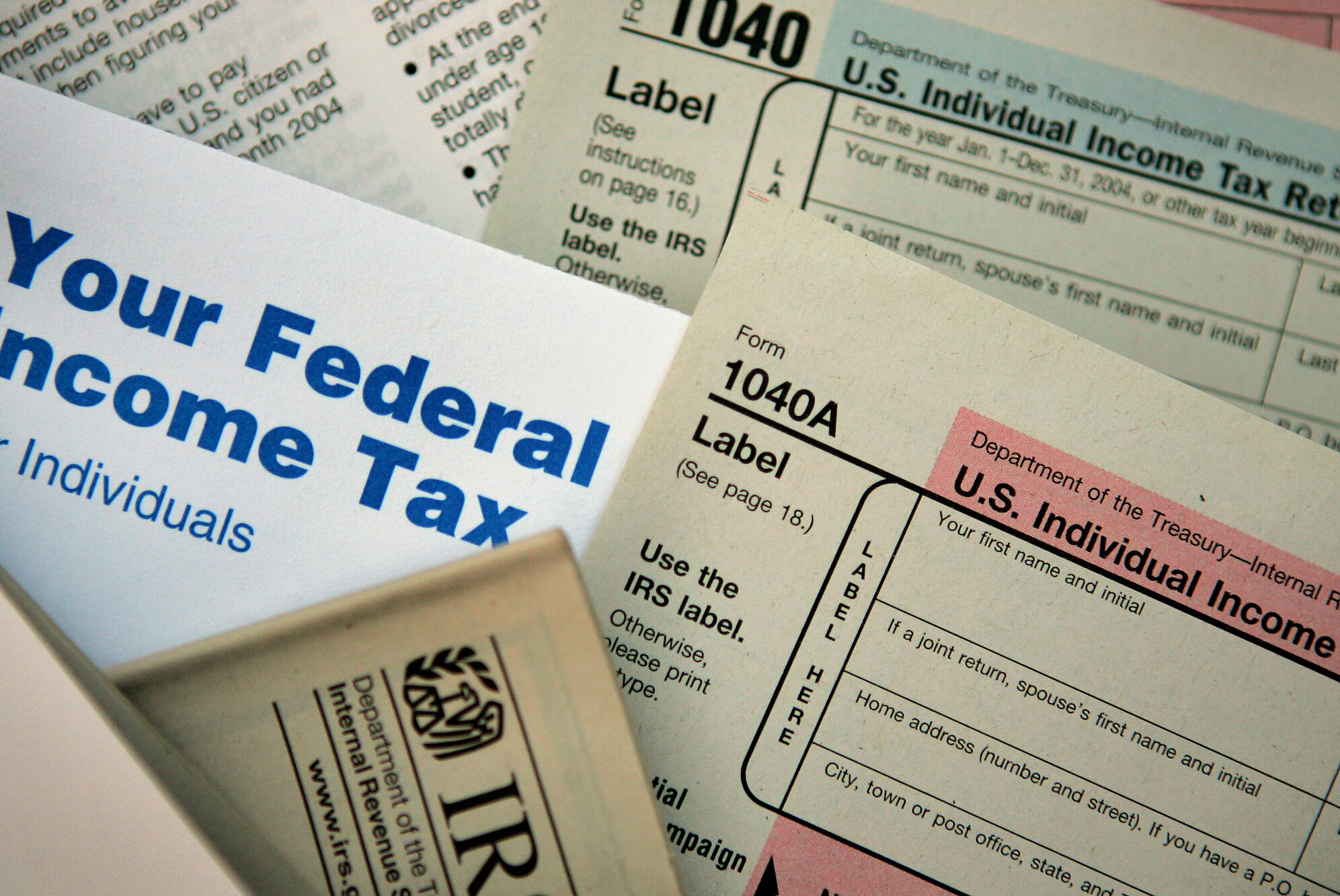 Current federal tax forms are distributed at the offices of the Internal Revenue Service on Nov. 1, 2005, in Chicago, Illinois. (Scott Olson/Getty Images)
Claudia keeps filing year after year in the hope that one day she’ll have a pathway to documentation that would let her visit her family in Mexico, find work more easily and live with no fear about status.
“You hold onto the hope that, in the future, you’ll be able to do things the right way,” she says.
But after over 20 years of filing, her hope toward legalization only seems to be dwindling. “In the end, there’s nothing there for you, is there?” she asks.
Claudia still sees no pathway to legal status and receives no Social Security benefits, no MediCal — and this year, for the first time, she was told she’ll receive no credits back for her son, who is a U.S. citizen.
Her voice grows soft. “So, what’s the point in paying?” she asks. “There’s no hope for someone like me.”
Claudia says she went back and forth in her head, deciding if this would be the year she broke her commitment to a stable future here. In the end, she filed, but her doubt continues to grow, both in the system and her future in the United States.