

Listen to this article
Estimated 5 minutes
The audio version of this article is generated by AI-based technology. Mispronunciations can occur. We are working with our partners to continually review and improve the results.
A 10-day ceasefire between Israel and Lebanon was announced by U.S. President Donald Trump on Thursday, six weeks into a renewed war with Hezbollah that has killed more than 2,000 people, caused widespread destruction and driven more than a million residents from their homes.
The ceasefire is expected to begin at 5 p.m. ET, Trump said in a post on Truth Social.
Trump announced the pause in fighting on social media, saying it followed “excellent” conversations with Lebanese President Joseph Aoun and Israeli Prime Minister Benjamin Netanyahu.
It is not clear if Hezbollah will abide by the agreement after it outright rejected talks between the two countries earlier this week.
In a separate post, Trump said he will be inviting Aoun to the White House for “meaningful talks” between Lebanon and Israel.
The announcement came days after officials from Lebanon and Israel held their first direct diplomatic talks in decades, hosted by the United States in Washington on Tuesday. Israel had ruled out discussion of a ceasefire with Lebanon during the talks.
Officials from Lebanon and Israel have yet to comment on the announcement or provide any details of the deal.
WATCH | Historic talks between Israel and Lebanon held in Washington on Tuesday: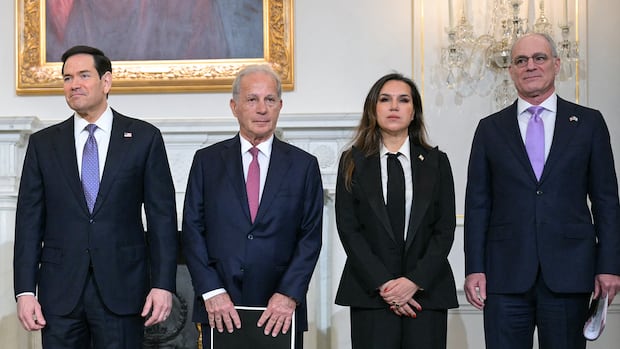
Israel, Lebanon hold direct talks as questions surround Strait of Hormuz blockade
Israel and Lebanon held their first direct talks in decades as questions swirl around the effectiveness of the U.S. blockade in the Strait of Hormuz.
Following Trump’s announcement on Thursday, an Israeli security official said the military has no plans to withdraw forces from southern Lebanon during a ceasefire, according to Reuters.
Meanwhile, Netanyahu’s security cabinet has convened for an “urgent discussion” on the ceasefire Thursday afternoon, a cabinet source said.
Earlier on Thursday, Aoun urged Trump to help secure a ceasefire for his country in the first call ever between the two leaders.
Aoun’s office said he spoke to Trump and Secretary of State Marco Rubio separately and thanked them for their efforts in reaching a ceasefire in Lebanon.
Hezbollah lawmaker Hassan Fadlallah said the Iran-backed militant group was informed by Iran’s ambassador in Beirut that a temporary ceasefire could begin Thursday evening.
Asked whether the group would commit to the agreement, Fadlallah, who urged the Lebanese government to reconsider its decision to negotiate with Israel on Wednesday, said it will come down to Israel’s commitment to “halt all forms of hostilities.”
Earlier this week, another Hezbollah official rejected the talks and said the group will not abide by any agreement reached as a result of the negotiations.
Hezbollah is a Lebanon-based Shia militant group that also has a political wing. It formed in 1982 primarily to combat occupying Israeli forces in southern Lebanon. The name means “party of God” in Arabic. It’s considered a terrorist organization by Canada, the U.S. and other countries.
Thousands killed and injured in Lebanon
Renewed fighting between Israel and Hezbollah ignited after Hezbollah began firing rockets into northern Israel on March 2 in solidarity with its ally Iran, two days after the U.S. and Israel attacked the Islamic Republic.
Initial attacks also killed Iran’s supreme leader, Ayatollah Ali Khamenei, and promptly triggered retaliatory Iranian strikes on Israel and Persian Gulf states that host U.S. military bases and personnel.
Since March 2, Israel’s attacks in Lebanon have killed more than 2,100 people — including health workers and journalists — and injured more than 6,500 others, according to Lebanon’s Health Ministry.
Missiles launched from Hezbollah have killed two Israeli civilians; 13 Israeli soldiers have also been killed in southern Lebanon, according to Israeli authorities.
Hours after Tehran and Washington announced a truce last Wednesday, Israel launched more than 100 strikes across Lebanon, including in densely packed residential and commercial areas of central Beirut. Those strikes killed more than 350 people in only 10 minutes, according to Lebanese authorities.
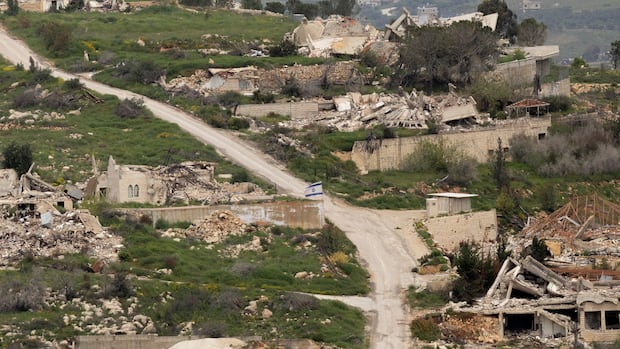
Although Israel has avoided targeting Beirut since then, it has continued to strike parts of the country’s southern and eastern regions, where intense fighting is ongoing. On Thursday, Israel destroyed the last bridge over the Litani River into Lebanon’s south after hitting several other crossings during the war. That loss of those crossings means almost a tenth of Lebanon is now effectively cut off from the rest of the country.
The war in Lebanon has also resulted in the displacement of more than 1.2 million people from their homes, according to Lebanese authorities.
Israel has threatened Gaza-scale devastation in Lebanon. It says it aims to occupy southern Lebanon up to the Litani River, which meets the Mediterranean about 30 kilometres from Israel’s border. Last month, Defence Minister Israel Katz said the plan was to create a “defensive buffer,” spelling out for the first time Israel’s intent to seize that territory.