
By Dawn Chmielewski
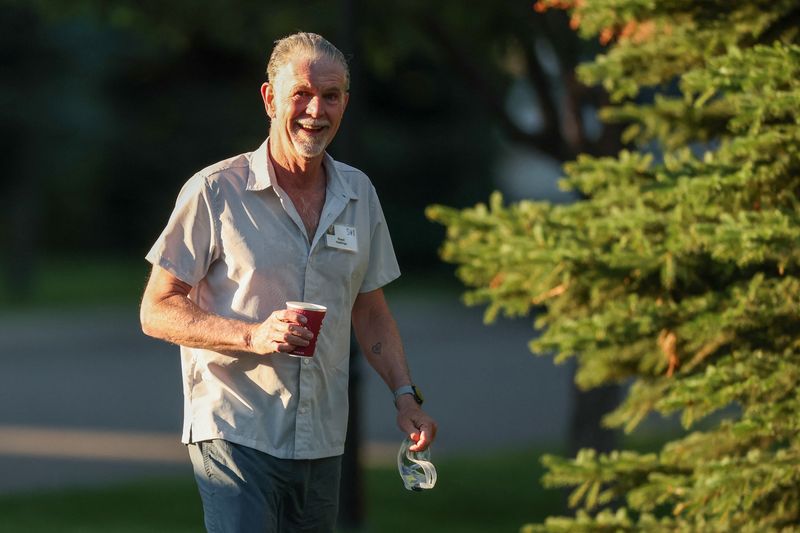
LOS ANGELES, April 16 (Reuters) – Netflix Chairman Reed Hastings is leaving the streaming service he co-founded 29 years ago as the company regains its footing after it lost its $72 billion deal for Warner Bros Discovery.
In a letter to investors released on Thursday, Netflix said Hastings will not stand for re-election at its annual meeting in June and plans to focus on philanthropy and other pursuits.
The company’s stock plunged around 8% on the news of Hastings’ departure. The co-founder is credited with helping to revolutionize how movies and television shows are delivered in homes, upending Hollywood’s business model.
“Netflix is growing revenues double-digits, expanding margins in 2026 and gushing free cash flow,” said LightShed Partners media analyst Richard Greenfield. “While the Q1 was uneventful financially, the departure of Reed Hastings has spooked investors.”
Netflix reaffirmed in a 14-page shareholder letter that its mission remains “ambitious and unchanged” – to entertain the world, providing movies and series for many tastes, cultures and languages. The company’s full-year outlook remained unchanged.
The company did not say how it plans to spend the $2.8 billion termination fee it received after losing the Warner Bros movie studio and HBO, and lifted its earnings per share to $1.23 in the first quarter compared with 66 cents per share in the same quarter last year.
Revenue rose to $12.25 billion, an increase of 16% from the year-ago period, modestly exceeding analyst forecasts of $12.18 billion.
Netflix, which long told investors that a Warner Bros acquisition was a “nice to have, not need to have” proposition, highlighted areas of future growth.
The company said its investment in expanding its entertainment offerings with video podcasts, and live entertainment – such as the World Baseball Classic in Japan – is fuelling engagement. It plans to use technology to improve the user experience and improve monetization, as advertising revenue remains on track to reach $3 billion in 2026 – a twofold increase from a year ago.
(Reporting by Dawn Chmielewski in Los Angeles and Harshita Mary Varghese in Bengaluru; Editing by Jennifer Saba and Matthew Lewis)