
Strait of Hormuz is fully open, Trump and Iranian foreign minister say
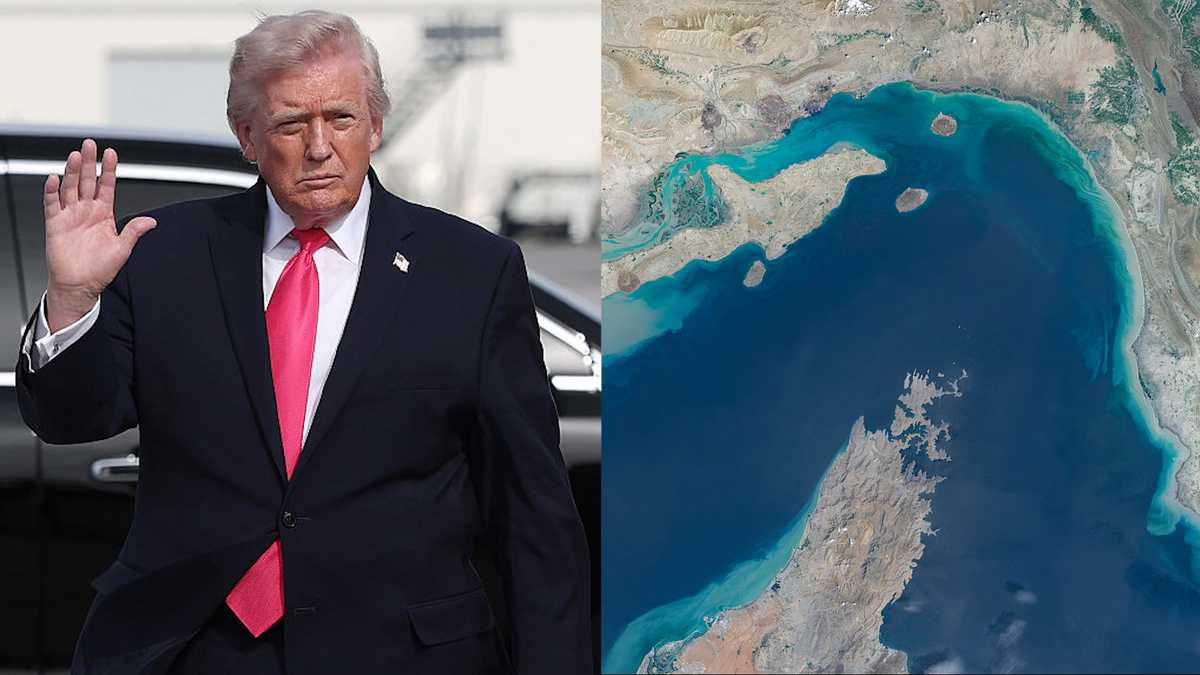
This is the Strait of Hormuz, *** narrow bending waterway in the Persian Gulf, and *** trade route between the Middle East and the rest of the world that has global impact. The strait lies between Iran on one side and Arab Gulf states on the other, the latter of which includes several key US allies. At its narrowest point, it separates Oman and Iran by just 21 miles. It connects the Persian Gulf to the Gulf of Oman, and from there ships travel to the open ocean. While Iran and Oman both have their territorial waters in the strait, it’s generally viewed as an international waterway. The strait links crude oil producers in the Middle East to key markets in Asia, Europe, North America and beyond. Around 20% of the world’s traded crude oil and *** similar share of natural gas passes through the Strait of Hormuz, much of it destined for markets in Asia. It has only two shipping lanes, but it is deep enough for supertankers. While there are pipelines in Saudi Arabia and the United Arab Emirates that can avoid the passage, most of the oil and gas that travels through the strait has no alternative means of exiting the region. When the region surrounding the strait is disrupted by conflict, the global flow of crude can be disrupted as well, increasing oil prices. The knock-on effect can have lasting impacts on the world economy, raising the price of oil and pushing inflation higher, meaning everyday. Goods and services rise in price as *** result. On top of that, fertilizers and their components are exported globally in large quantities from the Persian Gulf. When these are disrupted, food supply, food prices, and food security are all affected as well.
This is the Strait of Hormuz, *** narrow bending waterway in the Persian Gulf, and *** trade route between the Middle East and the rest of the world that has global impact. The strait lies between Iran on one side and Arab Gulf states on the other, the latter of which includes several key US allies. At its narrowest point, it separates Oman and Iran by just 21 miles. It connects the Persian Gulf to the Gulf of Oman, and from there ships travel to the open ocean. While Iran and Oman both have their territorial waters in the strait, it’s generally viewed as an international waterway. The strait links crude oil producers in the Middle East to key markets in Asia, Europe, North America and beyond. Around 20% of the world’s traded crude oil and *** similar share of natural gas passes through the Strait of Hormuz, much of it destined for markets in Asia. It has only two shipping lanes, but it is deep enough for supertankers. While there are pipelines in Saudi Arabia and the United Arab Emirates that can avoid the passage, most of the oil and gas that travels through the strait has no alternative means of exiting the region. When the region surrounding the strait is disrupted by conflict, the global flow of crude can be disrupted as well, increasing oil prices. The knock-on effect can have lasting impacts on the world economy, raising the price of oil and pushing inflation higher, meaning everyday. Goods and services rise in price as *** result. On top of that, fertilizers and their components are exported globally in large quantities from the Persian Gulf. When these are disrupted, food supply, food prices, and food security are all affected as well.
Strait of Hormuz is fully open, Trump and Iranian foreign minister say

Updated: 8:37 AM CDT Apr 17, 2026
U.S. President Donald Trump and Iran’s foreign minister said Friday that the Strait of Hormuz is now fully open to commercial vessels.In a social media post, Trump said Iran announced that the strait “is fully open and ready for full passage.”Minutes earlier, Iranian Foreign Minister Abbas Araghchi posted on X that the passage for all commercial vessels through the strait “is declared completely open” in line with the ceasefire in Lebanon. He said it would stay open for the remaining period of the ceasefire.It was not immediately clear what that meant for the U.S. blockade of the strait, but Trump said the blockade would “remain in full force” until Iran reaches a deal with the U.S. to end war.Meanwhile in Beirut, barrages of gunshots rang out across the city as residents fired into the air just after midnight to celebrate the beginning of the truce, and displaced families began moving toward southern Lebanon and Beirut’s southern suburbs despite warnings by officials not to attempt to return to their homes until it became clear whether the ceasefire would hold.A spokesperson for the U.N. peacekeepers in southern Lebanon said Friday that they have not observed any airstrikes since midnight, but accused the Israeli military of violating airspace and artillery shelling in southern Lebanon. The Israeli military did not immediately comment. According to the agreement shared by the State Department, Israel can act in self-defense against imminent attacks but cannot carry out offensive operations against southern Lebanon.Trump heralded the deal a “historic day for Lebanon,” even as he expressed confidence that the war with Iran would soon end in a Las Vegas speech.“I will say the war in Iran is going along swimmingly,” Trump said. “It should be ending pretty soon.”An end to Israel’s war with Hezbollah was a key demand of Iranian negotiators, who previously accused Israel of breaking the current ceasefire deal with strikes on Lebanon. Israel said that deal did not cover Lebanon.The fighting has killed at least 3,000 people in Iran, more than 2,100 in Lebanon, 23 in Israel and more than a dozen in Gulf Arab states. Thirteen U.S. service members have also been killed.
U.S. President Donald Trump and Iran’s foreign minister said Friday that the Strait of Hormuz is now fully open to commercial vessels.
In a social media post, Trump said Iran announced that the strait “is fully open and ready for full passage.”
Minutes earlier, Iranian Foreign Minister Abbas Araghchi posted on X that the passage for all commercial vessels through the strait “is declared completely open” in line with the ceasefire in Lebanon. He said it would stay open for the remaining period of the ceasefire.
It was not immediately clear what that meant for the U.S. blockade of the strait, but Trump said the blockade would “remain in full force” until Iran reaches a deal with the U.S. to end war.
Meanwhile in Beirut, barrages of gunshots rang out across the city as residents fired into the air just after midnight to celebrate the beginning of the truce, and displaced families began moving toward southern Lebanon and Beirut’s southern suburbs despite warnings by officials not to attempt to return to their homes until it became clear whether the ceasefire would hold.
A spokesperson for the U.N. peacekeepers in southern Lebanon said Friday that they have not observed any airstrikes since midnight, but accused the Israeli military of violating airspace and artillery shelling in southern Lebanon. The Israeli military did not immediately comment. According to the agreement shared by the State Department, Israel can act in self-defense against imminent attacks but cannot carry out offensive operations against southern Lebanon.
Trump heralded the deal a “historic day for Lebanon,” even as he expressed confidence that the war with Iran would soon end in a Las Vegas speech.
“I will say the war in Iran is going along swimmingly,” Trump said. “It should be ending pretty soon.”
An end to Israel’s war with Hezbollah was a key demand of Iranian negotiators, who previously accused Israel of breaking the current ceasefire deal with strikes on Lebanon. Israel said that deal did not cover Lebanon.
The fighting has killed at least 3,000 people in Iran, more than 2,100 in Lebanon, 23 in Israel and more than a dozen in Gulf Arab states. Thirteen U.S. service members have also been killed.