
Napoleon Bonaparte is credited with proclaiming that “an army marches on its stomach”.
Yet, the maxim that military success depends on well-fed soldiers seems not to have reached those in charge of American armed forces in the Gulf.
US marines deployed to the Middle East – poised to strike Iran if a fragile ceasefire collapses – are complaining of dwindling rations and inedible food.
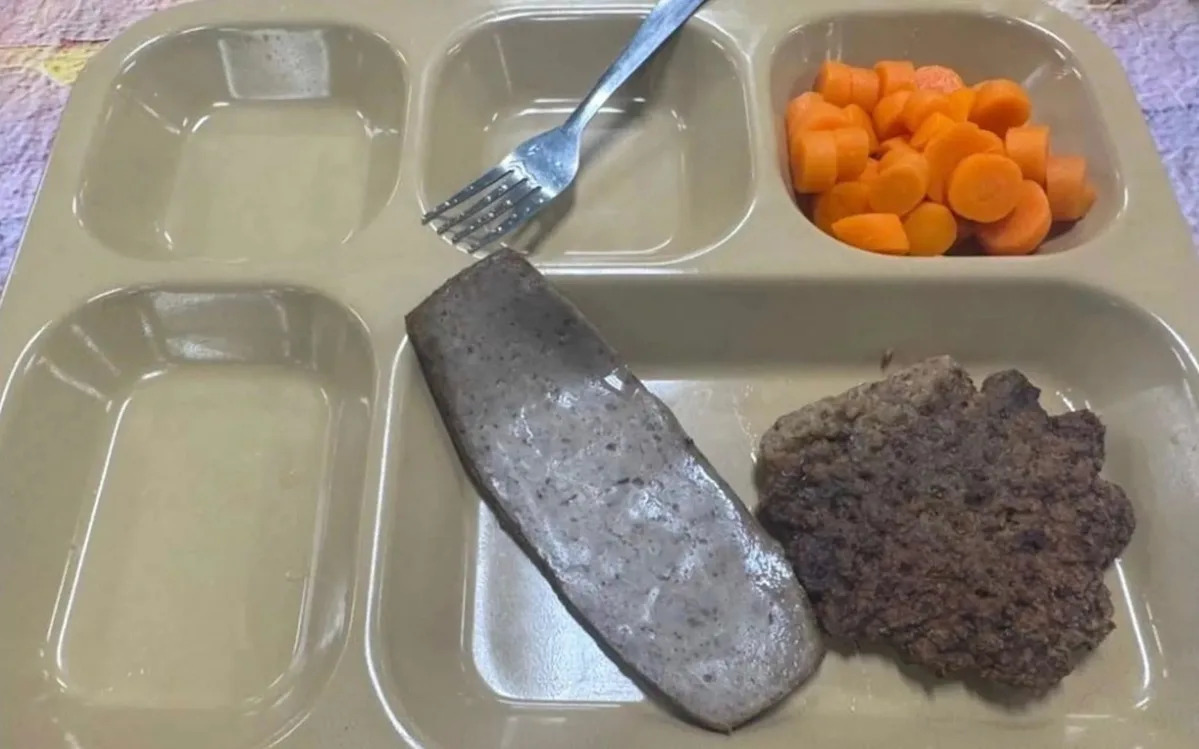
One “meal” – photographed on the USS Abraham Lincoln aircraft carrier – consists of what appears to be a pre-cooked gyros slice, a pile of an unknown brown substance and some boiled carrots.
Another picture, taken on the USS Tripoli, shows a spoonful of shredded meat and a single tortilla on tray.
The USS Tripoli, an amphibious assault ship with 3,500 marines and sailors onboard, has been at sea since leaving its base in Okinawa, Japan, for the Middle East more than a month ago. It is engaged in Donald Trump’s blockade of Iranian ports.
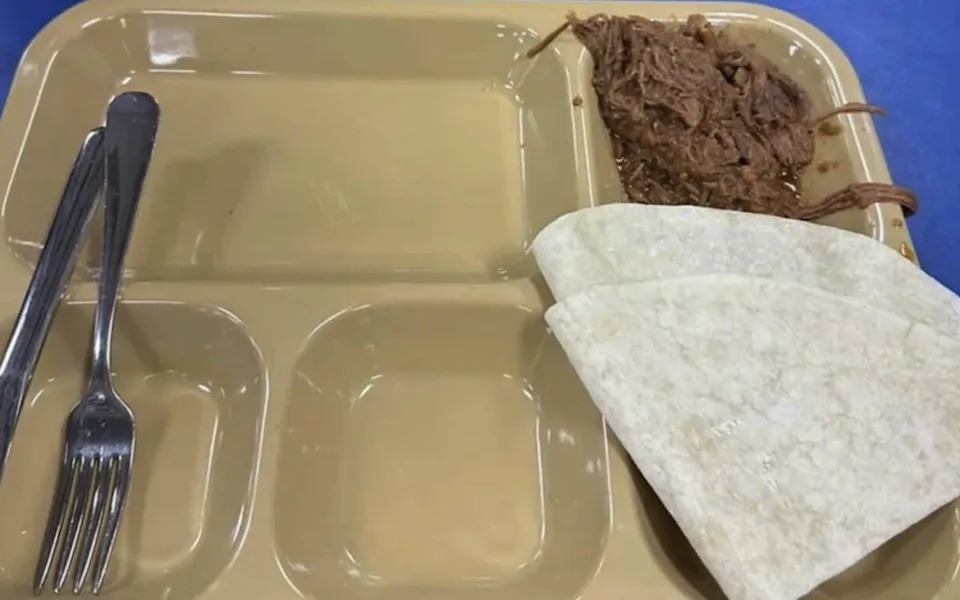
Ship’s mess: a particularly meagre meal photographed on board USS Tripoli
Iran was quick to mock the US over the unappetising images. Iran Embassy Tunisia wrote on X. “OMG Unbelievable!! This is what Trump is feeding his soldiers to open the Strait of Hormuz.” The post added: “Mothers of American soldiers – look at this.”
One marine told her father that food was being rationed, the coffee machines were broken, and fresh vegetables and fruit had long disappeared.
Dan, 63, a veteran marine, told USA Today: “We have the strongest military in the world. You shouldn’t be running out of food, and you shouldn’t not be able to get mail on the ship.”
Postal deliveries to serving troops in the Middle East were temporarily suspended after the US and Israel attacked Iran on Feb 28. By April, the service was suspended indefinitely because of what the military called “airspace closures” and “logistical impacts” of the war.
Thousands of packages – stuffed with treats and food, and often sent at great cost – sit in warehouses, waiting to be delivered.
Morale will be at ‘all-time low’
One mother spent $2,000 (£1,479) on care packages for her son, who complained of being hungry aboard the USS Tripoli, USA Today reported. Weeks later, none have reached him.
Supplies “are going to get really low”, he wrote in text messages in mid-March, warning that there were no port stops until the end of the mission. He wrote: “Morale is going to be at an all-time low.”
The issues point to how the conflict has stretched supply lines, with the naval force engaged in constant operations and granted no port visits.
Similar complaints have been made about the poor quality and small rations by those onboard USS Abraham Lincoln, one of two aircraft carriers deployed to the region.
Karen Erskine-Valentine, a pastor in West Virginia who hears reports from the ship, said: “The food is tasteless and there’s not nearly enough and they’re hungry all the time. That kind of breaks your heart.”
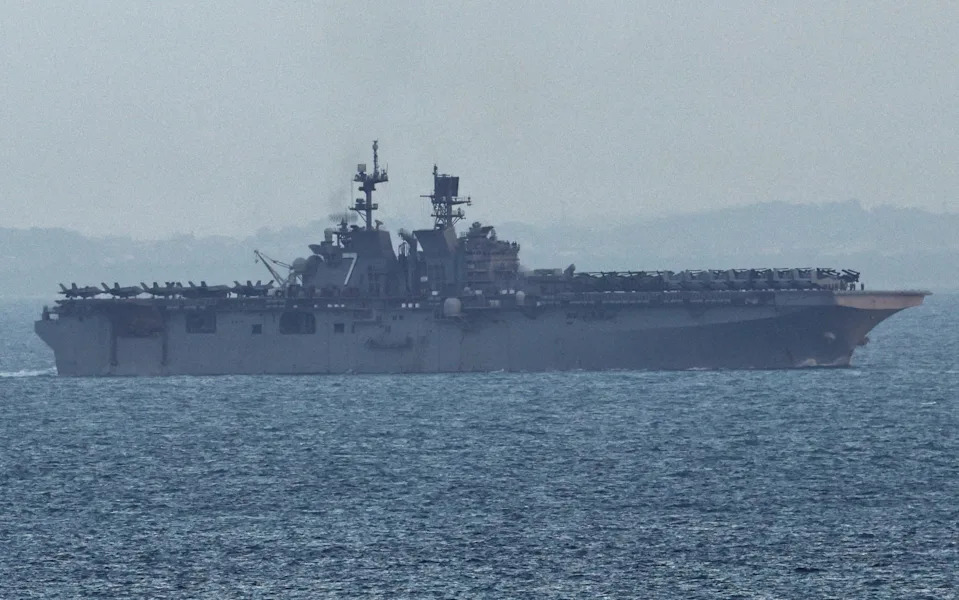
Supplies are said to be running low on the USS Tripoli, which is home to 3,500 marines and sailors – Reuters
It is a far cry from the steak and lobsters served to US forces before the Iran war. Last month, a government watchdog found that the department of defence, led by Pete Hegseth, had spent $9m (£6.65m) on crabs’ legs and lobster for troops in the three months before Operation Epic Fury.
Images circulating online in February showed ribeye steaks and seafood on plastic meal trays.
It has been known to generations of US troops that “surf and turf” meals are often served before combat operations. It signals that action is imminent as their commanders try to improve morale ahead of difficult deployments.
In March, the US government watchdog Open the Books revealed that the defence department had spent $93bn (£68.7bn) in September 2025, exhausting its budget before the fiscal year had ended.
The spending spree included $15.1m (£11.15m) on ribeye steak, $6.9m (£5.1m) on lobster tail and $2m (£1.48m) on Alaskan king crab. Mr Hegseth spent nearly $100,000 (£74,000) on a Steinway grand piano for the home of the air force chief of staff.
There is often pressure on department heads to spend their annual budgets to avoid a surplus of funds, so questions are not raised in Congress over a budget review.
The Pentagon has been contacted for comment.