
Overdrive went into overdrive this past week. After providing a cheering section for the Maple Leafs for years, the afternoon TSN talk show was faced with a very different task: Dissecting the collapse of the Leafs this season and the increasingly bizarre role of MLSE CEO Keith Pelley in that catastrophe.
To be fair, regulars Jamie McLennan and Jeff O’Neill handled it well. McLennan has always been a likable guy and O’Neill (a former Leaf himself) stands out in that cringey Toronto media sphere for his willingness to tell the truth, a commodity as rare in Toronto as Stanley Cup parades.
The topic of the day was a story in The Athletic detailing the bizarre events when Pelley barged into the Leafs’ war room in the lead-up to the trade deadline with his AI expert in tow and began detailing potential trades and the returns Toronto might expect (Montreal prospect Michael Hage among them.)
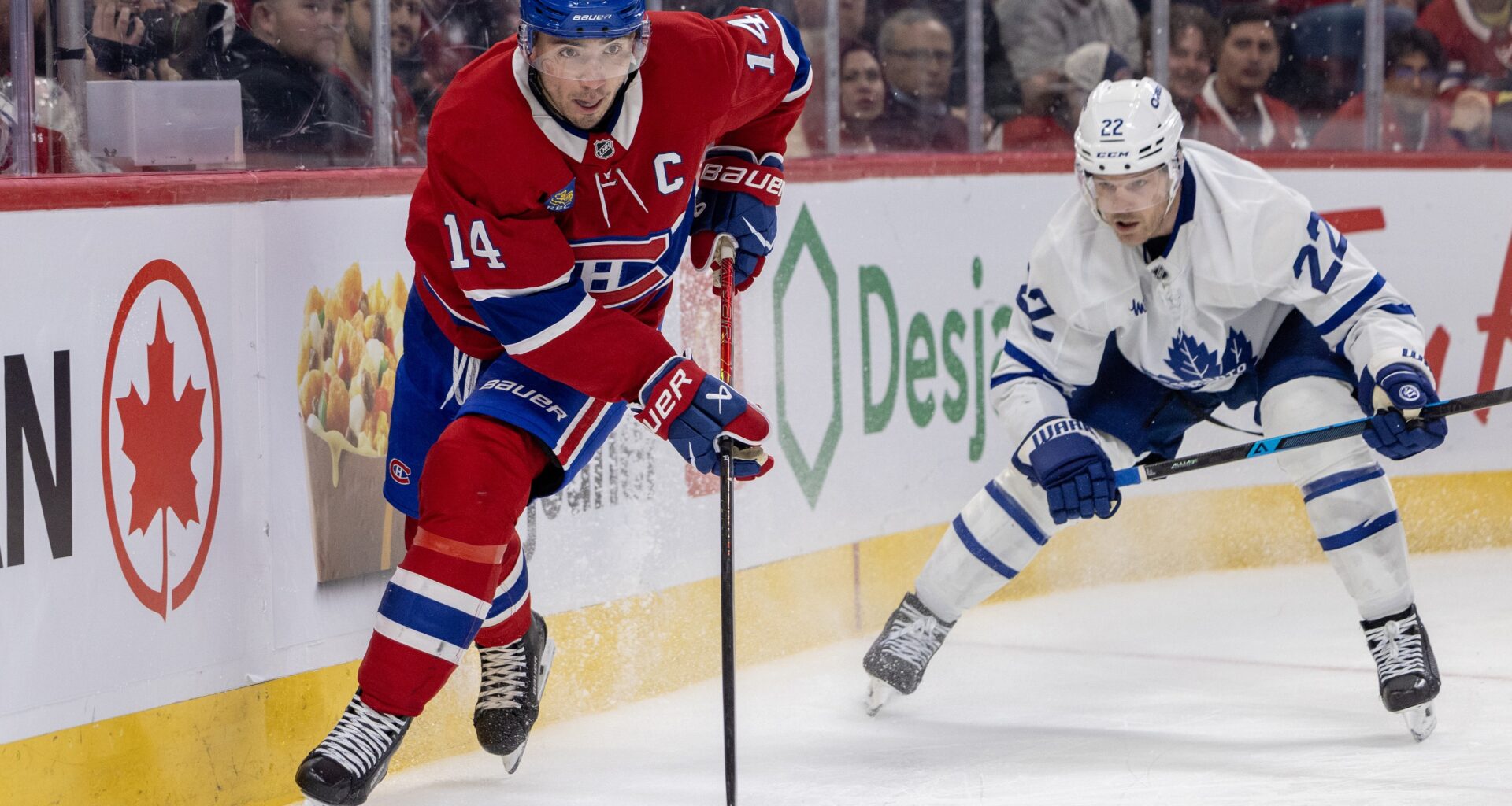
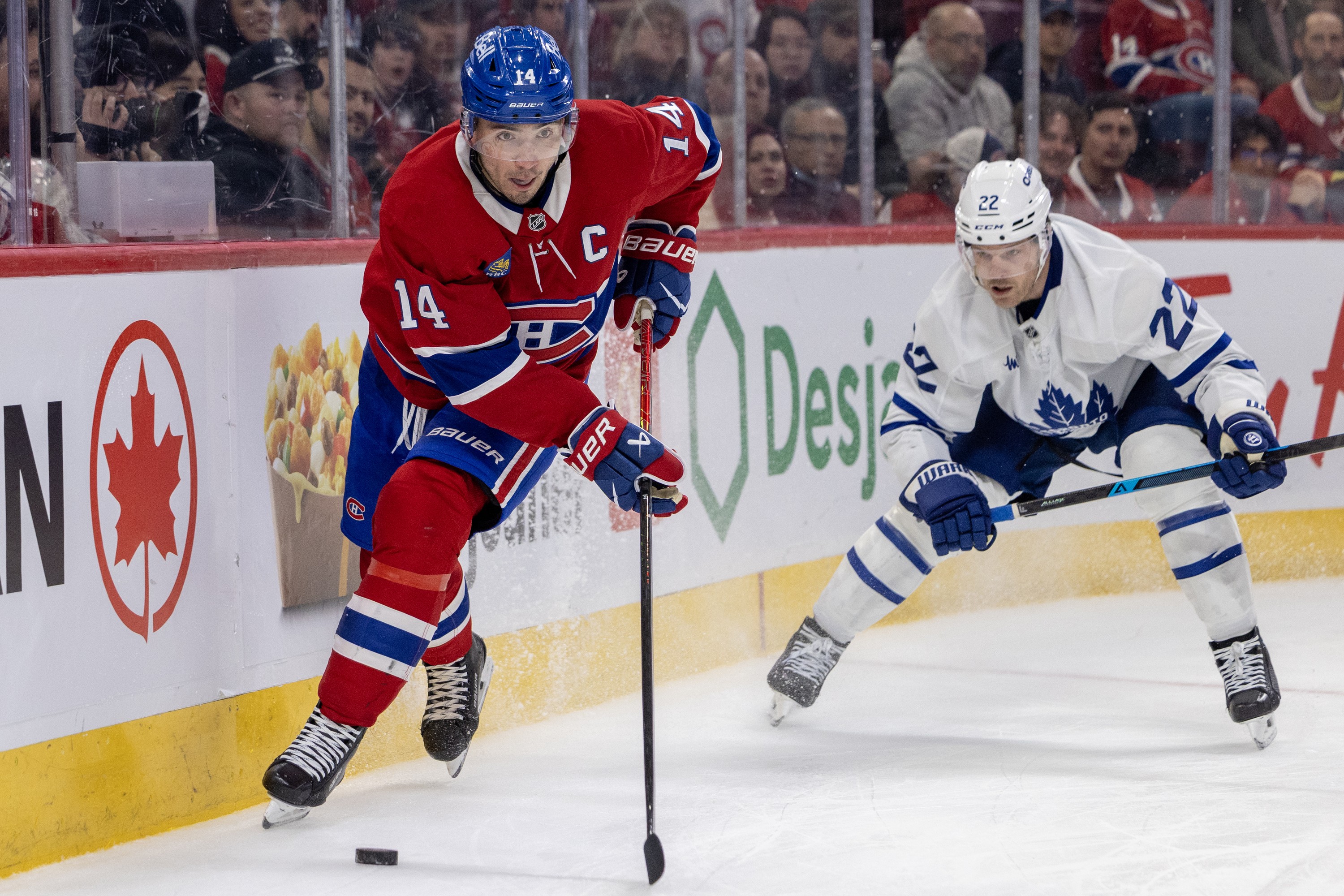 Maple Leafs’ Jake McCabe pursues Canadiens captain Nick Suzuki behind the Toronto net during third period in Montreal on March 10. John Mahoney / Montreal Gazette
The one person who did not handle it well was Chris Johnston, brought on to discuss a story he helped report. Clearly uncomfortable in the role of criticizing the Leafs, Johnston initially declined to give Pelley a grade on his performance to date until he was finally shamed into admitting that Pelley would get failing marks so far.
I kept thinking how different the response would have been on RDS had the Canadiens fallen from 108 points and first in the Atlantic (where the Leafs were at the end of last season) to 78 points and last in the division this year. Never mind an outlier like Norman Flynn, who said Nick Suzuki didn’t belong on the Olympic team — the sanest analysts on the French side would have been tearing fresh strips off the entire Canadiens organization, with reason.
By any measure, the relative fate of the two cornerstone franchises this season is mind-blowing. The Canadiens, four years removed from a 55-point season, finished with 106 points, two shy of Toronto’s total last year. Last season, Montreal finished with 91 points and 40 wins and barely scraped into the playoffs. This year, they won 48 games and would likely have won the Atlantic and perhaps contended for the Presidents’ Trophy if not for Samuel Montembeault’s struggles in goal during the first half of the season.
All told, the Leafs dropped 30 points and the Canadiens gained 15, a net shift of 45 points in a single season. Toronto didn’t simply miss the playoffs. They collapsed. Worse, they quit, going 5-15-5 after the Olympic break and losing captain Auston Matthews to a nasty hit from serial offender Radko Gudas on March 12.
 Canadiens winger Cole Caufield follows play during third period against the Toronto Maple Leafs in Montreal on March 10. John Mahoney / Montreal Gazette
Even Craig Berube couldn’t scare them straight. It was as though when they let Mitch Marner get away, the entire organization fell apart.
Yet in the discussions I heard on Overdrive this week, not once did the Montreal Canadiens come up in relation to the spiralling Leafs. Six hours away along the 401, Jeff Gorton, Kent Hughes and Martin St. Louis have set the example and built a team, brick by brick. They have emphasized brains and character over the ability to ring up individual stats — and still their best players have put up numbers not seen in these parts in decades.
The contrast is inescapable. The Maple Leafs are governed by a cumbersome board and run by the delusional Pelley, who believes he can actually manage seven franchises at once (including the Raptors and Toronto FC) while armed with AI stats and little understanding of the game, at least when it comes to hockey. As long as he’s charging kids $1,000 (plus the price of a ticket) to skate around the ice with the flag, Pelley’s bosses are apparently good with it.
Look, it took Canadiens owner Geoff Molson some false starts to get it right. There was the culture-damaging tenure of GM Pierre Gauthier, the bizarre Randy Cunneyworth sequence, the Logan Mailloux draft and the bungled attempt at damage control, the hiring of the inept Dominique Ducharme. Molson got there, figuring out the fundamental principle that should be on the wall of every owner in professional sports: Hire the right people and get out of the way.
 Canadiens winger Ivan Demidov carries puck into the Toronto Maple Leafs’ zone during third period in Montreal on March 10. John Mahoney / Montreal Gazette
At least Toronto was spared the indignity of the annual early exit from the playoffs. But when the CEO and the captain are so clearly the problem with the team and fans keep buying tickets while prominent voices in the media are too servile to speak out, it’s unlikely to change.
It’s doubtful that anything short of a full-on rebuild will put the Leafs on the road to that long-awaited Stanley Cup. Rebuilding means more than improving the talent — it touches every aspect of the organization and it means rebuilding the team culture, too.
The Canadiens take care of their players. When Hage elected to spend another season at Michigan, Hughes offered his full support for whatever the young man chose to do. These things do matter. Players talk. They notice when the CEO is running off the rails and the captain declines to commit to remaining with the club.
Montreal now sets the example. Toronto can choose to follow — or fall further behind.
Editor’s Picks