
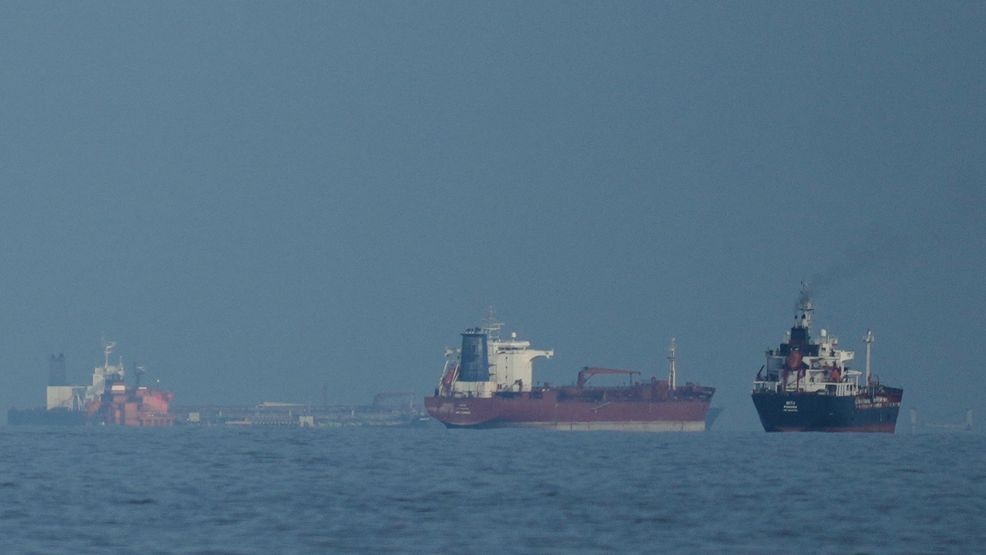
Iran reimposed restrictions on the Strait of Hormuz on Saturday, reversing its brief reopening after President Trump said a U.S. blockade would remain in place.
The shift came a day after Iran briefly reopened the strait to commercial vessels.
Iran’s joint military command said that “control of the Strait of Hormuz has returned to its previous state … under strict management and control of the armed forces.”
Trump had said the U.S. blockade would “remain in full force” until Tehran reaches an agreement with Washington, including over its nuclear program.
Trump, when speaking to reporters on Air Force One early on Saturday morning, said he might not extend Iran ceasefire if no deal is reached.
“I don’t know. Maybe not. Maybe I won’t extend it, but the blockade is going to remain,” he said. “But maybe I won’t extend it, so you have a blockade, and unfortunately, we’ll have to start dropping bombs again.”
Despite rising tensions, Pakistani officials said negotiations between the U.S. and Iran are continuing ahead of an April 22 ceasefire deadline.
Iran’s initial reopening came as a fragile 10-day ceasefire between Israel and the Iran-backed Hezbollah militant group in Lebanon appeared to be holding.
The news comes as a vessel-tracking service reported that two Indian ships, including a supertanker carrying about 2 million barrels of Iraqi oil, reversed course after reports of gunfire from Iran’s Revolutionary Guard.
The British military also said Iranian gunboats fired on a tanker transiting the strait after Iran reimposed restrictions, though the vessel and crew were reported safe.
Iran has limited access to the waterway throughout the conflict, allowing passage only for vessels it authorizes as tensions with the U.S. continue.
_________________
EDITOR’S NOTE: The Associated Press contributed to this report.