

The single biggest client of Lord Mandelson’s lobbying firm was a company linked to the Chinese military, according to leaked documents.
Last year Global Counsel, in which Mandelson retained shares while he was the UK ambassador to Washington, received £2.24 million from WuXi AppTec, a Shanghai-listed life science company. In 2024, when Mandelson’s appointment was announced, it received £1.42 million.
As a result, the company topped a list of “biggest clients by revenue” shared among senior executives at Global Counsel, co-founded by the peer in 2010.
Daily Briefing newsletter
Get our top stories and exclusive analysis sent straight to your inbox every morning.
Sign up with one click
The Pentagon recently described WuXi as a company engaged in assisting the Chinese military and urged Congress to add it to a list of companies that pose security risks, according to Bloomberg.
Its alleged links to the Chinese People’s Liberation Army and human rights abuses in Xinjiang long predated its work with the company.
Ge Li, WuXi’s chair and chief executive, signed an open letter in 2024 which denied the company posed a national security risk to any country. “We strongly object to blanket allegations and preemptive actions against our company without due process,” the letter added.
The disclosures come as senior government sources said it had been the peer’s foreign links that accounted for the decision by the UK Security Vetting agency to recommend against his appointment, rather than his friendship with Jeffrey Epstein.
They will raise further questions about what Sir Keir Starmer knew as he prepares to justify his handling of the appointment in a parliamentary appearance on Monday.
 Andrew Mountbatten-Windsor, Jeffrey Epstein and Lord MandelsonPA
‘Honestly the hardest bit’
Mandelson resigned from Global Counsel shortly before the 2024 general election and stood down as an adviser in December 2024, though he maintained a stake in the company. He served as the UK ambassador to America from February 10 to September 11 last year.
Sir Oliver Robbins, then permanent secretary at the Foreign Office, told MPs in November that determining whether Mandelson should relinquish his shares was “honestly the hardest bit of this bit of the process for both of us.”
He told the foreign affairs committee: “While he was confident that he could conduct his role as ambassador without giving rise to a conflict, we wanted to make sure we managed and mitigated that possibility in some particular ways. I did put in place some measures to do that with him, which we added to as time went on.”
Robbins added that while Mandelson had been “actively trying” to find ways out of his shareholding, “an extra guarantee” was imposed to ensure he wouldn’t benefit in any “upside” in the shares while ambassador. Robbins was sacked in a phone call from the prime minister last week.
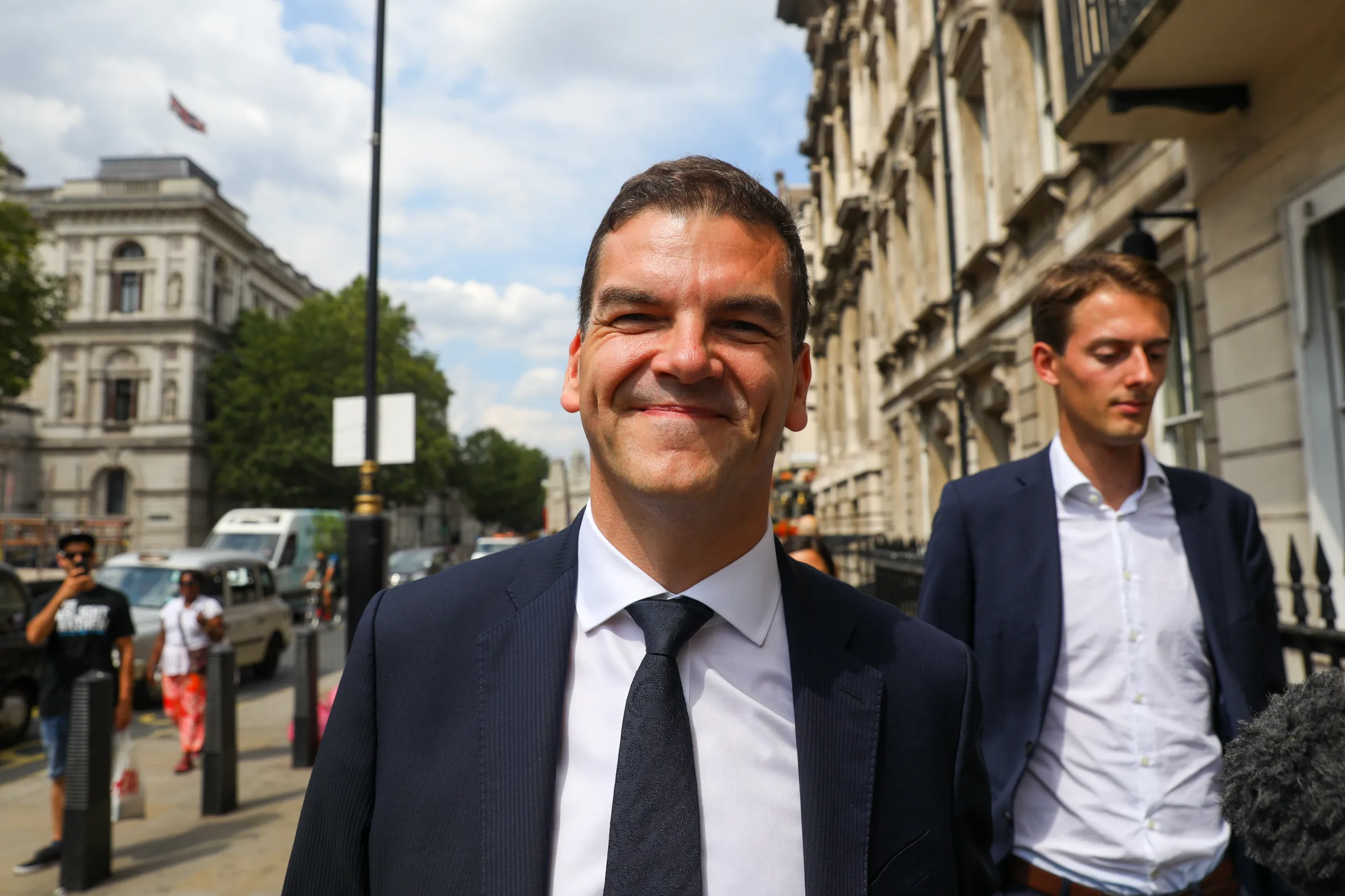 Robbins in 2018Simon Dawson/Bloomberg/Getty Images
Separately, a source familiar with the content of the negotiations between Mandelson and Robbins said the former permanent secretary had been relaxed about Mandelson’s ongoing shares in Global Counsel. They said that Robbins’s preference had been for Mandelson to divest, but Robbins never made a strenuous effort to make this happen.
An opening for Burnham?
On Monday, Starmer will address MPs about a saga that has left even some of his most loyal supporters in a state of suspended disbelief. They are being required to accept that the prime minister was left in the dark about a vetting process that, he had long maintained, gave Mandelson the green light — and that the fault lies with an overreaching mandarin, and not with an insufficiently curious prime minister.
 Lord Mandelson with the prime minister during a reception at the ambassador’s residence in Washington last yearAlamy
As Starmer prepares for this appearance in the House of Commons, officials were this weekend continuing to search for the full details of the extraordinary affair, a Kafkaesque struggle that advisers blamed on an “obstructive” Foreign Office. “Even since Tuesday evening, it’s been a difficult process getting information out for Foreign Office,” one No 10 source said.
With a vital set of elections just over a fortnight away, on May 7, the timing is dire. Allies of Andy Burnham, the mayor of Greater Manchester, have signalled that the Mandelson affair has renewed his interest in seeking a parliamentary seat. One person close to the mayor told the Financial Times that Burnham was “keeping an eye” on how the composition of the party’s National Executive Committee (NEC) might look after voting for 16 of its about 40 places begins in July. The person added that Burnham’s team had held conversations with four trade unions about the NEC’s makeup.
Allies rally around Robbins
Starmer is expected to tell MPs that both he and parliament should have been alerted sooner to the fact that security officials did not believe Mandelson should have access to secret material.
Indeed, No 10 believes Robbins, who did not disclose the recommendations by the UK Security Vetting (UKSV) to Starmer or any government minister, had four previous opportunities to inform them of the vetting advice.
First, he could have done so as soon as he saw its advice; second, when Mandelson was sacked in September; third, when emails published by the Department of Justice paved the way for a “humble address”, forcing the government to release material on Mandelson’s appointment; fourth, when the government said it would review security vetting last month.
But allies of Robbins continued to make the case this weekend that the prime minister had misunderstood the vetting process.
This process of developed vetting (DV) is not, these friends maintain, a simple pass/fail but rather an assessment of the risks, after which mitigating factors can be put in place to allay concerns. There were two vetting phases Mandelson was subjected to, one a due diligence inquiry conducted by officials and another to secure DV. This latter process is conducted by UKSV, a division of the Cabinet Office.
What’s more, these friends argue, a permanent secretary is severely restrained in what they can share about this latter process with a prime minister.
Allies of Robbins making this case include Ciaran Martin, former head of the National Cyber Security Centre, who said “the laws and procedures on vetting are clear.”
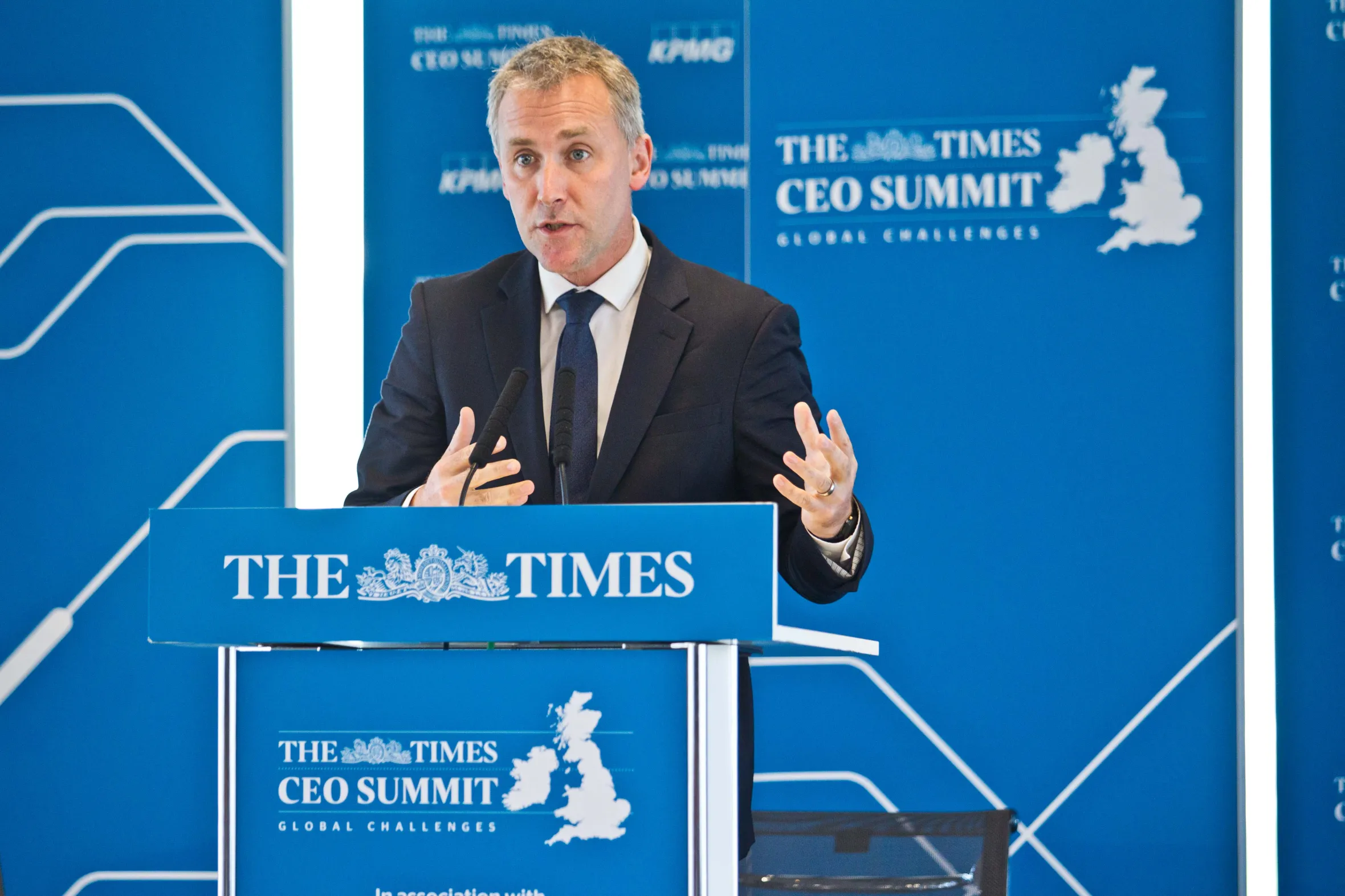 Ciaran MartinBen Gurr for The Times
Martin added: “That’s not to say they’re perfect. But if the prime minister feels it’s not the right system then the answer is for him to change the system, and, if need be, the law. Instead he has sacked someone who appears to have applied the current rules correctly.”
On Saturday Lord McDonald of Salford, who ran the Foreign Office from 2015 to 2020, joined in, arguing that vetting report details are “very closely held” and would “never be shared with No 10 or the prime minister.”
“And they are, generally, when things are confused or sensitive, a matter of judgment and mitigation. And it feels to me as though we are in that grey area rather than in a very black and white world,” he told the BBC.
McDonald also cited the Constitutional Reform and Governance Act 2010, which he said “requires those in charge of the vetting process to maintain confidence.” Asked if Robbins was effectively being thrown under the bus, McDonald said: “Yes.”
The former mandarin also suggested that the process to replace Robbins should be fast and confined to internal candidates. One Foreign Office insider suggested Dame Karen Pierce, Mandelson’s predecessor as ambassador to Washington, would be a strong candidate for the role.
Included in this chorus of Robbins’s allies is also understood to be Baroness Gray of Tottenham, the former Downing Street chief of staff, who has texted some Labour MPs in his defence.
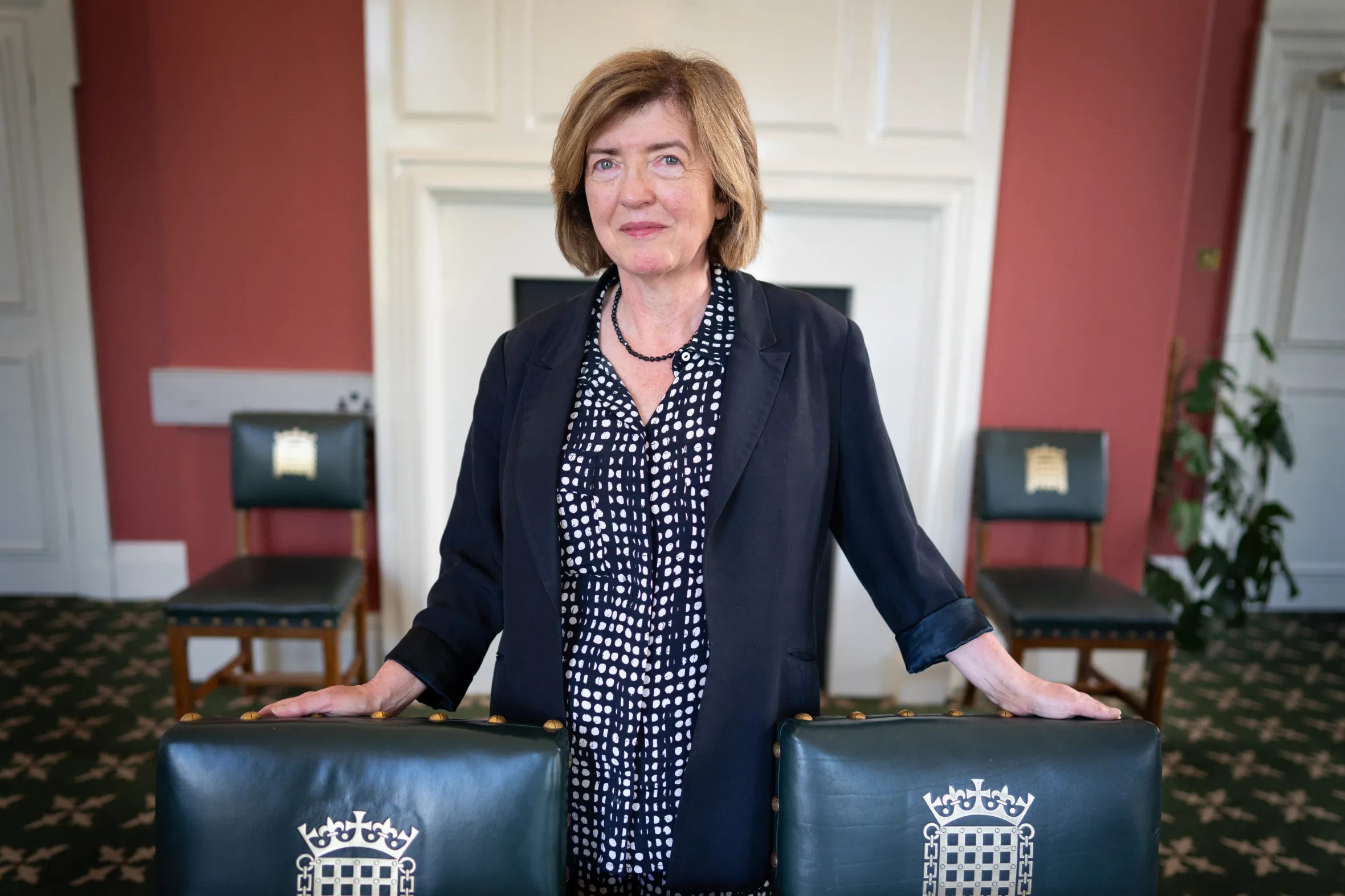 Baroness Gray of TottenhamStefan Rousseau/PA
However, Sir Richard Dearlove, the former boss of MI6, said he would have expected Robbins at least to have alerted Starmer to the conclusions of the vetting process, stopping short of sharing the details. “I cannot believe the permanent secretary didn’t ring up his minister who he sees every day and say: ‘Look, we have a problem’,” Dearlove told LBC. “The idea you don’t tell this is quite frankly, rubbish. You don’t tell them the reasons why they are being rejected.”
Mandelson is said to have emerged from the vetting process with mitigations in place, including restrictions related to specific former clients. The arrangements included a requirement that Mandelson’s deputy head of mission in Washington had to have knowledge of or supervise contacts with those clients, The Spectator reported on Saturday.
On Tuesday Robbins will be questioned about this process in more detail when he appears before the foreign affairs select committee. This is not, friends insist, part of any “strategic grand plan” on his part.
“The reality is Olly is a tremendously proper, old fashioned civil servant in many ways,” one said. “A committee of MPs has summoned him to attend a hearing. So of course he is going to attend. He would only turn parliament down if there was a clash and in those circumstances he’d apologetically request a rearrangement. But given he’s lost his job, he’s obviously free.”
But these friends are confident that Robbins will emerge exonerated from the affair. “His treatment has been beyond shabby,” a former senior ambassador and friend of Robbins said, describing his sacking as “mean-minded, blame-shifting and self-righteous.”
They added: “Olly Robbins did not deserve to be fired, and certainly didn’t deserve the subsequent pile-on. And ultimately, it won’t work — everyone knows it was Starmer that made the decision, and hanging a brilliant and dedicated civil servant out to dry won’t shift that one iota.”
On Saturday Matthew Gould, the former UK ambassador to Israel, described Robbins as “one of the outstanding public servants of his generation”.
He said: “At the Foreign Office he has led a painful process of cuts and redundancies, showing decisive, courageous leadership, a model of how to drive reform.”
‘Lying is a better look than downright incompetence’
Starmer, for one, will come under significant pressure on Monday to explain precisely what he knew, and when. On Friday, it emerged that two senior civil servants — Dame Antonia Romeo, the cabinet secretary, and Cat Little, the permanent secretary at the Cabinet Office — were aware of the fact last month. Starmer maintains that he was first told of the vetting recommendation on Tuesday evening. So why the delay?
 Cat LittleTayfun Salci
Downing Street is adamant that Romeo and Little acted appropriately in conducting checks before sharing the revelation with Starmer. “The whole reason Little got the UK Security Vetting form was because she was gathering documents to publish them as part of the humble address,” a No 10 source said.
The source went further, adding that the suggestion the officials “sat on” the findings was “just pals of Olly Robbins desperately trying to kind of shift the blame – from the man who did keep the prime minister in the dark to the people who’ve actually been doing their best to get these documents out in the open”.
On Monday, Starmer will be forced to defend himself from accusations that he misled parliament, having maintained in recent months that full due process had been followed. Opposition leaders are questioning why he did not appear before the House to update the record sooner.
“How can we honestly believe that the prime minister was going out on telly and in parliament saying Mandelson passed the vetting, full due process was followed, and not a single person told him?” Kemi Badenoch, the Conservative leader, told The Sunday Times.
“And we only found out from The Guardian. It’s not like he suddenly discovered this and is coming out to confess. I’m afraid I don’t believe him and that’s why I’m saying either he lied or he’s incompetent.”
A Labour source put it more starkly. “At some point lying becomes a better look than downright incompetence. I think that point has been reached.”